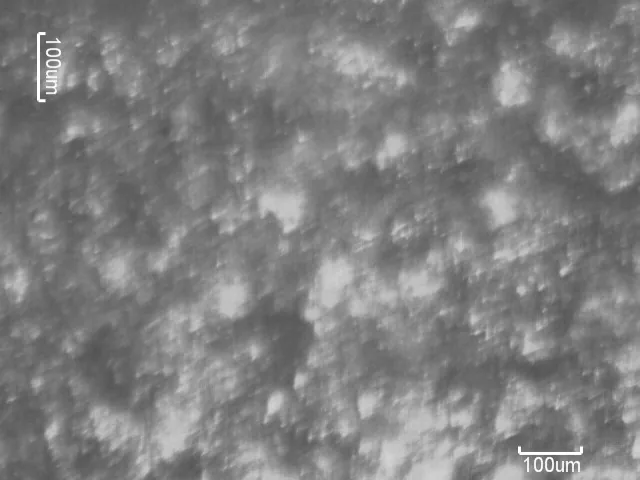
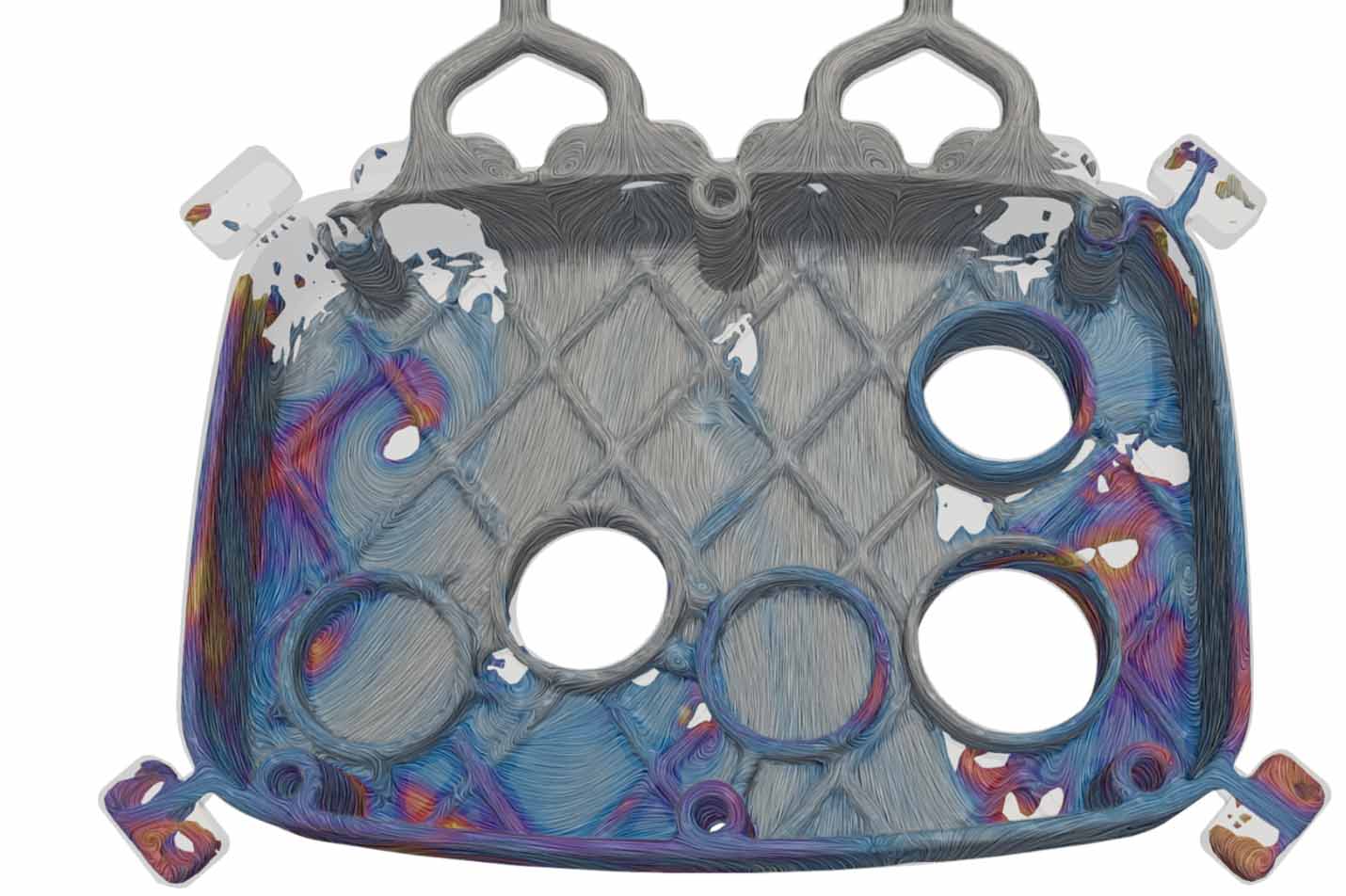
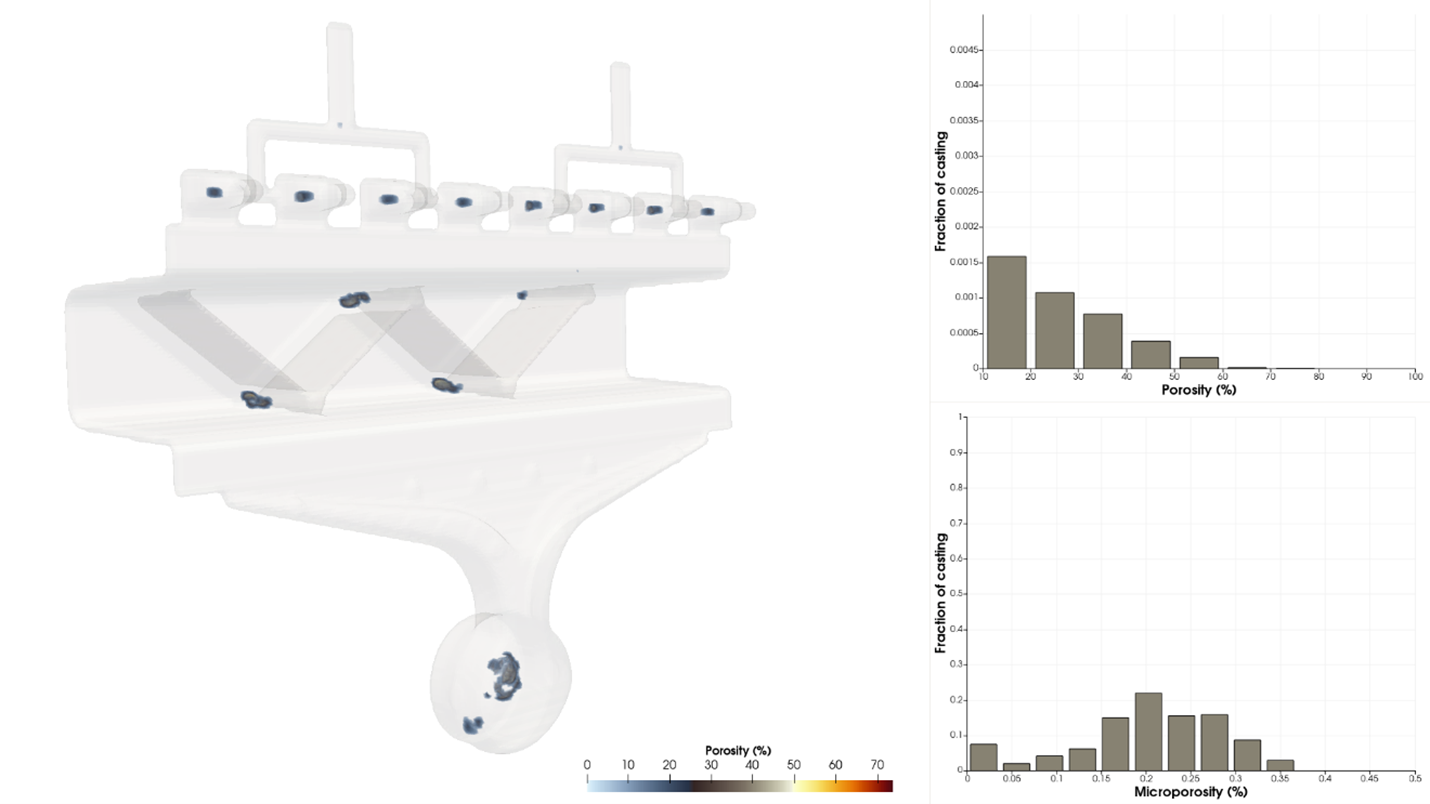
Fig. 3 - Sample mold CT scan

CFD 해석을 통한 러너 및 벤트 시스템 최적화: 고압 다이캐스팅 기공 결함 감소의 새로운 해법

이 기술 요약은 M.D Ibrahim 외 저자가 2023년 INTERNATIONAL JOURNAL OF INTEGRATED ENGINEERING에 게재한 “[Parametric Study for Runner Modifications of Die Casted Part with Venting Systems]” 논문을 기반으로 합니다. STI C&D의 기술 전문가가 분석하고 요약했습니다.

키워드

  • 주요 키워드: 다이캐스팅 기공 결함 감소
  • 보조 키워드: 고압 다이캐스팅(HPDC), 러너 게이트 시스템, 벤트 시스템, CFD 해석, 파라메트릭 연구, 수치 해석

Executive Summary

  • 도전 과제: 고압 다이캐스팅(HPDC) 공정에서 발생하는 가스 혼입은 제품의 기계적 특성과 표면 품질을 저하시키는 주요 원인인 기공 결함을 유발합니다.
  • 해결 방법: 본 연구에서는 검사 계측기 테스트 피스를 대상으로 파라메트릭 연구와 CFD 해석을 수행하여 러너 게이팅 시스템을 최적화하고 에어 벤트를 도입했습니다.
  • 핵심 돌파구: ‘외향 곡률 러너(outward curvature runner)’라는 새로운 러너 설계와 에어 벤트를 적용하여 용탕의 속도 및 온도 분포를 크게 개선했으며, 이를 통해 가스 기공을 효과적으로 감소시켰습니다.
  • 핵심 결론: CFD 해석에 기반한 러너 설계 및 벤팅 시스템 최적화는 다이캐스팅 부품의 기공 결함을 최소화하고 전반적인 품질을 향상시키는 핵심 전략입니다.

도전 과제: 왜 이 연구가 CFD 전문가에게 중요한가

고압 다이캐스팅(HPDC)은 복잡한 형상의 부품을 대량 생산하는 데 필수적인 공정이지만, 고질적인 결함 문제에 직면해 있습니다. 고속으로 용탕을 주입하는 과정에서 발생하는 역류는 용탕 내부에 공기 방울을 혼입시켜 가스 기공 결함의 원인이 됩니다. 이러한 기공은 제품의 인장 강도와 연성을 저하시켜 내구성에 치명적인 영향을 미칩니다.

또한, 용탕이 금형 내에서 불균일하게 응고하면서 발생하는 수축은 수축 기공을 유발합니다. 특히 러너 게이트와 같은 좁은 단면을 통과하며 발생하는 난류는 용탕의 충전 과정을 방해하고 결함을 심화시킵니다. 기존의 평면 게이트 시스템은 이러한 난류와 불균일한 충전을 유발하는 경향이 있어, 제품 품질을 유지하기 위한 새로운 게이팅 시스템 설계 최적화의 필요성이 꾸준히 제기되어 왔습니다.

접근 방식: 연구 방법론 분석

본 연구는 실제 산업 문제를 해결하기 위해 실험적 분석과 수치적 분석을 결합했습니다.

  • 실험적 분석: 먼저, 실제 마그네슘 다이캐스트 샘플 금형을 CT(Computed Tomography) 스캔하여 내부 기공 결함의 발생 위치와 분포를 비파괴 방식으로 정밀하게 분석했습니다. CT 분석 결과, 제품의 가장 두꺼운 16mm 두께 부위에서 기공 발생률이 가장 높다는 것을 확인했으며, 이 지점을 결함 개선을 위한 ‘임계점(critical point)’으로 설정했습니다.
  • 수치적 분석 (CFD): CT 분석으로 확인된 결함을 줄이기 위해 CFD 소프트웨어를 사용하여 금형 설계를 수정하고 시뮬레이션을 진행했습니다. 핵심적인 수정 사항은 다음과 같습니다.
    1. 외향 곡률 러너 (Outward Curvature Runner): 용탕이 캐비티로 더 원활하게 유입되도록 곡선 형태의 외향 러너를 새롭게 설계했습니다.
    2. 에어 벤트 (Air Vents) 도입: 캐비티 내부의 가스 방울 포집을 제거하고 배출을 촉진하기 위해 에어 벤트를 설치했습니다.
Fig. 1 - Test piece with air vents
Fig. 1 – Test piece with air vents

이 최적화된 금형 설계를 바탕으로, 용탕의 주입 속도(inlet velocity)와 작동 압력(operating condition)을 주요 변수로 설정하여 파라메트릭 연구를 수행했습니다. 이를 통해 최적의 공정 조건을 도출하고, 새로운 설계가 용탕 유동 및 결함 감소에 미치는 영향을 정량적으로 분석했습니다.

돌파구: 주요 연구 결과 및 데이터

결과 1: 주입 속도와 작동 압력이 결함에 미치는 영향

파라메트릭 분석 결과, 주입 속도와 작동 압력이 임계점의 압력 및 온도에 직접적인 영향을 미치는 것으로 나타났습니다.

  • 압력 변화: Table 3에서 볼 수 있듯이, 주입 속도가 1.5 m/s에서 3.0 m/s로 증가함에 따라 임계점의 압력은 345,250 kPa에서 1,345,800 kPa (작동 압력 -5 Pa 기준)까지 크게 증가했습니다. Figure 4의 3D 그래프는 이러한 관계를 시각적으로 보여줍니다. 높은 압력은 캐비티 내에 갇힌 공기 방울을 오버플로우나 에어 벤트 쪽으로 밀어내는 데 더 효과적이므로 기공 감소에 유리합니다.
  • 온도 변화: 주입 속도가 증가하면 마찰열 발생으로 인해 임계점의 온도도 함께 상승하는 경향을 보였습니다(Figure 5 참조). 하지만 주목할 점은, 100 Pa 및 3.0 m/s의 고압/고속 조건에서는 온도가 다른 조건에 비해 오히려 약간 낮게 나타났습니다. 이는 높은 압력을 유지하면서도 응고 시간을 단축하고 불필요한 가스 흡수를 방지할 수 있어 생산성 향상에 기여할 수 있음을 시사합니다.
Fig. 3 - Sample mold CT scan
Fig. 3 – Sample mold CT scan

결과 2: ‘외향 곡률 러너’ 설계의 탁월한 성능

새롭게 제안된 ‘외향 곡률 러너와 에어 벤트’ 설계는 기존 샘플 금형 대비 용탕 유동을 획기적으로 개선했습니다.

  • 온도 분포 개선: Figure 6은 두 설계의 온도 분포를 비교합니다. 기존 샘플 금형(a)의 고온 영역은 722.7 K ~ 762.1 K 범위였으나, 제안된 설계(b)에서는 683.3 K ~ 722.7 K로 훨씬 낮고 균일한 온도 분포를 보였습니다. 이러한 균일한 온도는 불균일한 응고로 인한 수축 결함을 방지하고 더 나은 응고 품질을 촉진합니다.
  • 유동 균일성 향상: Figure 7의 유선(streamline) 분포는 제안된 설계(b)가 기존 설계(a)에서 발생하던 와류(vortex) 형성을 제거하고, 훨씬 더 일관되고 균일한 속도 분포를 만들어내는 것을 명확히 보여줍니다. 이는 용탕이 캐비티를 완전히 채우는 것을 돕고, 가스 혼입 가능성을 근본적으로 줄여줍니다. 또한, 에어 벤트 상단에서 나타나는 높은 속도(붉은색 영역)는 내부 가스를 효과적으로 흡입하여 배출하고 있음을 증명합니다.

R&D 및 운영을 위한 실질적 시사점

  • 공정 엔지니어: 본 연구는 용탕 주입 속도와 진공 압력(작동 조건)을 조절하는 것이 임계 부위의 결함을 제어하는 데 매우 중요함을 보여줍니다. Table 3의 데이터는 특정 공정 조건이 제품 품질에 미치는 영향을 예측하는 데 활용될 수 있습니다.
  • 품질 관리팀: Figure 3과 Table 1의 CT 스캔 데이터는 제품의 가장 두꺼운 부분(16mm)이 기공 결함 발생 가능성이 가장 높다는 것을 명확히 보여주므로, 해당 부위에 대한 품질 검사를 강화하는 기준을 마련할 수 있습니다.
  • 설계 엔지니어: 이 연구 결과는 러너의 형상(특히 외향 곡률)과 에어 벤트의 전략적 배치가 응고 중 결함 형성에 지대한 영향을 미친다는 것을 입증합니다. 이는 금형 설계 초기 단계에서부터 유동 균일성을 확보하고 가스 배출을 최적화하는 설계가 필수적임을 시사합니다.

논문 상세 정보


Parametric Study for Runner Modifications of Die Casted Part with Venting Systems

1. 개요:

  • 제목: Parametric Study for Runner Modifications of Die Casted Part with Venting Systems
  • 저자: M.D Ibrahim, J. Jendia, Y. Kashiwabara, Y. Sunami
  • 발행 연도: 2023
  • 게재 학술지: INTERNATIONAL JOURNAL OF INTEGRATED ENGINEERING
  • 키워드: Porosity occurrence, parametric analysis, numerical analysis, design optimization

2. 초록:

고압 다이캐스팅(HPDC)은 복잡한 부품을 고압으로 용탕을 캐비티 내부에 주입하여 생성하는 공정입니다. 다이캐스팅의 실패는 제품의 기계적 특성, 표면 품질 및 수명을 감소시킬 수 있습니다. 본 논문에서는 검사 계측기인 테스트 피스의 다이캐스팅 공정에 대한 파라메트릭 연구 및 전산 유체 역학(CFD) 분석을 수행합니다. 다이캐스팅 공정에서 사용되는 매개변수는 캐비티 내부의 용탕 유동 품질에 영향을 미치기 때문에 중요합니다. 따라서 테스트 피스의 다이캐스팅 공정에서 최적의 매개변수 사용을 조사하기 위해 파라메트릭 연구를 수행합니다. 러너 게이팅 시스템 설계 또한 제품의 품질을 유지하는 중요한 기준 중 하나입니다. 본 논문은 또한 가스 기공을 줄이는 데 있어 러너 게이팅 시스템 설계 최적화의 효과를 조사했습니다. 샘플 금형의 CT 스캔은 가스 기공 발생과 CFD 결과 간의 관계를 비교하기 위해 포함되었습니다. 본 논문은 다이캐스팅 결함을 줄이는 데 있어 속도 및 온도 분포를 개선할 수 있는 에어 벤트를 갖춘 ‘외향 곡률 러너’라는 새로운 러너 설계를 제안했습니다. 또한, 에어 벤트는 부피를 확장하고 더 높은 흡입을 촉진하여 캐비티 내부의 가스 방울 포집을 제거하기 위해 설치되었습니다.

3. 서론:

금속 사출 성형(MIM)에 대한 수요는 수년간 증가해 왔으며, 이러한 성장은 이 제조 공정이 폐기물을 최소화하면서 복잡한 제품을 생산할 수 있는 능력 때문입니다. 기술 발전과 산업 혁명의 진전은 다이캐스팅 부품을 경제적이고 효과적으로 대량 생산하는 데 중요합니다. V-LINE®SYSTEM은 산업용 사출 성형 공정에 사용되는 시스템으로, 가소화 및 사출 실린더를 분리하여 정확한 양의 용탕을 채우고, 더 나은 유체 주입을 위해 열을 제공하고 온도를 유지합니다. 제조업체는 다이캐스팅 공정의 품질을 확인하여 주조 결함을 최소화하고 생산성을 향상시키는 것이 중요합니다.

4. 연구 요약:

연구 주제의 배경:

고압 다이캐스팅(HPDC)은 복잡한 부품을 제조하는 데 널리 사용되지만, 고속 주입으로 인한 공기 혼입으로 가스 기공과 같은 결함이 발생하여 제품 품질을 저하시키는 문제가 있습니다.

이전 연구 현황:

불량한 게이팅 시스템은 가스 혼입 및 수축 기공을 유발할 수 있으며, 특히 평면 게이팅 시스템은 난류 및 불균일한 충전을 유발하는 것으로 알려져 있습니다. 진공 다이캐스팅은 가스 혼입을 줄이는 데 이론적으로 도움이 될 수 있습니다.

연구 목적:

본 연구의 목적은 테스트 피스의 다이캐스팅 공정에서 최적의 매개변수를 조사하고, 가스 기공을 줄이기 위해 러너 게이팅 시스템 설계를 최적화하는 것입니다.

핵심 연구:

실제 다이캐스트 샘플의 CT 스캔을 통해 결함을 분석하고, 이를 바탕으로 CFD를 사용하여 파라메트릭 연구를 수행했습니다. 특히, ‘외향 곡률 러너’와 에어 벤트를 포함하는 새로운 설계를 제안하고, 이 설계가 용탕의 유동, 온도 분포 및 기공 감소에 미치는 영향을 수치적으로 평가했습니다.

5. 연구 방법론

연구 설계:

실험적 분석(CT 스캔)과 수치적 분석(CFD 시뮬레이션)을 결합한 연구 설계를 채택했습니다.

데이터 수집 및 분석 방법:

Nikon X-ray CT 장비(XT: H225 Series Interior)를 사용하여 마그네슘 다이캐스트 샘플의 기공 데이터를 수집했습니다. CFD 소프트웨어(Ansys)를 사용하여 파라메트릭 및 수치 해석을 수행했으며, 주입 속도와 작동 압력을 변수로 설정하여 임계점에서의 압력과 온도 데이터를 수집하고 분석했습니다.

연구 주제 및 범위:

연구 대상은 90° 각진 모서리를 가진 사다리 모양의 검사 계측기 테스트 피스(200mm x 100mm, 두께 4, 8, 12, 16mm)입니다. 연구 범위는 CT 분석에서 결함이 가장 많이 발견된 임계점(16mm 두께 부품의 8mm 깊이)에서의 기공 형성을 줄이고 캐비티 내 용탕 유동성을 개선하는 데 중점을 둡니다.

6. 주요 결과:

주요 결과:

  • 주입 속도가 증가하면 임계점의 압력과 온도가 모두 증가하며, 높은 압력은 공기 방울 분산에 유리합니다.
  • 새롭게 제안된 ‘외향 곡률 러너’와 에어 벤트 설계는 기존 설계에 비해 캐비티 내 용탕의 온도 분포를 더 낮고 균일하게 만들었습니다.
  • 제안된 설계는 와류 형성을 제거하고 유속을 균일하게 분배하여 용탕 충전 과정을 개선하고 가스 혼입을 줄였습니다.
  • 에어 벤트는 내부 압력을 낮춰 흡입력을 높임으로써 가스 배출을 촉진하는 효과가 있었습니다.

그림 목록:

  • Fig. 1 – Test piece with air vents
  • Fig. 2 – Nikon x-ray CT machine XT: H225 Series interior
  • Fig. 3 – Sample mold CT scan
  • Fig. 4 – 3D graph of pressure at a critical point
  • Fig. 5 – 3D graph of temperature at a critical point
  • Fig. 6 – Temperature contour for (a) sample mold; (b) outward curvature runner with air vent
  • Fig. 7 – Velocity streamline distribution for (a) sample mold; (b) outward curvature runner with air vent

7. 결론:

파라메트릭 연구 결과, 주입 속도가 증가하면 임계점의 압력도 증가하여 용탕 내 공기 방울을 분산시키는 데 도움이 될 수 있습니다. 임계점의 압력이 높을수록 마찰열이 더 많이 발생하여 용탕의 온도가 높아집니다. 임계점의 고온은 응고 속도를 늦추지만, 100 Pa 및 3.0 m/s에서는 고압임에도 불구하고 온도가 약간 낮아 제조 시간을 줄이는 데 도움이 될 수 있습니다. 특정 조건에서 진공 보조 다이캐스팅 공정은 가장 두꺼운 지점의 압력을 감소시킬 수 있는데, 이는 높은 진공이 용탕의 난류를 유발하여 역류 및 가스 혼입을 초래할 수 있기 때문입니다. 수치 해석에서 용탕의 높은 국부 온도는 균열, 번 마크, 유동 마크를 유발합니다. 높은 온도 차이는 또한 응고 속도의 불일치를 초래하여 금형 캐비티를 완전히 채우지 못하고 일부 용탕이 굳기 시작하는 불완전 충전을 유발할 수 있습니다. 불완전 충전은 가스 기공 결함으로 이어지는 가스 방울 혼입을 유발합니다. 와류 형성은 또한 용탕 속도를 감소시킵니다. 외향 곡률 러너는 러너가 바깥쪽을 향하는 다른 접근 방식을 보여주며, 러너 게이트 입구에서 생성된 곡선이 특징입니다. 이 러너는 용탕 속도와 온도 분포를 효과적으로 증가시킵니다. 또한, 에어 벤트는 내부의 낮은 압력으로 인해 더 높은 흡입을 촉진합니다.

8. 참고 문헌:

  • [1] Grand View Research (2015). Metal Injection Molding Market Size, Share & Trends Analysis Report by End-Use (Automotive, Consumer Product, Medical, Industrial, Defense), By Region (North America, Europe, Asia Pacific, CSA, MEA), Competitive Landscape, And Segment Forecasts, 2018 -2025. https://www.grandviewresearch.com/industry-analysis/metal-injection-molding-mim-market
  • [2] Luo, A. A. (2013). Magnesium casting technology for structural applications. Journal of Magnesium and Alloys, 1(1), 2-22. https://doi.org/10.1016/j.jma.2013.02.002
  • [3] El-Sayed, M. A., Hassanin, H. & Essa, K. (2016). Bifilm defects and porosity in Al cast alloys. International Journal Advanced Technology, 86(1), 1173-1179. https://doi.org/10.1007/s00170-015-8240-6
  • [4] Sadeghi, M. & Mahmoudi, J. (2012). Experimental and Theoretical Studies on the Effect of Die Temperature on the Quality of the Products in High-Pressure Die-Casting Process. Journal of Advances in Materials Science and Engineering, 2012(1), 1-10. https://doi.org/10.1155/2012/434605
  • [5] Lee, B. D., Baek, U. H. & Han, J. W. (2012). Optimization of gating system design for die casting of thin magnesium alloys-based multi-cavity LCD housings. Journal of Materials Engineering and Performance, 21(9), 1893-1903, https://doi.org/10.1007/s11665-011-0111-1
  • [6] Piyanut, M. & Chakrit, S. (2017). Evaluate of chill vent performance for high pressure die-casting production and simulation of motorcycle fuel caps. International Conference on Mechatronics and Mechanical Engineering (ICMME 2016), 95, 07025. https://doi.org/10.1051/matecconf/20179507025
  • [7] Ibrahim, M.D., Rahman, M.R.A., Khan, A.A., Mohamad, M.R., Suffian, M.S.Z.M., Yunos, Y.S., Wong, L.K., & Mohtar, M.Z. (2017). Effect of Mold Designs on Molten Metal Behaviour In High-Pressure Die Casting. Conference Series: Journal of Physics, 822(1) 2017, 1-6. https://doi.org/10.1088/1742-6596/822/1/012029
  • [8] Ramnath, B. V., Elanchezhian, C., Chandrasekhar, V., Kumar, A. A., Asif, S. M., Mohamed, G. R., Raj, D. V., & Kumar, C. S. (2014). Analysis and Optimization of Gating System for Commutator End Bracket. Procedia Materials Science, 6(1), 1312-1328. https://doi.org/10.1016/j.mspro.2014.07.110
  • [9] Westengen, H., & Rashed, H. (2016). Magnesium Alloys: Properties and Applications. Encyclopedia of Materials: Metals and Alloys, 2016(1), 11-19. https://doi.org/10.1016/B978-0-12-803581-8.02568-6
  • [10] Sodick Co. Ltd. (n.d). Sodick News Letter: Core technology. http://www.sodick.jp/tech/v_line.html
  • [11] Ibrahim. M.D, Tan, G. L., Roslan, L., Kashiwabara, Y., Jendia, J., & Sunami, Y. (2020). Numerical and Experimental Analysis on Runner and Gate Positioning for Magnesium Alloy Die-Casted Test Piece. Materials Science Forum, 975(1), 242-247. https://doi.org/10.4028/www.scientific.net/MSF.975.242
  • [12] Rai, J. K., Lajimi, A. M. & Xirouchakis, P. (2008). An intelligent system for predicting HPDC process variable in interactive environment. Journal of Materials Processing Technology, 203(1-3), 72-79. https://doi.org/10.1016/j.jmatprotec.2007.10.011
  • [13] El-Sayed, M. A., Hassanin, H. & Essa, K. (2016). Bifilm defects and porosity in Al-cast alloys. International Journal Advanced Manufacturing Technology, 86(1), 1173-1179. https://doi.org/10.1007/s00170-015-8240-6

전문가 Q&A: 자주 묻는 질문

Q1: 왜 파라메트릭 연구의 변수로 주입 속도와 작동 조건을 선택했습니까?

A1: 논문에 따르면, 이 두 매개변수는 캐비티 내부의 용탕 유동 품질에 직접적인 영향을 미치는 핵심 공정 변수입니다. 주입 속도는 유동 패턴과 압력 형성을 결정하고, 작동 조건(진공 압력)은 캐비티 내 가스 배출 효율을 좌우합니다. 따라서 이 두 변수를 분석하는 것은 가스 혼입과 응고 과정을 제어하여 기공 결함을 줄이는 최적의 조건을 찾는 데 필수적입니다.

Q2: 논문에서 제안한 ‘외향 곡률 러너’는 기존 설계의 어떤 특정 문제를 해결합니까?

A2: 기존 설계, 특히 평면 게이트 시스템은 용탕이 캐비티로 진입할 때 난류와 와류(vortex)를 유발하기 쉽습니다. Figure 7의 유선 분석에서 볼 수 있듯이, ‘외향 곡률 러너’는 용탕이 캐비티로 부드럽고 균일하게 흐르도록 유도하여 이러한 와류 형성을 제거합니다. 이를 통해 불균일한 충전과 그로 인한 가스 포집 문제를 근본적으로 해결합니다.

Q3: 에어 벤트는 단순히 공기 배출구 역할을 넘어 기공 감소에 어떻게 기여합니까?

A3: 논문에서는 에어 벤트가 단순히 공기를 배출하는 수동적인 역할을 넘어, 부피를 확장하고 벤트 내부의 낮은 압력으로 인해 더 높은 ‘흡입(suction)’을 촉진한다고 설명합니다. 이는 캐비티 내부에 갇힌 가스 방울을 수동적으로 배출하는 것이 아니라, 능동적으로 빨아들여 제거하는 효과를 가집니다. 이로 인해 가스 제거 효율이 크게 향상됩니다.

Q4: Table 1을 보면 16mm 두께 섹션에서 결함 비율(0.0239%)이 유독 높습니다. 가장 두꺼운 부분이 가장 문제가 되는 이유는 무엇입니까?

A4: 논문에 따르면, 고온 영역은 주변부보다 늦게 응고됩니다. 가장 두꺼운 부분은 열을 가장 오래 유지하기 때문에 응고가 지연되고, 이 과정에서 주변부가 먼저 굳으면서 빠져나가지 못한 공기 방울이 갇히게 됩니다. 또한, 이러한 불균일한 응고는 불완전 충전의 원인이 되어 결함 발생 가능성을 더욱 높입니다.

Q5: Figure 5에서 100 Pa, 3.0 m/s 조건의 온도가 다른 고속 조건보다 약간 낮은데, 이것이 의미하는 바는 무엇입니까?

A5: 논문에서는 이 점을 긍정적으로 평가합니다. 높은 압력을 통해 가스 배출 효과를 극대화하면서도, 온도가 과도하게 상승하는 것을 막을 수 있기 때문입니다. 이는 불필요한 가스 흡수를 방지하고 응고 속도를 적절히 제어하여 전체 제조 시간을 단축하는 데 도움이 될 수 있음을 시사합니다. 즉, 생산성과 품질을 동시에 잡을 수 있는 최적의 공정 조건일 가능성을 보여줍니다.


결론: 더 높은 품질과 생산성을 향한 길

본 연구는 고압 다이캐스팅 공정의 고질적인 문제인 기공 결함을 해결하기 위해 CFD 해석을 활용한 체계적인 접근법을 제시합니다. 러너 형상을 ‘외향 곡률’로 최적화하고 에어 벤트를 전략적으로 배치함으로써 용탕의 유동을 안정시키고 가스 배출을 극대화할 수 있음을 입증했습니다. 이는 최종적으로 다이캐스팅 기공 결함 감소로 이어져 제품의 기계적 신뢰성과 품질을 한 단계 끌어올릴 수 있습니다.

STI C&D는 최신 산업 연구 결과를 적용하여 고객이 더 높은 생산성과 품질을 달성할 수 있도록 지원하는 데 전념하고 있습니다. 본 논문에서 논의된 과제가 귀사의 운영 목표와 일치한다면, 저희 엔지니어링 팀에 연락하여 이러한 원칙을 귀사의 부품에 어떻게 구현할 수 있는지 논의해 보십시오.

(주)에스티아이씨앤디에서는 고객이 수치해석을 직접 수행하고 싶지만 경험이 없거나, 시간이 없어서 용역을 통해 수치해석 결과를 얻고자 하는 경우 전문 엔지니어를 통해 CFD consulting services를 제공합니다. 귀하께서 당면하고 있는 연구프로젝트를 최소의 비용으로, 최적의 해결방안을 찾을 수 있도록 지원합니다.

  • 연락처 : 02-2026-0450
  • 이메일 : flow3d@stikorea.co.kr

저작권 정보

  • 이 콘텐츠는 “M.D Ibrahim” 외 저자의 논문 “[Parametric Study for Runner Modifications of Die Casted Part with Venting Systems]”을 기반으로 한 요약 및 분석 자료입니다.
  • 출처: https://doi.org/10.30880/ijie.2023.15.05.010

이 자료는 정보 제공 목적으로만 사용됩니다. 무단 상업적 사용을 금지합니다. Copyright © 2025 STI C&D. All rights reserved.

図8 鋳巣の種類

다이캐스팅 머신의 진화: 초고속 충전 및 전동화 기술이 품질을 혁신하는 방법

이 기술 요약은 Journal of The Japan Institute of Light Metals에 게재된 Yuji ABE의 논문 “Die-casting machine”(2019)을 기반으로 하며, STI C&D의 기술 전문가에 의해 분석 및 요약되었습니다.

키워드

  • Primary Keyword: 다이캐스팅 머신
  • Secondary Keywords: 단시간 충전, 전동화, 사물 인터넷(IoT), 에너지 절약, 주조 품질, 가스 결함, 수축 결함

Executive Summary

  • 도전 과제: 자동차 산업의 경량화 요구에 따라 더 얇고, 더 크며, 더 복잡한 형상의 다이캐스팅 제품을 높은 품질로 생산해야 하는 기술적 과제가 대두되었습니다.
  • 해결 방법: 서보 기술을 이용한 초고속 사출, 2플래튼 및 전동 토글과 같은 혁신적인 형체 기구, 그리고 국부 가압 및 고진공 다이캐스팅과 같은 공정 기술의 발전을 통해 대응하고 있습니다.
  • 핵심 돌파구: 사출 속도의 고속화 및 가속 성능 향상은 충전 시간을 단축하여 박육 제품의 외관 및 내부 품질을 동시에 개선하며, 특히 승압 시간을 최소화하는 것이 내부 결함 감소에 매우 효과적임을 입증했습니다.
  • 핵심 결론: 최신 다이캐스팅 머신 기술은 단순한 생산성 향상을 넘어, 기존에 성형이 어려웠던 고품질·고부가가치 부품의 양산을 가능하게 하여 제조업의 경쟁력을 한 단계 끌어올리고 있습니다.

도전 과제: CFD 전문가에게 이 연구가 중요한 이유

다이캐스팅은 우수한 표면과 높은 정밀도의 주물을 대량 생산할 수 있어 자동차 산업을 중심으로 널리 사용되어 왔습니다. 최근 자동차 업계는 xEV(전동화 차량)로의 전환과 함께 연비 향상 및 저비용화를 위한 ‘경량화’라는 필수 과제에 직면해 있습니다. 알루미늄, 마그네슘과 같은 경금속은 다이캐스팅 공법을 통해 이러한 경량화 요구에 효과적으로 대응할 수 있습니다.

이러한 배경 속에서 다이캐스팅 제품은 점점 더 얇아지고(박육화), 여러 부품을 하나로 통합하는 일체화 및 대형화가 진행되고 있습니다. 이는 용탕이 응고되기 전에 금형 캐비티를 완전히 채워야 하는 다이캐스팅 공정의 근본적인 원리에 큰 도전이 됩니다. 기존의 다이캐스팅 머신으로는 용탕의 유동성 한계로 인해 미충전, 탕경계 불량과 같은 외관 결함이나 내부 수축 결함이 발생하기 쉬웠습니다. 따라서 더 빠른 속도로 용탕을 충전하고, 더 효과적으로 가압하여 고품질의 박육·대형 부품을 안정적으로 생산할 수 있는 혁신적인 다이캐스팅 머신 기술이 절실히 요구되었습니다.

접근 방식: 방법론 분석

본 논문은 다이캐스팅 머신의 기본 원리부터 최신 기술 동향까지 체계적으로 분석합니다. 연구는 크게 기계 구조의 변천과 공정 기술의 진화 두 가지 축으로 진행됩니다.

  1. 기계 구조의 변천:
    • 사출 능력의 진화: 기존의 유압 방식에서 서보 밸브와 같은 고응답성 부품을 채용한 ‘초고속 다이캐스팅 머신’의 개발 과정을 설명합니다. 이를 통해 기존 4~5m/s 수준이었던 공타 고속 사출 속도를 10m/s 수준까지 끌어올려 충전 시간을 단축하고 응답성을 향상시킨 과정을 분석합니다. 또한, 고속화에 따른 서지 압력(Surge Pressure) 문제를 해결하기 위한 감속 제어 기술도 함께 다룹니다.
    • 형체부의 다양화: 전통적인 유압 토글 방식에서 벗어나, 설치 공간과 에너지 효율을 개선한 ‘2플래튼 방식’과 사이클 타임 단축 및 정밀도 향상을 이룬 ‘전동 토글 방식’ 다이캐스팅 머신의 구조적 특징과 장점을 비교 분석합니다.
  2. 공정 기술의 진화:
    • 주조 품질 향상 기술: ‘단시간 충전·단시간 승압’이라는 개념을 중심으로, 사출 가속 성능과 승압 시간이 내부 결함(수축결함)에 미치는 영향을 데이터(그림 11, 표 1)를 통해 정량적으로 분석합니다.
    • 결함 제어 기술: 특정 부위의 수축 결함을 제어하기 위한 ‘국부 가압(Local Squeeze Die Casting)’ 기술과, 가스 결함을 근본적으로 줄여 열처리나 용접이 가능한 제품을 생산하는 ‘고진공 다이캐스팅’ 기술의 원리와 적용 사례를 소개합니다.

돌파구: 주요 연구 결과 및 데이터

결과 1: ‘단시간 충전’이 박육 제품의 품질을 결정한다

서보 기술을 적용한 초고속 다이캐스팅 머신은 기존 기술의 한계를 뛰어넘었습니다. 논문에 따르면, 기존 4~5m/s의 공타 고속 사출 속도를 10m/s 수준으로 향상시킬 수 있게 되었습니다. 이는 단순히 속도만 빠른 것이 아니라, 응답성이 뛰어난 고속 가속이 가능함을 의미합니다.

그림 10은 가속 시간 5ms의 차이가 고속 구간을 약 10mm 단축할 수 있음을 보여줍니다. 이 짧은 시간 단축이 용탕이 응고되기 전에 캐비티를 완전히 채울 수 있게 하여, 2~5mm 두께의 박육 제품에서 발생하는 미충전이나 탕경계 불량과 같은 외관 품질 문제를 해결하는 핵심 요소가 됩니다. 또한, 빠른 가속은 용탕이 게이트를 통과할 때 미세하게 비산하게 만들어, 내부 가스 결함을 미세화하고 분산시키는 효과도 있습니다.

결과 2: 내부 품질은 ‘승압 시간’이 좌우한다

제품 내부의 수축 결함을 억제하기 위한 증압 공정에서, 단순히 압력을 높이는 것보다 ‘얼마나 빨리’ 목표 압력에 도달하는지가 더 중요하다는 점을 데이터로 입증했습니다.

그림 11과 표 1은 승압 시간을 10ms에서 100ms로 변경했을 때의 금형 내 압력과 결함 비율을 비교합니다. 승압 시간이 10ms일 때(실제 금형 내 승압 시간 17ms) 최대 금형 내 압력은 52MPa에 도달했고 결함 비율은 0.80%였던 반면, 승압 시간이 100ms일 때(실제 금형 내 승압 시간 120ms) 최대 압력은 40MPa로 떨어지고 결함 비율은 0.97%로 증가했습니다. 이는 승압이 늦어지면 게이트 부위가 먼저 응고되어 압력이 제품 내부에 효과적으로 전달되지 못함을 의미합니다. 따라서, 내부 품질 확보를 위해서는 버(flash) 발생에 유의하면서 승압 시간을 최소화하는 것이 가장 효과적인 전략입니다.

R&D 및 운영을 위한 실질적 시사점

  • 공정 엔지니어: 본 연구는 사출 프로파일 설정 시, 단순히 최고 속도뿐만 아니라 ‘가속 성능’과 ‘승압 시간’이 품질에 미치는 영향을 명확히 보여줍니다. 이를 바탕으로 박육 제품의 충전 불량이나 두꺼운 부위의 수축 결함 문제를 해결하기 위한 최적의 공정 조건을 설정하는 데 기여할 수 있습니다.
  • 품질 관리팀: 그림 11과 표 1의 데이터는 승압 시간이 금형 내 실제 압력 전달 및 내부 결함률에 직접적인 영향을 미친다는 것을 보여줍니다. 이는 수축 결함 발생 시, 단순히 주조 압력 설정값만 확인할 것이 아니라 실제 승압 시간을 모니터링하고 관리하는 새로운 품질 검사 기준을 수립하는 데 중요한 근거가 될 수 있습니다.
  • 설계 엔지니어: 초고속 사출 기술의 발전으로 기존에는 성형이 불가능하다고 여겨졌던 더 얇은 두께의 설계가 가능해졌습니다. 또한, 국부 가압 기술은 특정 부위에 두께 변화가 큰 설계에서 발생하는 수축 결함을 효과적으로 제어할 수 있으므로, 초기 설계 단계에서부터 이러한 공법을 고려하여 제품의 기능성과 경량화를 극대화할 수 있습니다.

논문 정보


ダイカストマシン (Die-casting machine)

1. 개요:

  • 제목: ダイカストマシン (Die-casting machine)
  • 저자: 阿部 裕治 (Yuji ABE)
  • 발행 연도: 2019
  • 게재 학술지/학회: 軽金属 (Journal of The Japan Institute of Light Metals), Vol. 69, No. 10, 512-517
  • 키워드: short time filling; electrification; Internet of Things; energy saving

2. 초록:

(논문에 초록이 제공되지 않았습니다.)

3. 서론:

다이캐스팅은 우수한 주물 표면과 높은 정밀도를 가진 주물을 대량 생산할 수 있어 자동차 산업을 중심으로 다양한 분야에서 활용되어 왔다. 최근 자동차 산업이 xEV화 등 변혁의 시기를 맞이하면서 연비 향상, 저비용화, 첨단 안전 기술 대응이 과제로 떠오르고 있다. 특히 연비 향상과 저비용화를 위해서는 자동차의 경량화가 필수적이며, 리사이클성이 우수한 경금속(알루미늄, 마그네슘)을 사용하는 다이캐스팅 공법이 주목받고 있다. 이러한 시대적 요구에 부응하기 위해 다이캐스팅 머신은 구동 방식의 변화(수동→유압→전동)와 성능 향상(사출 속도 고속화, 응답성 향상)을 거듭해왔다. 최근에는 안전 및 환경 성능 요구와 더불어, 주조 품질 향상을 위해 IoT 기술을 도입하는 방안도 주목받고 있다. 본고에서는 다이캐스팅 머신의 기본 원리부터 구조의 변천, 그리고 향후 개발 동향과 과제에 대해 소개한다.

4. 연구 요약:

연구 주제의 배경:

자동차 산업의 경량화 요구 증대에 따라 다이캐스팅 제품은 더욱 얇고, 크고, 복잡해지고 있다. 이에 따라 기존 다이캐스팅 머신의 성능 한계를 극복하고 고품질 제품을 안정적으로 생산하기 위한 기술 혁신이 필요하다.

기존 연구 현황:

다이캐스팅 머신은 수동식, 수압식에서 유압식, 전동식으로 구동 방식이 발전해왔다. 성능 면에서는 용탕이 응고되기 전에 충전 및 가압을 완료한다는 기본 원리에 충실하기 위해 사출 속도를 높이고 응답성을 개선하는 방향으로 진화해왔다.

연구 목적:

다이캐스팅 머신의 기본 원리와 구조적 변천 과정을 설명하고, 최신 기술 동향인 초고속 사출, 형체부의 다양화, 그리고 주조 품질 향상을 위한 공정 기술(단시간 충전·승압, 국부 가압, 고진공)을 소개함으로써 미래의 개발 방향과 과제를 제시하고자 한다.

핵심 연구:

본 연구는 다이캐스팅 머신의 핵심 기능인 사출부와 형체부의 기술적 진화를 중심으로 분석한다. 특히 서보 기술을 이용한 초고속 사출이 박육·대형 제품의 품질에 미치는 긍정적 효과와, 2플래튼 및 전동 토글 방식이 생산성과 에너지 효율에 기여하는 바를 설명한다. 또한, 단시간 승압이 내부 결함 감소에 미치는 영향을 정량적 데이터로 제시하고, 국부 가압 및 고진공 다이캐스팅과 같은 첨단 공정 기술을 소개한다.

5. 연구 방법론

연구 설계:

본 연구는 다이캐스팅 머신의 기술적 발전 과정을 기술 문헌 및 실제 개발 사례를 바탕으로 분석하는 기술 해설(Technical Review)의 형태를 취한다.

데이터 수집 및 분석 방법:

다이캐스팅 머신의 구조(사출부, 형체부)와 작동 원리, 그리고 공정(저속/고속 사출, 증압)에 대한 이론적 설명과 함께, 실제 주조 시뮬레이션 및 실험 데이터를 인용하여 기술의 효과를 설명한다. 특히 승압 시간에 따른 금형 내 압력 변화와 결함률 데이터를 제시하여(그림 11, 표 1) 주조 품질과의 상관관계를 분석한다.

연구 주제 및 범위:

연구 범위는 콜드챔버 다이캐스팅 머신을 중심으로 하며, 핵심 구성 요소인 사출부와 형체부의 구조 및 기능, 그리고 이와 관련된 주조 품질 향상 기술(단시간 충전·승압, 국부 가압, 고진공 다이캐스팅)에 초점을 맞춘다. 또한, 미래 기술로서 IoT 및 전동화 기술의 적용 가능성과 과제를 논의한다.

図7 トグル式ダイカストマシン外観
図7 トグル式ダイカストマシン外観

6. 주요 결과:

주요 결과:

  • 서보 기술을 이용한 초고속 다이캐스팅 머신은 공타 고속 사출 속도를 10m/s 수준까지 향상시켜, 박육·대형 제품의 외관 및 내부 품질 개선에 기여한다.
  • 주조 시 승압 공정에서는 압력의 크기보다 목표 압력까지 도달하는 ‘승압 시간’을 단축하는 것이 내부 수축 결함 감소에 더 효과적이다. (표 1)
  • 2플래튼 방식 형체 기구는 기계 전체 길이를 줄여 공간 효율성을 높이고, 전동 토글 방식은 고속·고정밀 형개폐 및 사이클 타임 단축에 유리하다.
  • 국부 가압 기술은 제품의 특정 후육부(두꺼운 부분)에 발생하는 집중적인 수축 결함을 효과적으로 억제할 수 있다.
  • 고진공 다이캐스팅은 금형 내 가스를 제거하여 가스 결함을 줄이고, 이를 통해 후속 열처리나 용접이 가능한 고품질 제품 생산을 가능하게 한다.
図8 鋳巣の種類
図8 鋳巣の種類

그림 목록:

  • 図1 各部の構成
  • 図2 トグル機構と型締力
  • 図3 油圧式押出装置
  • 図4 射出部外観
  • 図5 ダイカストの射出工程
  • 図6 2プラテン式ダイカストマシン外観
  • 図7 トグル式ダイカストマシン外観
  • 図8 鋳巣の種類
  • 図9 短時間充填の概念
  • 図10 高速加速時間と高速区間の関係例
  • 図11 昇圧時間と型内圧力の関係
  • 図12 局部加圧制御の考え方

7. 결론:

다이캐스팅 기술은 제품의 품질과 생산성을 결정하는 다양한 파라미터를 관리해야 하는 복잡한 공법이다. 미래의 다이캐스팅 공장은 IoT 기술을 활용하여 기계와 주변 설비의 데이터를 통합 관리하고, AI를 통해 품질에 영향을 미치는 핵심 인자를 분석하여 생산에 반영하는 스마트 팩토리로 진화할 것이다. 또한, CO2 배출량 삭감이라는 산업계의 요구에 따라 에너지 효율이 높은 전동화 기술의 채용이 더욱 중요해질 것이다. 현재는 고속·고압을 구현하는 데 유압 기술이 여전히 우위를 점하고 있지만, 제어성과 에너지 효율이 뛰어난 전동 기술을 적재적소에 배치한 하이브리드형 다이캐스팅 머신이 환경 부하 저감과 생산성 향상을 동시에 달성하는 최적의 솔루션이 될 것으로 전망된다.

8. 참고 문헌:

  • 1) 日本ダイカスト協会:新版ダイカスト技能者ハンドブック, (2012), 34-118.
  • 2) 相田 悟:気泡・ボイドの発生メカニズムと未然防止・除去技術, 技術情報協会, (2014), 317-319.
  • 3) 蓮野昭人:電気製鋼, 78 (2007), 325.
  • 4) 辻 真:鋳造工学, 75 (2003), 435-436.
  • 5) 藤岡俊治:素形材, 48 (2007), 25.
  • 6) 西 直美, 菊池政男, 岡本 実, 井澤龍介, 神戸洋史:鋳造要素技術概論―ダイカスト, 日本鋳造工学会, (2017), 60-68.

전문가 Q&A: 자주 묻는 질문

Q1: 최신 다이캐스팅에서 사출 ‘가속 성능’이 그토록 강조되는 이유는 무엇입니까?

A1: 용탕이 금형 캐비티에 충전되는 시간은 매우 짧습니다. 특히 벽 두께가 2~5mm에 불과한 박육 제품의 경우, 용탕이 응고되기 전에 충전을 완료해야 합니다. 높은 가속 성능은 고속 사출 구간에 더 빨리 도달하게 하여 전체 충전 시간을 단축시키고, 이는 미충전이나 탕경계 불량을 방지하는 데 결정적입니다. 또한, 논문에 따르면 높은 가속은 게이트 통과 시 용탕을 미세하게 비산시켜 내부 가스 결함을 줄이는 데도 기여합니다.

Q2: 논문에서 언급된 고속 사출 시의 ‘서지 압력’ 문제는 무엇이며, 서보 기술은 이를 어떻게 해결합니까?

A2: 서지 압력은 고속으로 움직이던 플런저가 캐비티 충전 완료 시점에 용탕과 충돌하며 급격히 정지할 때 발생하는 순간적인 압력 급등 현상입니다. 이 압력은 금형 파팅면에 버(flash)를 발생시키는 주요 원인이 됩니다. 서보 사출 기술은 사출 실린더의 2차측(로드측)에 서보 밸브를 배치하여, 충전 완료 직전에 플런저를 정밀하게 감속시키는 제어가 가능합니다. 이를 통해 서지 압력 발생을 억제하여 버 없이 안정적인 고속 충전을 실현할 수 있습니다.

Q3: 전통적인 토글 방식과 2플래튼 방식 형체 기구의 근본적인 차이점은 무엇입니까?

A3: 가장 큰 차이는 힘을 증폭시키는 메커니즘과 구조에 있습니다. 전통적인 토글 방식은 3개의 플래튼(고정반, 이동반, 링크 하우징)과 링크기구를 이용해 형체 실린더의 힘을 증폭시킵니다. 반면, 2플래튼 방식은 링크 하우징을 없애고 2개의 플래튼만 사용하며, 타이바에 설치된 직압 실린더를 통해 직접 형체력을 발생시킵니다. 이 구조적 차이로 인해 2플래튼 방식은 기계 전체 길이가 짧아져 공장 내 공간 활용도를 크게 높일 수 있습니다.

Q4: 그림 11에 따르면, 승압 시간이 짧을 때 오히려 최대 금형 내 압력이 더 높게 나타납니다. 그 이유는 무엇입니까?

A4: 이는 게이트 응고 현상 때문입니다. 용탕이 제품 캐비티로 들어가는 좁은 통로인 게이트는 금형과 접촉 면적이 넓어 매우 빠르게 응고됩니다. 승압 시간이 길어지면, 압력이 충분히 전달되기도 전에 게이트가 막혀버려 제품 내부에 압력 전달 효율이 급격히 떨어집니다. 반면, 승압 시간이 짧으면 게이트가 응고되기 전에 신속하게 압력을 전달할 수 있어, 더 높은 실효 압력을 제품 내부에 가할 수 있고 수축 보상 효과를 극대화할 수 있습니다.

Q5: 논문에서 소개된 ‘국부 가압’과 ‘고진공 다이캐스팅’은 어떤 경우에 각각 선택해야 합니까?

A5: 두 기술은 해결하고자 하는 결함의 종류가 다릅니다. ‘국부 가압’은 제품 내 특정 부위, 특히 두께가 두꺼워 최종적으로 응고되는 부분에 집중적으로 발생하는 ‘수축 결함’을 해결하기 위한 기술입니다. 반면, ‘고진공 다이캐스팅’은 사출 과정에서 슬리브나 캐비티 내의 공기가 말려 들어가 발생하는 ‘가스 결함’을 근본적으로 줄이기 위한 기술입니다. 따라서 열처리나 용접이 필요하여 내부 기공을 최소화해야 하는 제품에는 고진공 방식을, 특정 부위의 기밀성이나 강도가 문제 될 때는 국부 가압 방식을 적용하는 것이 효과적입니다.


결론: 더 높은 품질과 생산성을 향한 길

본 논문은 자동차 산업의 경량화 요구에 부응하기 위해 다이캐스팅 머신 기술이 어떻게 진화해왔는지를 명확하게 보여줍니다. 서보 기술을 통한 초고속 사출과 정밀한 감속 제어, 그리고 단시간 승압 기술은 기존에 성형이 어려웠던 박육·대형·고품질 부품의 생산을 현실로 만들었습니다. 또한, 2플래튼 및 전동 토글과 같은 혁신적인 기계 구조는 생산 현장의 효율성을 극대화하고 있습니다. 이러한 기술 발전은 단순한 성능 향상을 넘어, 제조업의 새로운 가능성을 열고 있습니다.

(주)에스티아이씨앤디에서는 고객이 수치해석을 직접 수행하고 싶지만 경험이 없거나, 시간이 없어서 용역을 통해 수치해석 결과를 얻고자 하는 경우 전문 엔지니어를 통해 CFD consulting services를 제공합니다. 귀하께서 당면하고 있는 연구프로젝트를 최소의 비용으로, 최적의 해결방안을 찾을 수 있도록 지원합니다.

  • 연락처 : 02-2026-0450
  • 이메일 : flow3d@stikorea.co.kr

저작권 정보

  • 이 콘텐츠는 “[Yuji ABE]”의 논문 “[Die-casting machine]”을 기반으로 한 요약 및 분석 자료입니다.
  • 출처: https://doi.org/10.2464/jilm.69.512

이 자료는 정보 제공 목적으로만 사용됩니다. 무단 상업적 사용을 금합니다. Copyright © 2025 STI C&D. All rights reserved.

Fig 2.2 - Tipology of chamber and its components (adapted from [11, 17]). (a) - Cold chamber; (b) - Hot chamber;

HPDC 게이팅 설계 자동화: Python 기반 모델링 및 시뮬레이션으로 개발 시간 단축

이 기술 요약은 Nélson Moura Pereira Duro가 2024년 Universidade do Minho에 제출한 석사 학위 논문 “Modelling and Simulation of Die Casting Process on Aluminium Alloys”를 기반으로 하며, STI C&D의 기술 전문가에 의해 분석 및 요약되었습니다.

키워드

  • Primary Keyword: 고압 다이캐스팅 시뮬레이션
  • Secondary Keywords: 게이팅 시스템 설계, Python 자동화, 알루미늄 합금, 유동 해석, 응고 해석, 충전 패턴 분석

Executive Summary

  • The Challenge: 고압 다이캐스팅(HPDC) 공정에서 게이팅 시스템의 개발 및 검증은 숙련된 엔지니어의 시간 소모적인 수작업에 의존하여 공정의 병목 현상을 유발합니다.
  • The Method: NADCA(북미 다이캐스팅 협회) 가이드라인을 기반으로 Python을 사용하여 게이팅, 오버플로우 및 벤팅 시스템 설계를 자동화하는 ‘H.E.L.P. Die Casting’ 소프트웨어를 개발했습니다.
  • The Key Breakthrough: 개발된 소프트웨어를 통해 밸브 커버 부품의 게이팅 시스템을 성공적으로 생성하고, 시뮬레이션을 통해 수축 기공, 공기 혼입과 같은 잠재적 결함을 정밀하게 예측 및 분석했습니다.
  • The Bottom Line: 설계-시뮬레이션 프로세스 자동화는 모델링 시간을 획기적으로 단축하고, 데이터 기반의 신뢰성 높은 CAE 검증을 가능하게 하여 다이캐스팅 공정의 생산성과 품질을 크게 향상시킬 수 있습니다.
Fig 2.1 – Model constituted by the different elements. 1 – Biscuit; 2 – Runner; 3 – Ingate; 4 – Component; 5 – Overflow (adapted from [14]).

The Challenge: 왜 이 연구가 CFD 전문가에게 중요한가

오늘날의 제조 산업에서 고압 다이캐스팅(HPDC) 기술은 복잡한 형상의 부품을 대량 생산하는 핵심 공정입니다. 그러나 용탕이 금형 캐비티를 채우는 경로인 게이팅 시스템의 설계는 여전히 큰 과제로 남아있습니다. 기존의 방식은 숙련된 엔지니어의 경험과 반복적인 CAD/CAE 작업을 통해 이루어지며, 이는 상당한 시간과 비용을 소모하는 공정의 주요 병목 지점입니다.

특히, 최적의 충전 패턴을 찾고 수축 기공이나 공기 혼입과 같은 결함을 최소화하기 위한 설계 검증 과정은 수많은 시행착오를 동반합니다. 이러한 비효율성을 개선하고, 보다 빠르고 정확한 설계 솔루션을 찾기 위해 모델링 및 시뮬레이션 프로세스의 가상화를 고도화할 필요성이 대두되었습니다. 본 연구는 바로 이 문제, 즉 게이팅 시스템 설계의 병목 현상을 해결하기 위해 프로그래밍을 통한 자동화 솔루션을 제안합니다.

Fig 2.2 - Tipology of chamber and its components (adapted from [11, 17]). (a) - Cold chamber; (b) - Hot chamber;
Fig 2.2 – Tipology of chamber and its components (adapted from [11, 17]). (a) – Cold chamber; (b) – Hot chamber;

The Approach: 연구 방법론 분석

본 연구는 고압 다이캐스팅 공정의 게이팅 시스템 설계를 자동화하기 위해 체계적인 접근 방식을 채택했습니다.

1. 자동화 소프트웨어 개발 (H.E.L.P. Die Casting): – 프로그래밍 언어: 배우기 쉽고 데이터베이스 및 CAD 소프트웨어와의 인터페이스가 뛰어난 Python을 사용했습니다. – 핵심 알고리즘: 북미 다이캐스팅 협회(NADCA)의 게이팅 설계 매뉴얼에 명시된 체계적인 절차를 프로그래밍 로직으로 구현했습니다. – CAD 연동: Autodesk Inventor API를 활용하여 계산된 파라미터를 기반으로 게이팅 시스템의 3D 모델을 자동으로 생성하도록 했습니다. – 데이터 관리: 사용자가 입력한 공정 변수와 소프트웨어가 계산한 설계 데이터를 Excel 파일로 저장하여 관리 및 시뮬레이션 입력 자료로 활용할 수 있도록 했습니다.

2. CAE 시뮬레이션을 통한 검증: – 시뮬레이션 소프트웨어: ESI Group의 QuikCast를 사용하여 유한차분법(FDM) 기반의 유동 및 응고 해석을 수행했습니다. – 해석 모델: 실제 산업 사례인 밸브 커버 부품을 대상으로, 자동 생성된 게이팅 시스템을 적용하여 시뮬레이션을 진행했습니다. – 재료 물성: 주조재로는 AlSi9Cu3(Fe) 알루미늄 합금을, 금형 재료로는 H13 및 18Ni300(Maraging Steel)을 사용하여 실제 공정과 유사한 열-기계적 특성을 반영했습니다. – 해석 단계: 안정적인 금형 온도 구배 확보를 위한 ‘금형 사이클 시뮬레이션’과 실제 충전 및 응고 과정을 모사하는 ‘주조 시뮬레이션’의 두 단계로 나누어 해석의 정확도를 높였습니다.

이러한 접근법을 통해, 프로그래밍으로 설계안을 신속하게 도출하고 CAE 시뮬레이션으로 그 타당성을 심층적으로 검증하는 통합 워크플로우를 구축했습니다.

The Breakthrough: 주요 발견 및 데이터

본 연구는 자동화된 설계 및 시뮬레이션 워크플로우를 통해 몇 가지 중요한 성과를 도출했습니다.

Finding 1: 게이팅 시스템 설계 자동화 및 신속한 3D 모델 생성

개발된 H.E.L.P. 소프트웨어는 사용자가 부품의 체적, 재질, 공정 조건 등 주요 변수를 입력하면 NADCA 매뉴얼에 따라 게이팅 시스템의 모든 세부 치수를 자동으로 계산했습니다. 예를 들어, 밸브 커버 부품에 대해 2개의 탕구(attack)를 갖는 탠젠셜 러너(tangential runner) 시스템을 설계했으며, 각 섹션별 거리, 단면적, 두께 등의 상세 데이터를 Table 4.6과 같이 생성했습니다. 이 데이터는 즉시 Autodesk Inventor와 연동되어 Figure 4.12와 같이 복잡한 형상의 게이팅 시스템 3D 모델을 수 분 내에 자동으로 생성했습니다. 이는 수작업으로 몇 시간이 걸릴 수 있는 모델링 작업을 획기적으로 단축시킨 결과입니다.

Finding 2: 시뮬레이션을 통한 정밀한 결함 예측 및 공정 동역학 분석

자동 생성된 게이팅 시스템의 성능 검증을 위해 수행된 고압 다이캐스팅 시뮬레이션은 다음과 같은 핵심적인 결과를 보여주었습니다.

  • 수축 기공 예측: 시뮬레이션 결과, 최종 응고 영역인 특정 임계 지역(critical region 1)에서 수축 기공이 발생할 것을 Figure 5.7과 같이 정확하게 예측했습니다. 이는 Figure 5.8에서 볼 수 있듯이, 해당 부위가 러너와의 용탕 연속성이 가장 늦게까지 유지되다가 단절되면서 응고 수축을 보상받지 못하기 때문임을 규명했습니다.
  • 공기 혼입 분석: 충전 과정 중 공기가 갇힐 가능성이 있는 위치를 Figure 5.9를 통해 명확히 식별했습니다. 특히 부품의 형상적 특성으로 인해 특정 핀 주변과 임계 지역에서 공기 혼입이 불가피함을 확인했으며, 부품별 평균 공기 혼입량(각각 0.0007 g/cm³, 0.0008 g/cm³)을 정량적으로 평가했습니다.
  • 사출 압력 동역학 분석: 피스톤 변위에 따른 사출 압력 변화를 Figure 5.21과 같이 분석한 결과, 이론적으로 계산된 값과 시뮬레이션 값이 유사한 경향을 보임을 확인했습니다. 특히, 용탕이 러너로 진입하는 구간과 탕구(ingate)를 통과하는 구간에서 기하학적 변화로 인해 압력이 급격히 상승하는 두 개의 뚜렷한 구간을 식별하여(Figure 5.22), 공정 중 발생하는 에너지 손실의 주요 원인을 밝혔습니다.

Practical Implications for R&D and Operations

  • For Process Engineers: 본 연구에서 제시된 피스톤 변위에 따른 사출 압력 분석(Figure 5.21, 5.23)은 사출 프로파일을 최적화하는 데 중요한 통찰을 제공합니다. 러너와 탕구에서 발생하는 압력 손실 구간을 정량적으로 이해함으로써, 결함을 최소화하고 안정적인 충전을 달성하기 위한 사출 속도 및 압력 조건을 설정하는 데 기여할 수 있습니다.
  • For Quality Control Teams: Figure 5.7과 Figure 5.9의 데이터는 수축 기공 및 공기 혼입 결함이 발생할 가능성이 높은 위치를 명확하게 보여줍니다. 이는 품질 검사 시 해당 부위를 집중적으로 확인할 수 있는 기준을 제공하여 검사의 효율성과 정확성을 높일 수 있습니다.
  • For Design Engineers: 탕구의 형상(유동 각도, 두께)이 수축 및 공기 혼입 결함에 미치는 영향을 비교 분석(Chapter 5, Gating design A, B)한 결과는 초기 설계 단계에서 결함을 최소화하는 설계의 중요성을 강조합니다. 자동화된 설계-시뮬레이션 툴을 활용하면 다양한 설계안을 신속하게 평가하여 최적의 솔루션을 조기에 찾을 수 있습니다.

Paper Details


Modelling and Simulation of Die Casting Process on Aluminium Alloys

1. Overview:

  • Title: Modelling and Simulation of Die Casting Process on Aluminium Alloys
  • Author: Nélson Moura Pereira Duro
  • Year of publication: 2024
  • Journal/academic society of publication: Master’s Dissertation, Universidade do Minho, Escola de Engenharia
  • Keywords: Programming aided design; High-pressure die casting process; Aluminum alloys; Finite differences method

2. Abstract:

현대 사회에서 수요를 충족시키기 위한 생산량 증대의 필요성은 끊임없이 존재합니다. 그러나 시간 제약으로 인해 생산성을 높이고 시간이 많이 소요되는 작업을 최소화하는 데 주된 초점이 맞춰져 있습니다. 이를 통해 더 나은 해결책을 찾거나 공정의 내재적 비용을 줄일 수 있습니다. 다이캐스팅 기술도 이러한 요구 사항에서 예외는 아닙니다. 게이팅 설계의 개발 및 검증에 엔지니어가 소비하는 시간은 공정의 병목 현상 중 하나로 남아 있습니다. 따라서 다이캐스팅 공정의 모델링 및 시뮬레이션을 개선하기 위한 해결책을 찾아야 합니다. 본 논문은 다이캐스팅 제조에서 게이팅 설계를 위한 프로그래밍 도구로서 Python을 사용할 가능성을 탐구합니다. 습득된 지식은 ‘Highly Efficient Labor-saving Program Die Casting’이라는 소프트웨어로 집대성되었습니다. 이 소프트웨어는 다양한 주조 합금을 수용할 수 있으며, 알루미늄 합금에 중점을 둡니다. 이 소프트웨어는 게이팅 설계 검증의 두 단계에 적용되었습니다. 첫째, 밸브 커버의 게이팅 설계, 오버플로우 및 벤팅 시스템을 각 섹션의 해당 치수 데이터와 함께 생성하는 데 사용되었습니다. 둘째, 다이캐스팅 공정 시뮬레이션 중 경계 조건 및 초기 조건을 계산하는 데 사용되었습니다. 게이팅 설계의 검증은 세 가지 주요 측면에 초점을 맞췄습니다: 안정적인 열 구배를 보장하기 위한 다이 사이클 시뮬레이션, 잠재적 결함(수축 기공, 공기 혼입 및 콜드 셧 등) 분석, 그리고 공정 동역학 평가(용탕의 주손실 및 부손실 기반). 공정 동역학 분석에서는 손실이 다르게 작용하는 두 개의 뚜렷한 단계가 확인되었습니다.

3. Introduction:

신제품 개발을 위한 현대적 도구는 CAD(컴퓨터 지원 설계), CAE(컴퓨터 지원 엔지니어링), CAM(컴퓨터 지원 제조) 소프트웨어를 포함합니다. 주조 산업에서 CAD/CAE 기술 발전의 활용은 주목할 만했습니다. 주조 시뮬레이션의 구현은 비용, 시간, 노동력, 현장 시험 및 테스트할 프로토타입의 수를 크게 줄였습니다. 따라서 고압 다이캐스팅(HPDC)에서 CAD/CAE 환경을 개선하고 게이팅 설계 시간을 단축하기 위한 새로운 방법론의 개발이 필요합니다. 제안된 방법론은 북미 다이캐스팅 협회(NADCA) 매뉴얼에 설명된 기존 지침에 기반을 둡니다. 이는 생산성과 솔루션의 정확성을 높이고 고급 인력 비용을 절감할 것입니다. 그럼에도 불구하고, 이 새로운 방법론은 특히 게이팅 설계 및 주조 시뮬레이션에서 HPDC 공정에 필요한 전문 지식을 완전히 대체하지는 않을 것입니다. 대신, 산업 전문가의 지식과 기술을 보완하고 향상시키는 도구 역할을 합니다.

4. Summary of the study:

Background of the research topic:

고압 다이캐스팅(HPDC) 공정에서 게이팅 시스템 설계는 제품 품질을 결정하는 핵심 요소이지만, 설계 및 검증 과정은 시간과 비용이 많이 소요되는 병목 구간입니다. 기존의 CAD/CAE 소프트웨어를 활용하는 방식은 개선을 가져왔지만, 여전히 숙련된 인력과 많은 시간을 필요로 합니다.

Status of previous research:

기존 연구들은 주로 CAE 시뮬레이션을 통해 결함을 예측하고 공정을 최적화하는 데 초점을 맞추어 왔습니다. 그러나 게이팅 시스템의 3D 모델을 생성하는 ‘모델링’ 단계 자체를 자동화하려는 디지털 가상화 연구는 상대적으로 미흡한 실정입니다.

Purpose of the study:

본 연구의 목적은 Python 프로그래밍을 활용하여 알루미늄 합금의 HPDC 공정을 위한 게이팅 시스템 설계 프로세스를 자동화하고, 이를 통해 생성된 설계안을 CAE 시뮬레이션으로 검증하는 것입니다. 이를 통해 모델링 및 시뮬레이션의 효율성, 시간, 비용, 인력 문제를 개선하고자 합니다.

Core study:

연구의 핵심은 두 부분으로 구성됩니다. 첫째, NADCA 매뉴얼을 기반으로 게이팅 시스템, 오버플로우, 벤팅 시스템의 치수를 계산하고 3D 모델을 자동으로 생성하는 ‘H.E.L.P. Die Casting’ 소프트웨어를 개발했습니다. 둘째, 이 소프트웨어를 사용하여 실제 밸브 커버 부품의 게이팅 시스템을 설계하고, QuikCast 시뮬레이션 소프트웨어를 통해 금형 사이클 해석, 충전 및 응고 해석을 수행하여 설계안의 타당성을 검증했습니다. 검증 과정에서는 수축 기공, 공기 혼입과 같은 결함 발생 가능성과 사출 공정의 동역학적 특성을 심층적으로 분석했습니다.

5. Research Methodology

Research Design:

본 연구는 프로그래밍 기반의 설계 자동화 소프트웨어를 개발하고, 이를 통해 생성된 설계안을 상용 CAE 소프트웨어로 검증하는 방식으로 설계되었습니다. 북미 다이캐스팅 협회(NADCA)의 게이팅 설계 매뉴얼을 알고리즘의 근간으로 삼아, 이론적 계산과 실제 3D 모델링, 그리고 수치 해석을 연계하는 통합 워크플로우를 구축했습니다.

Data Collection and Analysis Methods:

  • 설계 데이터 생성: 개발된 Python 소프트웨어 ‘H.E.L.P. Die Casting’을 통해 사용자가 입력한 부품 및 공정 정보를 기반으로 게이팅 시스템의 치수 데이터를 계산하고 Excel 파일로 저장했습니다.
  • 3D 모델링: 소프트웨어는 Autodesk Inventor API를 통해 계산된 데이터를 바탕으로 게이팅 시스템의 3D 모델을 자동으로 생성했습니다.
  • CAE 시뮬레이션: ESI Group의 QuikCast를 사용하여 유한차분법(FDM) 기반의 시뮬레이션을 수행했습니다. 금형의 열적 안정 상태를 모사하기 위한 ‘금형 사이클 시뮬레이션’과 충전-응고 과정을 해석하는 ‘주조 시뮬레이션’을 진행했습니다. 시뮬레이션 결과로 충전 패턴, 온도 분포, 수축 기공, 공기 혼입, 사출 압력 등의 데이터를 수집하고 분석했습니다.

Research Topics and Scope:

연구의 범위는 알루미늄 합금(AlSi9Cu3(Fe))을 사용한 고압 다이캐스팅 공정에 초점을 맞춥니다. 주된 연구 주제는 (1) Python을 이용한 게이팅 시스템 설계 자동화 소프트웨어 개발, (2) 자동 생성된 설계안의 CAE 시뮬레이션을 통한 검증입니다. 검증은 잠재적 결함(수축 기공, 공기 혼입) 분석과 공정 동역학(사출 압력 변화) 평가를 포함합니다.

6. Key Results:

Key Results:

  • Python 기반의 ‘H.E.L.P. Die Casting’ 소프트웨어를 성공적으로 개발하여, NADCA 매뉴얼에 근거한 게이팅, 오버플로우, 벤팅 시스템의 설계 및 3D 모델링 자동화를 구현했습니다.
  • 금형 사이클 시뮬레이션을 통해 9번째 사이클 이후 금형 온도가 1% 이내의 오차로 안정화됨을 확인하여, 후속 주조 시뮬레이션의 신뢰성을 확보했습니다.
  • 최종 설계안의 주조 시뮬레이션 결과, 특정 임계 지역에서 수축 기공 발생(Figure 5.7)과 공기 혼입(Figure 5.9)을 성공적으로 예측했으며, 이는 설계된 오버플로우 위치의 타당성을 검증하는 근거가 되었습니다.
  • 사출 공정 중 피스톤의 위치에 따른 압력 변화를 분석하여, 러너 진입 구간과 탕구 통과 구간에서 발생하는 두 번의 주요 에너지 손실 단계를 규명했습니다.
  • 탕구 형상을 변경한 두 가지 대안 설계(A, B)와의 비교 시뮬레이션을 통해, 탕구의 유동 각도와 두께가 수축 기공 및 공기 혼입에 미치는 영향을 정량적으로 분석하여 최종 설계안의 우수성을 입증했습니다.

Figure List:

  • Fig 2.1 – Model constituted by the different elements. 1 – Biscuit; 2 – Runner; 3 – Ingate; 4 – Component; 5 – Overflow
  • Fig 2.2 – Tipology of chamber and its components. (a) – Cold chamber; (b) – Hot chamber;
  • Fig 2.3 – Injection sleeve.
  • Fig 2.4 – Cooling channels and the designed path to cool down the casting.
  • Fig 2.5–Air removal system in a mold to minimize air entrainment. (a) – overflows; (b) – chill vent; (c) vacuum system connection.
  • Fig 2.6 – Venting system.
  • Fig 2.7 – Generic P-Q2 graph and process constraints.
  • Fig 2.8 – Geometric representation of the effective and actual ingate area in a tangential runner.
  • Fig 2.9 – Runners profiles. (a) – Fan; (b) – Tangencial runner with 30ºC approach.
  • Fig 2.10 – Cross section of the curved sided fan (a) and tangencial runner (b).
  • Fig 2.11 – Overflow overall dimensions.
  • Fig 3.1 – The NADCA methodology was utilized in the development of H.E.L.P. Die Casting.
  • Fig 3.2 – Organization of H.E.L.P. Gating Design.
  • Fig 3.3 – Block code which searches for each file in a fixed folder.
  • Fig 3.4 – First GUI layout which the user will fill.
  • Fig 3.5 – Second GUI layout which the user will fill for a scenario of 4 attacks to 4 equal parts using a curved sided fan.
  • Fig 3.6 – Second GUI layout which the user will fill for a scenario of 1 attack to 4 equal parts using a tangential runner.
  • Fig 3.7 – Third GUI which the user might fill.
  • Fig 3.8 – Workflow of gating design and the positioning in the iterative process H.E.L.P. Gating design software.
  • Fig 3.9 – Attack correction in a round surface.
  • Fig 4.1 – Flowchart to generate a gating design.
  • Fig 4.2 – Thermal behaviour of H13. (a) – Temperature effect on thermal conductivity; (b) – Temperature effect on density and specific heat.
  • Fig 4.3 – Thermal behaviour of 18Ni300. (a) – Temperature effect on thermal conductivity; (b) – Temperature effect on density and specific heat.
  • Fig 4.4 – Thermal behaviour of AlSi9Cu3(Fe). (a) – Temperature effect on thermal conductivity; (b) – Temperature effect on density and specific heat; (c) – Temperature effect on solid fraction and total viscosity.
  • Fig 4.5 – Visual representation of the inverse of specific heat and latent heat.
  • Fig 4.6 – Component’s model of the study case part.
  • Fig 4.7 – Identification of the hotspots.
  • Fig 4.8 Attacks to each segment and its non-uniformal division through the parts length in Y axis and its critical regions.
  • Fig 4.9 – Design parameters of the tangential runner.
  • Fig 4.10 – Overflows nominal dimensions (dimensions in milimeters).
  • Fig 4.11 – Overflow location in the part (dimensions in milimeters).
  • Fig 4.12 – Gating design made using H.E.L.P. Die Casting.
  • Fig 4.13 – Mold’s inserts assembled in the mold plate.
  • Fig 4.14 – Mold’s filling cavity. (a) – filling cavity to be produce by machining; (b) – filling cavity to be produce by AM and machining.
  • Fig 4.15 – General mold’s and insert’s dimensions (dimensions in milimeters).
  • Fig 4.16 – Cooling channels positioning relatively to the part.
  • Fig 4.17 – Positioning of extractor pins.
  • Fig 4.18 – Discretization error for different element topology. (a) – first order element; (b) – second order element.
  • Fig 4.19 – Assembly edges with different element size. (a) – edges with 20 mm size; (b) – edge with 4 mm size; (c) – edge with 1.25 mm size.
  • Fig 4.20 – Visual representation of a surface’s normal and the two tangent vector which intersect it at point P.
  • Fig 4.21 – Nodes connectivity and its influence in normal’s orientation. (a) node connectivity is counterclockwise so normal’s orientation is positive; (b) node connectivity is clockwise so normal’s orientation is negative.
  • Fig 4.22 – Component’s elements with normal’s orientation in the wrong direction.
  • Fig 4.23- Mold’s insert’s elements with normal’s orientation in the wrong direction.
  • Fig 4.24 – Staggered grid generated by QuikCast mesh solver.
  • Fig 4.25 – Influence of volume correction factors. (a) – real geometry without VCF; (b) – repesctive volume correction factors as well as its discretized geometry.
  • Fig 4.26 – 2D staggered grid for the simulation problem with the respective connectivity of each node.
  • Fig 4.27 – Case of a node in a surface.
  • Fig 4.28 – Thermal scheme of the process.
  • Fig 4.29 – Initial conditions to the die cycling simulation.
  • Fig 4.30 – Mold’s Thermal field in instant 0 seconds. (a) – Fix mold plate; (b) – Mobile mold plate.
  • Fig 4.31 – Mold’s Thermal field in instant 12 seconds. (a) – Fix mold plate; (b) – Mobile mold plate.
  • Fig 4.32 – Mold’s Thermal field in instant 15 seconds. (a) – Fix mold plate; (b) – Mobile mold plate.
  • Fig 4.33 – Mold’s Thermal field in instant 25 seconds. (a) – Fix mold plate; (b) – Mobile mold plate.
  • Fig 4.34 – Initial state of volume’s capacity. Shot sleeve’s fill ratio is 29%.
  • Fig 4.35 Surfaces of application of boundary conditions by two methods. (a) – first method: it is considerated a method of definition of injections condition of Inlet and third stage effect and Inlet. (b) – second method: it is considerated a method of definition of injection condition of third stage effect and piston.
  • Fig 4.36 – Influence of velocity increase in air entrainment in shot sleeve. (a) – Situation of no air entrainment. (b) – Situation of air entrainment.
  • Fig 4.37– Theoric evolution of velocity and pressure with piston’s position.
  • Fig 4.38 – Transient venting pressure.
  • Fig 5.1 – Mould’s position of the tracking points.
  • Fig 5.2 – Temperature oscillation within the die cycling simulation.
  • Fig 5.3 – Maximum temperature in each cycle. (a) – maximum temperature in each cycle in points P01, P04, P11 and P14; (b) – maximum temperature reach in each cycle in points P03, P12, P02, P13 and Point_Ce_1.
  • Fig 5.4 – Relative variation of maximum temperature in each cycle and its defined threshold of 1% for acceptance.
  • Fig 5.5 – Association between each step of the process and the die cycling defined previously.
  • Fig 5.6 – Casting’s filling sequency. (a) – Filling frame at 0.6004 seconds; (b) – Filling frame at 0.6029 seconds; (c) – Filling frame at 0.6116 seconds; (d) – Filling frame at 0.6152 seconds.
  • Fig 5.7 – Shrinkage porosity in the end of the solidification process of reference gating design.
  • Fig 5.8 – Last frame of continuity of liquid-state domains between the component and the runner.
  • Fig 5.9 – Location of the air entrainment within the casting.
  • Fig 5.10 – Flow colored path variable.
  • Fig 5.11 – Gradient of the flow colored path variable.
  • Fig 5.12 – Ingate modification of gating design A.
  • Fig 5.13 – Shrinkage porosity at the end of the solidification process.
  • Fig 5.14 – Descontinuity of liquid-state domains between the component and the runner.
  • Fig 5.15- Air entrainment within the casting.
  • Fig 5.16 – Ingate’s last region to fill.
  • Fig 5.17 – Ingate modification of gating design B.
  • Fig 5.18 – Shrinkage porosity at the end of the solidification process.
  • Fig 5.19 – Descontinuity of liquid-state domains between the component and runner.
  • Fig 5.20 – Air entrainment in the casting.
  • Fig 5.21 – Injection pressure evolution with piston’s displacement.
  • Fig 5.22 – Piston’s position relation to the injection pressure. (a) – Shot sleeve at full capacity; (b) – Piston’s 2nd advancing stage; (c) – Piston’s 3rd advancing stage.
  • Fig 5.23 – Two step discretization of the machine based on piston’s displacement.

7. Conclusion:

본 연구의 주요 목표는 성공적으로 달성되었습니다. 알루미늄 합금을 사용한 고압 다이캐스팅 공정을 모델링하고 시뮬레이션했으며, 프로그래밍 인터페이스를 CAD 환경과 성공적으로 접목시켰습니다. H.E.L.P. Die Casting 소프트웨어는 NADCA 매뉴얼의 구조를 따라 사용자가 원하는 만큼 많은 게이팅 설계를 생성할 수 있게 함으로써 모델링 및 시뮬레이션 과정에서 시간을 절약하는 데 기여했습니다. 최종적으로, 샷 동역학 분석을 통해 2단계 사출 압력이 계산된 값보다 약간 낮다는 결론을 내릴 수 있었습니다. 또한, 손실이 뚜렷하게 구분되는 두 기간을 확인할 수 있었습니다. 첫 번째는 피스톤의 1단계에서 손실이 초기 운동 에너지의 16%와 같았고, 두 번째는 피스톤의 사출 단계 동안 손실이 35%에 도달했습니다. 이 연구는 게이팅 설계 자동화가 다이캐스팅 산업의 효율성을 높이는 유용한 도구가 될 수 있음을 보여주었습니다.

8. References:

  • [1] E. Flender and J. Sturm, Thirty Years of Casting Process Simulation. [Online]. Available: https/link.springer.com/article/10.1007/BF03355463 (accessed: Sep. 23 2024).
  • [2] H.-J. Kwon and H.-K. Kwon, “Computer aided engineering (CAE) simulation for the design optimization of gate system on high pressure die casting (HPDC) process,” Robotics and Computer-Integrated Manufacturing, vol. 55, pp. 147–153, 2019, doi: 10.1016/j.rcim.2018.01.003.
  • [3] B. Ravi, “Casting Simulation and Optimisation: Benefits, Bottlenecks and Best Practices,” ReseachGate, pp. 1–2, 2008. [Online]. Available: https://www.researchgate.net/publication/228975218
  • [4] NADCA, NADCA Gating Manual. Illinois, United States of America: NADCA.
  • [5] H. Bakemeyer, Operating the die casting: Machine. [Online]. Available: https://www.dykast.com/user/files/operating_the_die_cast_machine.pdf (accessed: Sep. 15 2024).
  • [6] UPMOLD, Casting Technique. Estados Unidos da América: UPMOLD. Accessed: Jan. 5 2024. [Online]. Available: http://www.upmold.com/
  • [7] NADCA, NADCA Product Specification Standards for Die Casting: Aluminum, Aluminum-MMC, Copper, Magnesium, Zinc and ZA Alloys, 9th ed. Illinois, United States of America: NADCA, 2015. … and more (The full list of 68+ references is extensive and available in the original document).

Expert Q&A: Your Top Questions Answered

Q1: 게이팅 설계 자동화 소프트웨어의 기반 알고리즘으로 NADCA 매뉴얼을 선택한 특별한 이유가 있습니까?

A1: 네, NADCA 매뉴얼은 고압 다이캐스팅 공정 정보를 매우 체계적이고 연속적인 형태로 제공하기 때문에 선택되었습니다. 이러한 구조는 복잡한 공학적 계산과 절차를 프로그래밍 언어의 논리적 순서로 변환하기에 매우 적합했습니다. 덕분에 신뢰성 있는 자동화 알고리즘을 구축할 수 있었습니다.

Q2: 주조 시뮬레이션의 정확도를 높이기 위해 금형의 초기 온도를 어떻게 설정했나요?

A2: 실제 양산 공정에서는 반복적인 주조 사이클을 통해 금형이 열적으로 안정된 상태에 도달합니다. 이를 모사하기 위해, 본 주조 시뮬레이션에 앞서 20회의 ‘금형 사이클 시뮬레이션’을 먼저 수행했습니다. Figure 5.4에서 볼 수 있듯이, 9번째 사이클 이후 금형의 각 지점의 최대 온도 변화율이 1% 이내로 수렴하는 것을 확인했고, 이 안정화된 최종 사이클의 온도 분포(Figure 4.33)를 본 시뮬레이션의 초기 조건으로 사용했습니다.

Q3: 최종 설계안에서 수축 기공이 특정 부위에 집중된 원인은 무엇이며, 이를 어떻게 분석했습니까?

A3: Figure 5.7에서 확인된 수축 기공은 해당 부위의 응고 지연이 주된 원인입니다. 시뮬레이션 분석 결과(Figure 5.8), 이 부위는 제품의 다른 부분보다 두꺼워 가장 늦게 응고가 진행됩니다. 응고가 완료되기 직전, 탕구(ingate)가 먼저 굳어버리면서 러너로부터 추가적인 용탕 공급이 차단됩니다. 이로 인해 최종 응고 시 발생하는 체적 수축을 보상받지 못해 내부 기공이 형성되는 것입니다.

Q4: 사출 압력 그래프(Figure 5.21)에서 나타나는 급격한 피크(peak)들은 무엇을 의미하며, 공정에 문제가 되지는 않나요?

A4: 그래프의 국부적인 압력 피크들은 주로 두 가지 원인에 의해 발생합니다. 첫째는 용탕이 좁은 러너나 탕구를 통과할 때 발생하는 급격한 유동 저항이며, 둘째는 샷 슬리브 내에서 용탕이 출렁이며 피스톤 표면에 부딪힐 때 발생하는 순간적인 충격압입니다. 시뮬레이션 분석 결과, 이러한 피크들은 전체 사출 사이클에 미치는 영향이 미미하고 추가적인 공기 혼입을 유발하지 않는 것으로 확인되어 공정상 큰 문제는 되지 않는 것으로 판단했습니다.

Q5: 본 연구에서 개발된 자동화 소프트웨어는 다른 CAD 소프트웨어와도 호환이 가능한가요?

A5: 현재 개발된 소프트웨어는 Autodesk Inventor API를 기반으로 하므로 직접적인 호환은 어렵습니다. 하지만 논문에서는 향후 연구 방향으로 다른 CAD 소프트웨어로의 확장을 제안하고 있습니다. 예를 들어, SolidWorks의 경우 VBA 언어를 사용하거나, NX Siemens나 Autodesk Fusion360과 같이 호환 가능한 인터페이스를 가진 소프트웨어에 동일한 Python 루틴을 적용하는 방식으로 확장이 가능할 것입니다.


Conclusion: Paving the Way for Higher Quality and Productivity

본 연구는 시간 소모적인 고압 다이캐스팅 게이팅 시스템 설계 과정을 Python 프로그래밍을 통해 자동화함으로써, 개발의 병목 현상을 해결할 수 있는 혁신적인 가능성을 제시했습니다. 자동화된 워크플로우는 신속한 3D 모델 생성을 가능하게 하고, 이어지는 고압 다이캐스팅 시뮬레이션을 통해 설계안을 정밀하게 검증하여 수축 기공이나 공기 혼입과 같은 잠재적 결함을 사전에 예측하고 최적화할 수 있음을 입증했습니다. 이는 R&D 및 운영 효율성을 극대화하여 더 높은 품질과 생산성을 달성하는 길을 열어줍니다.

“STI C&D는 최신 산업 연구 결과를 적용하여 고객이 더 높은 생산성과 품질을 달성할 수 있도록 돕는 데 전념하고 있습니다. 이 논문에서 논의된 과제가 귀사의 운영 목표와 일치한다면, 저희 엔지니어링 팀에 연락하여 이러한 원칙을 귀사의 부품에 어떻게 구현할 수 있는지 논의해 보십시오.”

(주)에스티아이씨앤디에서는 고객이 수치해석을 직접 수행하고 싶지만 경험이 없거나, 시간이 없어서 용역을 통해 수치해석 결과를 얻고자 하는 경우 전문 엔지니어를 통해 CFD consulting services를 제공합니다. 귀하께서 당면하고 있는 연구프로젝트를 최소의 비용으로, 최적의 해결방안을 찾을 수 있도록 지원합니다.

  • 연락처 : 02-2026-0450
  • 이메일 : flow3d@stikorea.co.kr

Copyright Information

  • This content is a summary and analysis based on the paper “Modelling and Simulation of Die Casting Process on Aluminium Alloys” by “Nélson Moura Pereira Duro”.
  • Source: This is a Master’s Dissertation submitted to Universidade do Minho in 2024. A public link or DOI is not available in the provided document.

This material is for informational purposes only. Unauthorized commercial use is prohibited. Copyright © 2025 STI C&D. All rights reserved.

Figure 2. Appearance of the samples' surfaces exposed to the molten alloy after the ejection tests

알루미늄 합금 주조와 접촉하는 미처리, 질화 및 PVD 코팅된 열간 공구강의 마모 및 솔더링 성능

알루미늄 합금 주조와 접촉하는 미처리, 질화 및 PVD 코팅된 열간 공구강의 마모 및 솔더링 성능

Wear and Soldering Performance of Bare, Nitrided and PVD Coated Hot-Working Tool Steel in Contact with Al-Alloy Casting

본 연구는 고압 다이캐스팅(HPDC) 환경에서 알루미늄 합금 주조 시 발생하는 금형 소착(Soldering) 및 마모 현상을 분석하기 위해 H11 열간 공구강, 플라즈마 질화강, 그리고 CrN 및 TiAlN PVD 코팅의 성능을 실험적으로 평가한 기술 보고서입니다.

Paper Metadata

  • Industry: 고압 다이캐스팅 (HPDC)
  • Material: H11 열간 공구강 (EN X37CrMoV5-1), Al-Si-Cu 합금 (EN AC-46200)
  • Process: 플라즈마 질화 (Plasma Nitriding), PVD 코팅 (CrN, TiAlN), 배출 시험 (Ejection Test)

Keywords

  • HPDC
  • 알루미늄 합금 주조
  • 열간 공구강
  • PVD 코팅
  • 플라즈마 질화
  • 갤링 (Galling)
  • 솔더링 (Soldering)

Executive Summary

Research Architecture

본 연구는 퀀칭 및 템퍼링된 H11 열간 공구강을 기본 소재로 사용하였으며, 표면 처리 조건에 따라 플라즈마 질화(PN), CrN PVD 코팅, TiAlN PVD 코팅 시편을 제작하였습니다. 실험은 일반 응고(CS)와 지연 응고(DS) 두 가지 구성의 배출 시험을 통해 수행되었습니다. CS 조건은 320°C로 예열된 금형에 730°C의 알루미늄 용탕을 주입하는 방식이며, DS 조건은 금형을 600°C로 예열하고 주입 후 700°C로 가열된 로에서 20분간 유지하여 금속 간 화학적 상호작용을 극대화했습니다. 시편의 표면 지형은 3D 스타일러스 프로필로메트리로 측정되었으며, 마모 및 솔더링 메커니즘 분석을 위해 SEM, FIB, EDS 및 XPS 분석이 병행되었습니다.

Key Findings

지연 응고(DS) 시험 결과, 미처리 H11 강철은 심각한 솔더링과 함께 배출력이 일반 응고(CS) 대비 약 120% 증가하는 현상을 보였습니다. 플라즈마 질화(PN) 시편은 미처리 강철보다 우수한 저항성을 보였으나, DS 조건에서 표면층의 박리(Spallation)가 관찰되었습니다. 반면, PVD 코팅(CrN, TiAlN) 시편은 두 실험 구성 모두에서 주조 합금과의 반응이 거의 나타나지 않아 가장 우수한 성능을 보였습니다. 특히, 연마된 PVD 코팅 시편은 DS 시험에서 배출력이 각각 47%(CrN) 및 42%(TiAlN) 감소하였는데, 이는 고온 노출 시 형성된 산화층(Cr2O3, Al2O3)이 화학적 불활성을 높이고 마찰을 줄였기 때문으로 분석되었습니다.

Industrial Applications

본 연구 결과는 HPDC 금형 설계 시 표면 처리 선택의 중요성을 시사합니다. 기계적 솔더링이 지배적인 환경에서는 과도한 표면 연마가 오히려 배출력을 높일 수 있으므로 적절한 조도 관리가 필요합니다. 반면, 고온 및 장시간 접촉으로 인한 화학적 솔더링이 우려되는 부위에는 CrN 또는 TiAlN과 같은 PVD 코팅을 적용하고, 사용 전 제어된 산화 처리를 통해 보호 산화층을 형성함으로써 금형 수명 연장과 생산 효율 향상을 기대할 수 있습니다.


Theoretical Background

솔더링 마모 메커니즘 (Soldering Wear Mechanisms)

주조 합금의 솔더링 마모는 크게 기계적 솔더링과 금속학적 솔더링으로 구분됩니다. 기계적 솔더링은 금형 표면의 요철에 주조 합금이 끼어드는 갤링(Galling) 및 단순 부착 현상을 포함하며, 이는 주로 표면 조도와 물리적 접촉 특성에 의존합니다. 금속학적 솔더링은 용융된 알루미늄 합금과 금형 소재 사이의 화학적 상호작용 및 확산에 의해 발생하며, 금속 간 화합물(Intermetallic compounds) 층을 형성하여 매우 강력한 결합을 유도합니다. 이러한 화학적 반응은 온도가 높고 접촉 시간이 길어질수록 가속화되어 금형 표면의 영구적인 손상을 초래합니다.

PVD 코팅의 고온 산화 특성

CrN 및 TiAlN과 같은 질화물 기반 PVD 코팅은 고온 환경에서 대기 중의 산소와 반응하여 표면에 얇은 산화층을 형성합니다. CrN 코팅은 Cr2O3 층을, TiAlN 코팅은 Al2O3가 풍부한 산화층을 형성하는 경향이 있습니다. 이러한 산화층은 용융 알루미늄 합금에 대해 질화물 층보다 더 높은 화학적 불활성을 가지며, 금속 간 확산을 차단하는 장벽 역할을 수행합니다. 또한, 산화물 층은 일반적으로 질화물보다 낮은 마찰 계수를 가지므로 주조품 배출 시 필요한 힘을 감소시키는 효과를 제공합니다.

Figure 1. Schematic representation of the employed experimental casting methods

Results and Analysis

Experimental Setup

실험에는 직경 15mm, 길이 100mm의 H11 강철 실린더 시편이 사용되었습니다. 시편은 미처리(H11), 플라즈마 질화(PN), CrN 코팅, TiAlN 코팅으로 준비되었으며, 코팅 시편은 추가로 다이아몬드 페이스트를 이용한 후연마(Post-polishing, PP) 공정을 거쳐 극도로 낮은 조도를 구현했습니다. 배출 시험은 ZDM 5/91 인장 시험기를 사용하여 주조품으로부터 시편을 뽑아낼 때 발생하는 하중-변위 곡선을 기록하는 방식으로 진행되었습니다. 주조 합금으로는 EN AC-46200 알루미늄 합금이 사용되었습니다.

Visual Data Summary

배출 시험 후 시편 표면 분석 결과, CS 조건에서는 모든 시편에서 단순 부착 및 갤링에 의한 솔더링 층이 관찰되었습니다. 그러나 DS 조건에서는 H11 시편에서 심각한 금속학적 반응으로 인한 깊은 분화구(Crater) 형태의 손상이 확인되었습니다. PN 시편은 DS 조건에서 표면 산화와 함께 국부적인 층 박리가 나타났습니다. PVD 코팅 시편은 DS 조건에서도 코팅층의 파손이나 화학적 반응 없이 표면에 얇고 불연속적인 알루미늄 부착층만 형성되었으며, 이는 코팅의 우수한 화학적 안정성을 입증합니다.

Figure 2. Appearance of the samples' surfaces exposed to the molten alloy after the ejection tests
Figure 2. Appearance of the samples’ surfaces exposed to the molten alloy after the ejection tests

Variable Correlation Analysis

표면 조도와 배출력 사이에는 밀접한 상관관계가 확인되었습니다. CS 조건에서 PVD 코팅 시편의 조도가 낮아질수록(연마된 상태) 오히려 배출력이 증가하는 경향을 보였는데, 이는 낮은 조도로 인해 실제 접촉 면적이 증가하고 접선 방향의 부착력이 강화되었기 때문입니다. 반면, DS 조건에서는 화학적 반응이 지배적이 되면서 조도보다는 표면의 화학적 성질이 더 중요한 변수로 작용했습니다. 특히 PVD 코팅 시편은 고온 노출에 의해 형성된 산화층이 화학적 결합을 억제하여, 조도가 낮음에도 불구하고 CS 조건보다 낮은 배출력을 기록하는 역전 현상이 발생했습니다.


Paper Details

Wear and Soldering Performance of Bare, Nitrided and PVD Coated Hot-Working Tool Steel in Contact with Al-Alloy Casting

1. Overview

  • Title: Wear and Soldering Performance of Bare, Nitrided and PVD Coated Hot-Working Tool Steel in Contact with Al-Alloy Casting
  • Author: Pal Terek, Lazar Kovacevic, Vladimir Terek, Zoran Bobic, Branko Skoric, Marko Zagoricnik, Aljaz Drnovsek
  • Year: 2025
  • Journal: SERBIATRIB ‘25 (19th International Conference on Tribology)

2. Abstract

최근 복잡한 알루미늄 합금 부품의 대량 생산을 위한 고압 다이캐스팅(HPDC) 기술의 적용이 확대되고 있습니다. 이에 따라 HPDC 금형 요소의 효율성과 마모 저항성에 대한 요구 사항도 증가하고 있습니다. 따라서 금형 표면에 하드 코팅 및 보호층을 적용하는 것은 큰 잠재력을 제공합니다. 보호층의 성능은 표면 지형, 코팅의 성장 결함 및 표면 화학의 가변적 특성에 크게 의존하며, 이러한 효과는 아직 완전히 이해되지 않았습니다. 본 연구에서는 EN X37CrMoV5-1 강철, 플라즈마 질화강, 그리고 듀플렉스 층 형태로 증착된 CrN 및 TiAlN PVD 코팅을 평가했습니다. 모든 시편은 동일한 수준의 표면 조도로 준비되었으며, 코팅된 시편은 추가적인 조도 단계로도 준비되었습니다. Al-Si-Cu 합금에서의 솔더링 및 마모 거동은 일반 응고(CS)와 지연 응고(DS) 두 가지 구성으로 수행된 실험실 배출 시험을 통해 평가되었습니다. 실험 전후에 3D 프로필로메트리와 다양한 현미경 및 분광 기술을 사용하여 표면을 특성화했습니다. DS 실험에서 강철 시편은 심각한 솔더링과 매우 높은 배출력을 보였습니다. 플라즈마 질화 시편은 상당히 나은 거동을 보였으나 DS 실험에서 표면층의 박리가 발생했습니다. 두 실험 구성 모두에서 PVD 코팅은 강철 및 질화층보다 우수한 성능을 보였으며 주조 합금과 반응을 보이지 않았습니다. PVD 코팅의 주요 단점은 조도를 낮추면 CS 주조물로부터의 배출력이 상당히 증가한다는 것입니다. 그러나 후연마된 PVD 코팅에서 기록된 가장 높은 배출력은 DS 테스트에서 감소했습니다. 이는 CrN 및 TiAlN 코팅 모두에 산화층이 형성되어 주조 합금과의 화학적 상호작용 및 마찰을 크게 줄였기 때문입니다. 최적의 코팅 성능을 달성하기 위해서는 적절한 코팅 유형을 선택하는 것뿐만 아니라 표면 형태와 사용 중 코팅의 변형을 고려하는 것이 필수적입니다.

3. Methodology

3.1. 시편 준비: H11 열간 공구강(EN X37CrMoV5-1)을 퀀칭 및 템퍼링하여 φ15×100 mm 크기의 원통형 시편으로 제작하고, 6 및 3 µm 다이아몬드 페이스트를 사용하여 정밀 연마를 수행함.
3.2. 표면 처리: ION 25I 장비를 사용하여 12시간 동안 펄스 플라즈마 질화를 수행하였으며, 이후 CrN은 열이온 아크 이온 플레이팅(BAI730)으로, TiAlN은 비대칭 마그네트론 스퍼터링(CC800/7)으로 증착함.
3.3. 배출 시험 구성: 일반 응고(CS, 금형 320°C)와 지연 응고(DS, 금형 600°C 예열 후 700°C 로에서 20분 유지) 두 가지 조건에서 알루미늄 합금을 주조하고 시편을 배출하여 하중을 측정함.
3.4. 표면 분석: 3D 스타일러스 프로필로메트리(Talysurf), 공초점 광학 현미경(CFM), FIB-SEM(Helios Nanolab 650i), EDS 및 XPS를 사용하여 시험 전후의 표면 상태 및 화학적 조성을 분석함.

4. Key Results

실험 결과, 미처리 H11 강철은 DS 조건에서 배출력이 CS 조건 대비 약 120% 급증하며 심각한 금속학적 솔더링을 보였습니다. 플라즈마 질화(PN) 시편은 강철보다 우수한 저항성을 나타냈으나, DS 조건에서 얇은 층의 박리가 발생하며 마모가 진행되었습니다. PVD 코팅(CrN, TiAlN)은 주조 합금과의 화학적 반응이 거의 없었으며, 특히 연마된 코팅 시편(PP)은 DS 조건에서 배출력이 크게 감소하는 특이점을 보였습니다. 이는 고온 노출 시 형성된 약 50nm 두께의 산화층(Cr2O3 등)이 윤활 및 확산 방지막 역할을 수행했기 때문입니다. 반면, 기계적 솔더링이 지배적인 CS 조건에서는 표면 조도가 낮을수록 배출력이 높아지는 경향이 확인되었습니다.

Figure List

  1. 그림 1. 사용된 실험적 주조 방법의 개략도 (CS 및 DS 방법)
  2. 그림 2. 배출 시험 후 용융 합금에 노출된 시편 표면의 외관
  3. 그림 3. DS 실험 후 H11 표면의 SEM 분석 (초기 표면, 솔더링 층, 분화구 위치 표시)
  4. 그림 4. DS 실험 후 PN 표면의 SEM(배면 산란 전자) 이미지
  5. 그림 5. DS 실험 후 a) CrN 및 b) TiAlN 시편 표면의 SEM 분석
  6. 그림 6. DS 실험 후 CrN-PP 시편의 a) FIB-SEM 단면 분석 및 b) EDS 라인 분석
  7. 그림 7. 모든 테스트 시편에 대해 두 가지 실험 구성에서 얻은 최대 배출력 값 및 Ra 조도 파라미터

References

  1. P. Terek et al., Wear 356–357 (2016) 122–134.
  2. J. Lin et al., Surf. Coatings Technol. 201 (2006) 2930–2941.
  3. A. Molinari et al., Surf. Coatings Technol. 126 (2000) 31–38.
  4. Z.W. Chen, Mater. Sci. Eng. A 397 (2005) 356–369.
  5. P. Terek et al., Tribol. Ind. 39 (2017).

Technical Q&A

Q: 지연 응고(DS) 시험이 일반 응고(CS) 시험과 비교하여 갖는 기술적 의의는 무엇인가?

DS 시험은 금형을 600°C로 예열하고 주조 후 고온의 로에서 20분간 유지함으로써, 실제 HPDC 공정보다 훨씬 가혹한 열적, 화학적 환경을 조성합니다. 이는 단순한 기계적 고착을 넘어 주조 합금과 금형 소재 사이의 금속학적 반응 및 확산 공정을 가속화하여, 장기적인 사용 환경에서 발생할 수 있는 화학적 솔더링 메커니즘을 정밀하게 시뮬레이션할 수 있게 합니다.

Q: PVD 코팅 시편에서 표면 조도가 낮아질 때 배출력이 증가하는 이유는 무엇인가?

기계적 솔더링이 지배적인 CS 조건에서는 표면이 매끄러울수록(조도가 낮을수록) 주조 합금과 코팅 표면 사이의 실제 접촉 면적이 넓어집니다. 이로 인해 접선 방향의 부착 효과가 강화되어 배출 시 더 높은 힘이 요구됩니다. 따라서 기계적 마찰이 주된 문제인 경우, 극도의 연마보다는 적절한 수준의 조도를 유지하는 것이 배출력 감소에 유리할 수 있습니다.

Q: DS 시험에서 PVD 코팅 시편의 배출력이 오히려 감소한 물리적 근거는?

FIB-SEM 및 EDS 분석 결과, DS 시험의 고온 환경에서 CrN 및 TiAlN 코팅 표면에 약 50nm 두께의 얇은 산화층이 형성됨이 확인되었습니다. 이 산화물(Cr2O3, Al2O3)은 용융 알루미늄에 대해 화학적으로 매우 불활성이며, 질화물 코팅보다 낮은 마찰 계수를 가집니다. 이 층이 알루미늄과의 화학적 결합을 차단하는 장벽 역할을 하여 배출력을 42~47% 가량 감소시킨 것입니다.

Q: 플라즈마 질화(PN) 시편이 DS 조건에서 보인 주요 실패 모드는 무엇인가?

PN 시편은 미처리 H11 강철보다는 우수한 성능을 보였으나, DS 조건에서 표면 산화와 함께 얇은 층의 박리(Delamination) 현상이 관찰되었습니다. 이는 주조 합금이 산화된 질화층 표면에 결합한 후, 배출 과정에서 발생하는 전단 응력이 산화층 및 그 아래의 화합물층을 뜯어내면서 발생합니다. 이러한 박리 부위는 확산층까지 노출되어 추가적인 손상의 기점이 될 수 있습니다.

Q: 본 연구 결과가 실제 HPDC 산업 현장에 주는 핵심 권고 사항은?

단순히 코팅의 종류를 선택하는 것뿐만 아니라, 금형의 작동 온도와 접촉 시간을 고려한 표면 설계를 수행해야 합니다. 특히 화학적 솔더링이 우려되는 고온 부위에는 PVD 코팅을 적용하되, 사용 전 제어된 산화 처리를 통해 보호 산화층을 미리 형성하는 것이 배출 성능 최적화에 효과적입니다. 또한, 기계적 고착이 주된 부위에서는 과도한 후연마를 지양해야 합니다.

Conclusion

본 연구는 H11 열간 공구강의 솔더링 저항성을 향상시키기 위해 플라즈마 질화 및 PVD 코팅의 효능을 검증하였습니다. 실험 결과, PVD 코팅(CrN, TiAlN)은 가혹한 지연 응고 조건에서도 주조 합금과의 화학적 반응을 완벽히 차단하여 가장 우수한 성능을 입증하였습니다. 특히 고온 노출 시 형성되는 자생적 산화층이 배출력을 현저히 낮추는 긍정적인 역할을 수행함을 확인하였습니다. 이러한 결과는 HPDC 금형의 수명 연장을 위해 코팅의 화학적 안정성과 사용 중 발생하는 표면 변형을 동시에 고려해야 함을 시사하며, 향후 금형 유지보수 전략 수립에 중요한 기초 자료로 활용될 수 있습니다.


Source Information

Citation: Pal TEREK, Lazar KOVACEVIC, Vladimir TEREK, Zoran BOBIC, Branko SKORIC, Marko ZAGORICNIK, Aljaz DRNOVSEK (2025). WEAR AND SOLDERING PERFORMANCE OF BARE, NITRIDED AND PVD COATED HOT-WORKING TOOL STEEL IN CONTACT WITH Al-ALLOY CASTING. SERBIATRIB ‘25.

DOI/Link: 10.24874/ST.25.135

Technical Review Resources for Engineers:


▶ Access the original research paper (PDF)


▶ FLOW-3D 솔루션 팀과 협의하여 기술적 타당성을 검토하시려면..

This material is for informational purposes only.
Unauthorized commercial use is prohibited.
Copyright © 2025 STI C&D. All rights reserved.

Figure 3. The comparison between the numerical simulation (right) results and the flow visualization experiment (left) within the transparent windows.

고압 다이캐스팅 공정의 직접 관찰: CFD 시뮬레이션 정확도 검증과 기공 예측의 새로운 지평

이 기술 요약은 Hanxue Cao 외 저자들이 2019년 Materials에 발표한 논문 “[Direct Observation of Filling Process and Porosity Prediction in High Pressure Die Casting]”을 기반으로 하며, STI C&D에서 기술 전문가를 위해 분석 및 요약했습니다.

키워드

  • 주요 키워드: 고압 다이캐스팅
  • 보조 키워드: 충전 공정, 기공 예측, 유동 가시화, CFD 검증, 결함 분석

Executive Summary

  • 도전 과제: 복잡한 박벽 부품의 고압 다이캐스팅(HPDC) 공정에서 발생하는 복잡한 충전 현상으로 인해, 수치 시뮬레이션의 정확도가 불충분하며 실험적 검증이 어렵습니다.
  • 연구 방법: 투명한 보로실리케이트 유리창을 금형에 설치하고 고속 카메라를 사용하여 실제 용융 알루미늄의 충전 과정을 직접 촬영하는 유동 가시화 실험을 수행했습니다.
  • 핵심 돌파구: 시뮬레이션이 예측하지 못하는 용탕의 파편화 및 무화(atomization)와 같은 복잡한 유동 현상을 직접 관찰했으며, 이를 통해 특정 유동 패턴이 기공 결함의 주요 원인임을 밝혔습니다.
  • 핵심 결론: 유동 가시화 실험은 CFD 시뮬레이션의 정확도를 검증하는 효과적인 방법이며, 충전 과정의 직접 관찰을 통해 기공 발생 위치를 정확하게 예측하고 공정을 최적화할 수 있습니다.

도전 과제: 이 연구가 CFD 전문가에게 중요한 이유

고압 다이캐스팅(HPDC)은 복잡한 박벽 부품을 고속으로 생산하는 핵심 공정이지만, ‘기공’이라는 고질적인 결함 문제에 직면해 있습니다. 기공은 제품의 기계적 특성을 심각하게 저하시키는 주요 원인이며, 대부분 용융 금속이 금형 캐비티를 채우는 충전 과정에서 공기가 혼입되어 발생합니다.

따라서 충전 과정을 정확히 예측하고 제어하는 것이 품질 확보의 관건입니다. 현재 Computational Fluid Dynamics(CFD) 시뮬레이션이 널리 사용되고 있지만, 특히 박벽의 복잡한 형상에서는 용탕의 파편화, 비산, 무화 등 예측이 어려운 현상들로 인해 정확도에 한계가 있습니다. 기존의 물을 이용한 모사 실험(water analogue experiment)은 실제 용탕과 물리화학적 특성이 다르고 온도 변화를 고려할 수 없다는 단점이 있으며, X-ray를 이용한 관찰법은 고가이고 특수 설계된 흑연 금형이 필요해 적용이 제한적이었습니다.

결론적으로, 실제 공정 조건에서 용탕의 거동을 직접 관찰하고 시뮬레이션 결과를 검증할 수 있는 효과적인 방법이 절실히 필요한 상황이었습니다. 이 연구는 바로 이 문제를 해결하기 위해 시작되었습니다.

접근 방식: 연구 방법론 분석

본 연구팀은 실제 고압 다이캐스팅 공정 중 용탕의 흐름을 실시간으로 관찰하기 위해 독창적인 유동 가시화 실험 장치를 구축했습니다.

  • 핵심 장비 및 재료: 수평형 콜드 챔버 다이캐스팅 머신을 사용했으며, 주조 재료로는 99.7% 순수 알루미늄을 사용했습니다. 금형은 P20 강철로 제작되었고, 용탕 주입 전 200°C로 예열되었습니다.
  • 핵심 실험 설계: 이동측 금형에 두 개의 투명한 보로실리케이트 유리창을 설치했습니다. 이 창을 통해 고속 카메라(초당 1000 프레임)로 캐비티 내부로 유입되고 충전되는 용탕의 흐름 패턴을 직접 촬영했습니다. 이를 통해 기존에는 볼 수 없었던 실제 충전 과정을 밀리초(ms) 단위로 포착할 수 있었습니다.
  • 주요 변수: 고속 사출 속도를 0.88 m/s, 1.59 m/s, 2.34 m/s 세 가지 조건으로 변경하며 속도가 충전 패턴과 기공 형성에 미치는 영향을 분석했습니다.
  • 결과 검증 및 비교: 실험 후, 주조품의 특정 위치(왼쪽 창의 L1, L2, L3 및 오른쪽 창의 R1, R2, R3)에서 시편을 채취하여 정수압 칭량법(hydrostatic weighing method)으로 기공률을 측정했습니다. 또한, 상용 주조 해석 소프트웨어인 Anycasting을 사용하여 동일한 조건으로 충전 과정을 시뮬레이션하고, 실험 결과와 비교하여 시뮬레이션의 정확도를 평가했습니다.
Figure 1. Geometry of die castings for the flow visualization experiment.

돌파구: 주요 발견 및 데이터

발견 1: 시뮬레이션과 실제 충전 과정의 현저한 차이

시뮬레이션은 충전 초기 단계, 즉 유동이 비교적 안정적인 층류(laminar flow) 상태일 때는 실제 현상과 거의 일치하는 예측을 보여주었습니다. 그러나 유속이 빨라지면서 용탕이 부서지고 파편(fragment)이 형성되거나 무화(atomization)되는 복잡한 단계에 이르자, 시뮬레이션과 실제 실험 결과 사이에 상당한 차이가 나타났습니다 (그림 3 참조).

실제 실험에서는 다수의 미세한 파편이 발생하고 공기 혼입이 역동적으로 일어나는 반면, 시뮬레이션에서는 이러한 현상이 거의 관찰되지 않고 유동 전단이 매끄럽게 표현되었습니다. 특히, 그림 3h에서 관찰된 와류(vortex)는 실제 실험에서 더 거친 경계면을 가지며 역동적으로 공기를 휘감는 모습을 보였지만, 시뮬레이션에서는 비어있는 영역이 더 크고 경계가 명확하게 나타났습니다. 이는 현재의 CFD 모델이 용탕의 파괴 및 무화 현상을 정확히 모사하는 데 한계가 있음을 명확히 보여줍니다.

발견 2: 유동 패턴이 기공 발생 위치를 결정

유동 가시화 실험을 통해 기공이 주로 발생하는 위치와 그 원인을 명확히 규명했습니다. 왼쪽 창(Left Window)에서는 금형 상부 벽에 부딪힌 후 되돌아오는 유동(back flow)과 게이트에서 유입되는 유동(incoming flow)이 만나는 지점에서 기공이 집중적으로 발생했습니다.

  • 그림 6의 데이터에 따르면, 모든 사출 속도 조건에서 두 유동이 합류하는 L2 영역의 기공률이 다른 영역(L1, L3)보다 현저히 높았습니다. 특히 0.88 m/s의 저속 조건에서는 L2의 기공률이 21.519%에 달했습니다. 이는 두 유동의 충돌이 난류를 유발하고 가스를 혼입시키는 주요 메커니즘임을 증명합니다. 고속 사출 속도는 이 합류 지점의 위치를 변화시켜 기공 분포에 직접적인 영향을 미쳤습니다.

발견 3: 장애물 주위 유동의 ‘항력 위기(Drag Crisis)’ 현상과 기공 분포 변화

오른쪽 창(Right Window)에 배치된 두 개의 원통형 장애물 주위의 유동을 관찰한 결과, 사출 속도(즉, 레이놀즈 수)에 따라 유동 패턴이 급격히 변하는 ‘항력 위기(drag crisis)’ 현상이 발생하며, 이로 인해 기공률이 가장 높은 위치가 바뀌는 것을 발견했습니다.

  • 저속 (0.88 m/s): 레이놀즈 수가 임계 영역(critical regime) 미만일 때, 상류 실린더 후방에 넓은 후류(wake) 영역이 형성됩니다. 이 후류 영역에 위치한 R2 시편의 기공률이 15.815%로 가장 높았으며, 기공률 순서는 R1 < R3 < R2 였습니다 (그림 11 참조).
  • 고속 (1.59 m/s 및 2.34 m/s): 레이놀즈 수가 임계 영역을 넘어서면서 후류 영역이 급격히 좁아지고, 유동이 두 실린더 사이의 틈을 통과하게 됩니다. 이로 인해 유동이 가장 늦게 채워지는 하류 실린더의 후방, 즉 R3 영역의 기공률이 가장 높아졌습니다. 기공률 순서는 R1 < R2 < R3 로 역전되었습니다. 이는 고속 유동 조건에서 부품의 기하학적 형상이 어떻게 기공 결함을 유발하는지에 대한 중요한 통찰을 제공합니다.

R&D 및 운영을 위한 실질적 시사점

  • 공정 엔지니어: 이 연구는 고속 사출 속도가 유동 합류 지점과 후류 영역의 형태를 변화시켜 기공 분포를 직접적으로 제어할 수 있음을 시사합니다. 특정 결함을 줄이거나 효율을 높이기 위해 사출 속도와 같은 공정 변수를 조정하는 근거로 활용될 수 있습니다.
  • 품질 관리팀: 논문의 그림 11과 같은 데이터는 특정 조건(사출 속도)이 핵심 결함(기공)에 미치는 영향을 명확히 보여줍니다. 이는 후류 영역이나 유동 합류 지점과 같이 기공 발생 가능성이 높은 영역에 대한 새로운 품질 검사 기준을 수립하는 데 정보를 제공할 수 있습니다.
  • 설계 엔지니어: 연구 결과는 특정 설계 형상(예: 엇갈린 원통형 보스)이 응고 중 결함 형성에 큰 영향을 미칠 수 있음을 나타냅니다. 이는 초기 설계 단계에서부터 기공 발생을 최소화하기 위해 유동 경로를 고려하는 것이 중요함을 시사합니다.

논문 상세 정보


Direct Observation of Filling Process and Porosity Prediction in High Pressure Die Casting

1. 개요:

  • 제목: Direct Observation of Filling Process and Porosity Prediction in High Pressure Die Casting
  • 저자: Hanxue Cao, Chao Shen, Chengcheng Wang, Hui Xu and Juanjuan Zhu
  • 발행 연도: 2019
  • 발행 학술지/학회: Materials
  • 키워드: direct observation; filling process; porosity prediction; high pressure die casting

2. 초록:

수치 시뮬레이션의 정확도가 빠르게 발전하고 있음에도 불구하고, 고압 다이캐스팅(HPDC), 특히 박벽의 복잡한 다이캐스팅 제품에서는 충전 과정의 복잡한 현상과 실험적 검증의 어려움으로 인해 아직 불충분한 단계에 있다. 따라서 본 논문에서는 유동 가시화 실험을 수행하고, 세 가지 다른 고속 사출 속도 하에서 다른 위치의 기공률을 예측했다. 실제 충전 과정과 수치 시뮬레이션 간의 유동 패턴 차이를 비교했다. 유동 가시화 실험은 실제적이고 실시간적인 충전 과정을 직접 관찰할 수 있으며, HPDC의 유동 시뮬레이션 모델 정확도를 위한 효과적인 실험적 검증 방법이 될 수 있음을 보여준다. 또한, 실제 실험과 Anycasting 솔루션 간의 유동 패턴에서 파편 또는 무화 형성 이후에 상당한 차이가 나타나기 시작한다. 마지막으로, 고속 사출 속도는 역류가 유입 흐름과 만나는 위치를 결정한다. 두 유체의 흐름이 만나는 지점은 다른 위치보다 더 많은 기공을 생성한다. 두 개의 엇갈린 실린더 주위에서 높은 고속 사출 속도 하의 항력 위기로 인해 유동 패턴에 전환이 있었으며, 이로 인해 기공률 관계도 R1 < R3 < R2 (0.88 m/s)에서 R1 < R2 < R3 (1.59 및 2.34 m/s)로 변경되었다.

3. 서론:

고압 다이캐스팅(HPDC) 공정은 고속 충전 및 고압 응고의 특징을 가지며, 복잡한 박벽 부품의 주요 제조 공정 중 하나가 되었다. 금형 설계는 알루미늄 합금 다이캐스팅의 표면 조도, 생산성, 미세구조 미세화와 같은 품질에 막대한 영향을 미친다. 충전 과정 중 용탕 흐름은 금형 설계에 의해 제어되며, 스프루, 게이트, 금형 위치, 이형제, 충전될 두께, 냉각 시스템 등 금형 설계와 관련된 매개변수를 신중하게 고려해야 한다. 기공은 다이캐스팅의 주요 결함이며, 기계적 특성을 심각하게 손상시킬 수 있다. 충전 과정 중 액체 금속 내 공기 혼입이 기공의 주요 원인이다. 따라서 고성능 주조품을 얻기 위해서는 다이캐스팅 충전 과정을 관찰하고 공기 혼입을 예측하는 것이 매우 중요하다.

4. 연구 요약:

연구 주제의 배경:

고압 다이캐스팅에서 기공 결함은 제품 품질을 저하하는 가장 큰 문제이며, 이는 대부분 복잡한 충전 과정에서 발생한다. CFD 시뮬레이션은 이를 예측하는 데 중요한 도구이지만, 실제 현상과의 차이로 인해 정확도 검증이 필수적이다.

이전 연구 현황:

이전 연구들은 주로 물을 이용한 모사 실험이나 X-ray 회절법을 통해 충전 과정을 관찰하려 했으나, 각각 물리적 특성의 차이, 비용 및 설비의 제약이라는 한계가 있었다. 실제 용융 금속을 이용한 직접적이고 실시간적인 관찰 연구는 부족했다.

연구 목적:

본 연구의 목적은 투명 창을 이용한 유동 가시화 실험을 통해 실제 HPDC 충전 과정을 직접 관찰하고, 이를 수치 시뮬레이션 결과와 비교하여 시뮬레이션의 정확도를 검증하는 것이다. 또한, 관찰된 유동 패턴을 기반으로 다양한 공정 조건 하에서 기공 발생 위치를 예측하고 그 메커니즘을 규명하고자 한다.

핵심 연구:

세 가지 다른 고속 사출 속도(0.88, 1.59, 2.34 m/s) 조건에서 유동 가시화 실험을 수행했다. 고속 카메라로 촬영한 실제 충전 과정과 Anycasting 소프트웨어로 계산한 시뮬레이션 결과를 비교 분석했다. 또한, 주조품의 특정 부위에서 기공률을 측정하여 관찰된 유동 패턴과 기공 분포 사이의 상관관계를 분석했다.

5. 연구 방법론

연구 설계:

실험적 접근과 수치적 접근을 병행하는 비교 연구로 설계되었다. 실제 다이캐스팅 공정을 모사한 유동 가시화 실험을 통해 실측 데이터를 확보하고, 이를 상용 CFD 소프트웨어의 시뮬레이션 결과와 비교하여 모델의 유효성을 검증했다.

Figure 2. The flow visualization setup. (a) A schematic showing the flow visualization experiment setup;
(b) the two shooting windows of high speed camera (the dimension of the bigger is 150  101mmand the
dimension of the smaller is 104  79mm) on themovable die.
Figure 2. The flow visualization setup. (a) A schematic showing the flow visualization experiment setup;
(b) the two shooting windows of high speed camera (the dimension of the bigger is 150  101mmand the
dimension of the smaller is 104  79mm) on themovable die.

데이터 수집 및 분석 방법:

  • 데이터 수집: 고속 카메라를 이용하여 1000 fps의 속도로 충전 과정의 동영상을 촬영했다. 실험 후 주조품의 6개 특정 위치(L1-L3, R1-R3)에서 시편을 채취하여 정수압 칭량법으로 밀도를 측정하고 기공률을 계산했다.
  • 데이터 분석: 촬영된 영상을 프레임 단위로 분석하여 시간 경과에 따른 유동 전단의 위치와 형태, 파편 및 와류 발생 등을 정성적으로 분석했다. 측정된 기공률 데이터는 사출 속도 변수에 따라 각 위치별로 비교 분석하여 유동 패턴과의 상관관계를 도출했다.

연구 주제 및 범위:

본 연구는 99.7% 순수 알루미늄을 사용한 고압 다이캐스팅 공정에 초점을 맞춘다. 연구 범위는 세 가지 다른 고속 사출 속도 조건 하에서 특정 형상을 가진 캐비티의 충전 과정 관찰 및 기공 예측으로 한정된다. 용탕의 파편화, 무화, 유동 합류, 장애물 주위 유동과 같은 복잡한 유체 역학적 현상이 주요 연구 주제이다.

6. 주요 결과:

주요 결과:

  • 유동 가시화 실험은 파편화 및 무화와 같은 복잡한 유동 현상을 포함한 전체 다이캐스팅 충전 과정을 명확하게 관찰할 수 있는 효과적인 검증 도구이다.
  • 수치 시뮬레이션(Anycasting)은 충전 초기 단계는 잘 예측하지만, 용탕의 파편화 또는 무화가 발생한 이후부터는 실제 현상과 상당한 차이를 보인다.
  • 고속 사출 속도는 금형 상부에서 되돌아오는 유동과 게이트에서 유입되는 유동이 만나는 위치를 결정하며, 이 합류 지점에서 다른 위치보다 더 많은 기공이 생성된다.
  • 엇갈린 두 원통 주위의 유동은 높은 사출 속도에서 항력 위기(drag crisis)로 인한 유동 패턴 전환을 겪으며, 이로 인해 기공률이 가장 높은 위치가 R2에서 R3로 이동한다 (0.88 m/s에서는 R1<R3<R2, 1.59 및 2.34 m/s에서는 R1<R2<R3).
Figure 3. The comparison between the numerical simulation (right) results and the flow visualization experiment (left) within the transparent windows.

그림 목록:

  • Figure 1. Geometry of die castings for the flow visualization experiment.
  • Figure 2. The flow visualization setup.
  • Figure 3. The comparison between the numerical simulation (right) results and the flow visualization experiment (left) within the transparent windows.
  • Figure 4. The actual filling process within the transparent windows.
  • Figure 5. The sampling location.
  • Figure 6. The porosity at different locations in the left window under different fast shot velocities.
  • Figure 7. Flow pattern under the fast shot velocity of 0.88 m/s in the left window.
  • Figure 8. Flow pattern under the fast shot velocity of 1.59 m/s in the left window.
  • Figure 9. Flow pattern under the fast shot velocity of 2.34 m/s in the left window.
  • Figure 10. Schematic diagram showing (a) the arrangement of the two cylinders in the right window; (b) shear layer designations.
  • Figure 11. The porosity at different locations in the right window under different fast shot velocities.
  • Figure 12. Flow pattern under the fast shot velocity of 0.88 m/s in the right window.
  • Figure 13. Flow pattern under the fast shot velocity of 1.59 m/s in the right window.
  • Figure 14. Flow pattern under the fast shot velocity of 2.34 m/s in the right window.

7. 결론:

본 연구는 유동 가시화 실험을 통해 실제 고압 다이캐스팅 충전 과정을 성공적으로 직접 관찰했다. 이 실험은 파편화, 무화와 같이 시뮬레이션이 예측하기 어려운 복잡한 유동 현상을 명확히 포착할 수 있어, CFD 시뮬레이션 결과를 검증하는 매우 가치 있는 도구임을 입증했다. 실제 유동과 시뮬레이션 유동은 용탕이 부서지기 시작하는 시점부터 현저한 차이를 보였다. 또한, 충전 과정의 직접 관찰을 통해 기공 분포를 정확하게 예측할 수 있었다. 두 유동 흐름이 만나는 지점과 원통형 장애물 후방의 후류 영역이 다른 영역보다 더 많은 기공을 생성하는 주요 원인임이 밝혀졌다. 특히, 높은 사출 속도에서 발생하는 항력 위기 현상으로 인해 유동 패턴이 전환되고, 이에 따라 기공이 최대로 발생하는 위치가 변화하는 것을 규명했다.

8. 참고 문헌:

  1. Hamasaiid, A.; Dour, G.; Dargusch, M.S.; Loulou, T.; Davidson, C.; Savage, G. Heat-Transfer Coefficient and In-Cavity Pressure at the Casting-Die Interface during High-Pressure Die Casting of the Magnesium Alloy AZ91D. Metall. Mater. Trans. A 2008, 39, 853–864.
  2. Silva, F.J.G.; Campilho, R.D.S.G.; Ferreira, L.P.; Pereira, M.T. Establishing Guidelines to Improve the High-Pressure Die Casting Process of Complex Aesthetics Parts. In Transdisciplinary Engineering Methods for Social Innovation of Industry 4.0, 2nd ed.; Peruzzini, M., Pellicciari, M., Bil, C., Stjepandić, J., Wognum, N., Eds.; IOS Press: Amsterdam, Holland, 2018; Volume 7, pp. 887–896.
  3. Nunes, V.; Silva, F.J.G.; Andrade, M.F.; Alexandre, R.; Baptista, A.P.M. Increasing the lifespan of high-pressure die cast molds subjected to severe wear. Surf. Coat. Technol. 2017, 332, 319–331.
  4. Hernandez-Ortega, J.J.; Zamora, R.; Palacios, J.; Lopez, J.; Faura, F. An Experimental and Numerical Study of Flow Patterns and Air Entrapment Phenomena During the Filling of a Vertical Die Cavity. J. Manuf. Sci. Eng.-Trans. ASME 2010, 132, 9.
  5. Pinto, H.; Silva, F.J.G. Optimisation of Die Casting Process in Zamak Alloys. Procedia Manuf. 2017, 11, 517–525.
  6. Cao, L.; Liao, D.; Sun, F.; Chen, T.; Teng, Z.; Tang, Y. Prediction of gas entrapment defects during zinc alloy high-pressure die casting based on gas-liquid multiphase flow model. Int. J. Adv. Manuf. Technol. 2018, 94, 807–815.
  7. Bi, C.; Guo, Z.P.; Xiong, S.M. An improved mathematical model to simulate mold filling process in high pressure die casting using CLSVOF method and CSF model. China Foundry 2015, 12, 180–188.
  8. Cleary, P.W.; Savage, G.; Ha, J.; Prakash, M. Flow analysis and validation of numerical modelling for a thin walled high pressure die casting using SPH. Comput. Part. Mech. 2014, 1, 229–243.
  9. Otsuka, Y. Experimental Verification and Accuracy Improvement of Gas Entrapment and Shrinkage Porosity Simulation in High Pressure Die Casting Process. Mater. Trans. 2013, 55, 154–160.
  10. Itsuo Ohnaka, A.S.; Ikeda, T.; Yasuda, H. Mold Filling and Prevention of Gas Entrapment in High-pressure Die-casting. J. Mater. Sci. Technol. 2008, 24, 139–140.
  11. Niu, X.F.; Fang, Z.; Liang, W.; Hou, H.; Wang, H.X. New numerical algorithm of gas-liquid two-phase flow considering characteristics of liquid metal during mold filling. Trans. Nonferrous Metals Soc. China 2014, 24, 790–797.
  12. Bi, C.; Guo, Z.; Xiong, S. Modelling and simulation for die casting mould filling process using Cartesian cut cell approach. Int. J. Cast Metals Res. 2015, 28, 234–241.
  13. Lee, W.B.; Lu, H.Y.; Lui, Y.B. A computer simulation of the effect of wall thickness on the metal flow in diecasting dies. J. Mater. Process. Technol. 1995, 52, 248–269.
  14. Cleary, P.; Ha, J.; Alguine, V.; Nguyen, T. Flow modelling in casting processes. Appl. Math. Model. 2002, 26, 171–190.
  15. Sakuragi, T. Mould filling simulation with consideration of surface tension and its application to a practical casting problem. Int. J. Cast Metals Res. 2005, 18, 202–208.
  16. Homayonifar, P.; Babaei, R.; Attar, E.; Shahinfar, S.; Davami, P. Numerical modeling of splashing and air entrapment in high-pressure die casting. Int. J. Adv. Manuf. Technol. 2008, 39, 219–228.
  17. Armillotta, A.; Fasoli, S.; Guarinoni, A. Cold flow defects in zinc die casting: Prevention criteria using simulation and experimental investigations. Int. J. Adv. Manuf. Technol. 2016, 85, 605–622.
  18. Sumner, D.; Price, S.J.; Paidoussis, M.P. Flow-pattern identification for two staggered circular cylinders in cross-flow. J. Fluid Mech. 2000, 411, 263–303.
  19. Gu, Z.; Sun, T. On interference between two circular cylinders in staggered arrangement at high subcritical Reynolds numbers. J. Wind Eng. Ind. Aerodyn. 1999, 80, 287–309.
  20. Rodríguez, I.; Lehmkuhl, O.; Chiva, J.; Borrell, R.; Oliva, A. On the flow past a circular cylinder from critical to super-critical Reynolds numbers: Wake topology and vortex shedding. Int. J. Heat Fluid Flow 2015, 55, 91–103.
  21. Djeridi, H.; Braza, M.; Perrin, R.; Harran, G.; Cid, E.; Cazin, S. Near-Wake Turbulence Properties around a Circular Cylinder at High Reynolds Number. Flow Turbul. Combust. 2003, 71, 19–34.
  22. Rodríguez, I.; Lehmkuhl, O.; Borrell, R.; Paniagua, L.; Pérez-Segarra, C.D. High Performance Computing of the Flow Past a Circular Cylinder at Critical and Supercritical Reynolds Numbers. Procedia Eng. 2013, 61, 166–172.
  23. Yeon, S.M.; Yang, J.; Stern, F. Large-eddy simulation of the flow past a circular cylinder at sub- to super-critical Reynolds numbers. Appl. Ocean Res. 2016, 59, 663–675.

전문가 Q&A: 자주 묻는 질문

Q1: 이 실험에서 다른 투명 재료 대신 보로실리케이트 유리를 사용한 특별한 이유가 있나요?

A1: 논문에 명시적으로 언급되지는 않았지만, 표 1에 제시된 보로실리케이트 유리의 물성치를 통해 이유를 유추할 수 있습니다. 이 유리는 750°C에 달하는 용융 알루미늄의 고온을 견딜 수 있는 높은 내열성과 낮은 열팽창 계수(32-35 × 10⁻⁶ cm/cm·°C)를 가지고 있습니다. 또한, 고압 다이캐스팅 공정의 압력을 견딜 수 있는 충분한 굽힘 강도(120-160 MPa)를 갖추고 있어, 고온, 고압의 극한 환경에서 안정적으로 내부 유동을 관찰하기에 가장 적합한 재료였기 때문입니다.

Q2: 충전 후기 단계에서 Anycasting 시뮬레이션과 실제 실험 결과 사이에 큰 차이가 발생한 핵심적인 이유는 무엇인가요?

A2: 핵심적인 이유는 현재의 시뮬레이션 모델이 용탕의 ‘파편화(fragmentation)’와 ‘무화(atomization)’ 현상을 정확하게 모사하지 못하기 때문입니다. 실제 실험에서는 고속으로 분사된 용탕이 부서지면서 수많은 작은 파편으로 나뉘고, 이는 액체의 총 표면적을 급격히 증가시킵니다. 이로 인해 산화 및 열전달 특성이 크게 변하고 주변 가스와의 상호작용이 복잡해지지만, 시뮬레이션에서는 이러한 현상을 제대로 반영하지 못하고 용탕이 연속적인 유체처럼 거동하는 것으로 계산하여 실제와 다른 유동 패턴을 보이게 됩니다.

Q3: 논문에서 언급된 ‘항력 위기(drag crisis)’ 현상을 뒷받침하는 구체적인 연구 증거는 무엇인가요?

A3: 가장 명확한 증거는 고속 사출 속도가 0.88 m/s에서 1.59 m/s로 증가했을 때, 오른쪽 창(R1, R2, R3)의 기공률 순서가 R1<R3<R2에서 R1<R2<R3로 역전된 현상입니다(그림 11). 이 속도 변화는 유동의 레이놀즈 수가 약 1.9×10⁵에서 3.3×10⁵로 증가하는 구간에 해당하며, 이는 원통 주위 유동에서 항력 계수가 급격히 감소하는 임계 레이놀즈 수 영역(약 2×10⁵)을 통과하는 것과 일치합니다. 이로 인해 상류 실린더의 경계층이 난류로 천이하면서 박리점이 뒤로 이동하고 후류 영역이 좁아지는, 전형적인 항력 위기 현상이 발생했음을 실험 데이터가 증명합니다.

Q4: 고속 사출 속도는 왼쪽 창(L1, L2, L3)의 기공률에 구체적으로 어떤 영향을 미칩니까?

A4: 고속 사출 속도는 게이트에서 유입되는 흐름과 금형 상부 벽에 부딪혀 되돌아오는 흐름이 만나는 ‘합류 지점’의 위치를 결정합니다. 이 합류 지점은 일반적으로 L2 영역 근처에서 형성되며, 두 유동의 충돌로 인해 심한 난류가 발생하고 가스가 갇히기 쉬워 기공률이 가장 높게 나타납니다. 사출 속도가 변하면 유입 흐름과 역류의 운동량 균형이 바뀌어 합류 지점이 위아래로 이동하게 되고, 이는 L1, L2, L3 영역의 상대적인 기공률 분포를 변화시키는 직접적인 원인이 됩니다.

Q5: 그림 3h에서 관찰된 시계 방향의 와류(vortex)를 직접 관찰한 것의 실질적인 중요성은 무엇인가요?

A5: 이 와류, 즉 재순환 영역(recirculation zone)을 직접 관찰한 것은 기공 결함 발생의 핵심 메커니즘을 시각적으로 확인했다는 점에서 매우 중요합니다. 이 와류는 내부에 저압 영역을 형성하여 주변에 용해되어 있거나 자유 상태인 가스를 빨아들여 가두는 역할을 합니다. 결국 이 영역은 기공이 밀집된 다공성 부위로 남게 됩니다. 시뮬레이션만으로는 그 경계면의 거칠기나 가스 혼입의 역동성을 파악하기 어렵지만, 직접 관찰을 통해 와류의 형성, 성장, 소멸 과정을 명확히 파악함으로써 이 결함을 완화하기 위한 공정 변경이나 금형 설계 수정의 명확한 목표를 제공할 수 있습니다.


결론: 더 높은 품질과 생산성을 향한 길

본 연구는 실제와 시뮬레이션의 간극을 메우는 ‘직접 관찰’이라는 강력한 도구를 통해 고압 다이캐스팅 공정의 이해를 한 단계 끌어올렸습니다. 복잡한 충전 과정에서 발생하는 기공 결함의 원인이 용탕의 파편화, 유동 합류, 그리고 장애물 후류와 같은 특정 유동 패턴에 있음을 명확히 밝혔습니다. 특히, 고속 사출 조건에서 발생하는 ‘항력 위기’가 기공 분포를 완전히 바꿀 수 있다는 발견은 공정 최적화에 중요한 시사점을 제공합니다.

STI C&D는 최신 산업 연구 결과를 적용하여 고객이 더 높은 생산성과 품질을 달성할 수 있도록 지원하는 데 전념하고 있습니다. 이 논문에서 논의된 과제가 귀사의 운영 목표와 일치한다면, 저희 엔지니어링 팀에 연락하여 이러한 원칙을 귀사의 부품에 어떻게 구현할 수 있는지 논의해 보십시오.

(주)에스티아이씨앤디에서는 고객이 수치해석을 직접 수행하고 싶지만 경험이 없거나, 시간이 없어서 용역을 통해 수치해석 결과를 얻고자 하는 경우 전문 엔지니어를 통해 CFD consulting services를 제공합니다. 귀하께서 당면하고 있는 연구프로젝트를 최소의 비용으로, 최적의 해결방안을 찾을 수 있도록 지원합니다.

  • 연락처 : 02-2026-0450
  • 이메일 : flow3d@stikorea.co.kr

저작권 정보

  • 이 콘텐츠는 “Hanxue Cao” 외 저자들의 논문 “Direct Observation of Filling Process and Porosity Prediction in High Pressure Die Casting”을 기반으로 한 요약 및 분석 자료입니다.
  • 출처: https://doi.org/10.3390/ma12071099

본 자료는 정보 제공 목적으로만 사용됩니다. 무단 상업적 사용을 금지합니다. Copyright © 2025 STI C&D. All rights reserved.

FLOW-3D MESH

Characterizing Flow Losses Occurring in Air Vents and Ejector Pins in High-Pressure Die Castings

고압 다이캐스팅에서 공기 배출구 및 이젝터 핀에서 발생하는 유동 손실 특성화

연구 목적

  • 본 논문은 **FLOW-3D®**를 사용하여 **고압 다이캐스팅(HPDC)**에서 공기 배출구 및 이젝터 핀에서 발생하는 유동 손실을 수치적으로 분석함.
  • 주조 과정에서 발생하는 **기공(porosity), 공기 함유량, 유동 손실 계수(loss coefficient)**를 측정하고 모델링함.
  • 실험 데이터를 바탕으로 CFD 모델을 보정하여 실제 다이캐스팅 공정의 유동 손실을 예측함.
  • 공기 배출 및 유동 손실을 효과적으로 제어할 수 있는 주조 설계 최적화 방안을 제안함.

연구 방법

  1. 공기 유동 및 손실 모델링
    • 공기 유동 손실은 배출구, 이젝터 핀, 잔류 누출 경로에서 발생하는 것으로 가정됨.
    • FLOW-3D®의 단열 기포 모델(Adiabatic Bubble Model)을 활용하여 유동 손실을 분석함.
    • Darcy 마찰계수 및 Moody 다이어그램을 활용한 기존 이론 모델과 비교 검증함.
  2. FLOW-3D® 시뮬레이션 설정
    • 유체 유동을 분석하기 위해 압력 강하(pressure drop) 및 공기 배출 경로를 모델링함.
    • 공기 유동을 비압축성 가스로 모델링한 경우단열 기포 모델을 적용한 경우를 비교 분석함.
    • 실험 데이터와 비교하여 시뮬레이션 결과의 정확성을 평가함.
  3. 실험 데이터 기반 검증
    • 실험은 Littler DieCast에서 수행되었으며, 금속이 없는 상태에서 공기 유동 실험을 진행함.
    • 다음의 5가지 조건에서 실험을 수행함.
      1. 모든 배출구 개방 (All Open)
      2. 배큠 밸브 닫힘 (Vacuum Closed)
      3. 분할선 닫힘 (Parting Line Closed)
      4. 이젝터 핀 및 분할선 닫힘 (Ejector and Parting Line Closed)
      5. 모든 배출구 닫힘 (All Closed)
    • 압력 변화 곡선을 측정하여 유동 손실을 정량화함.
  4. 추가 분석
    • 배출구 크기, 이젝터 핀 배치, 누출 경로 변화에 따른 유동 손실 변화를 분석함.
    • FLOW-3D® 시뮬레이션 결과와 실험 데이터를 비교하여 손실 계수를 보정함.
    • 고압 다이캐스팅에서 공기 배출 효율을 높일 수 있는 설계 변경안을 평가함.

주요 결과

  1. 유동 손실 및 압력 강하 분석
    • 실험 결과, 배큠 밸브가 주요 배출 경로이며, 밸브가 닫힐 경우 내부 압력이 증가함.
    • 이젝터 핀이 열려 있을 경우에도 압력 강하가 크지 않음 (압력 차 2psi 이하).
    • 분할선 배출은 압력에 거의 영향을 미치지 않으며, 배출 설계 시 주요 고려 대상이 아님.
  2. FLOW-3D® 시뮬레이션 검증
    • “All Closed” 실험과 CFD 결과 비교 시, 압력 차이가 5% 이내로 유사하게 예측됨.
    • 단열 기포 모델(Adiabatic Bubble Model)을 적용한 경우, 실험과 가장 일치하는 압력 곡선을 보임.
    • 잔류 누출(Residual Leak)이 존재할 경우, 모델과 실험 간 차이가 발생하며, 이는 금형 설계 시 고려해야 함.
  3. 배출 경로 최적화 가능성
    • 배큠 밸브가 없는 경우에도, 연장된 러너 시스템이 자연 배출구 역할을 수행할 수 있음.
    • 잔류 누출 경로(shot sleeve, parting line 등)가 전체 유동 손실에 미치는 영향이 큼.
    • 이젝터 핀 및 잔류 배출구를 최적화하면 배큠 밸브 없이도 효과적인 공기 배출 가능.
  4. 설계 개선 및 향후 연구 방향
    • FLOW-3D®를 활용하여 밸브 형상 및 배출 경로 최적화 가능.
    • 잔류 누출을 고려한 CFD 모델을 추가적으로 보정할 필요가 있음.
    • 실제 금속 충진 실험과 결합하여 기공 형성 및 공기 배출 성능을 종합적으로 분석해야 함.

결론

  • FLOW-3D® 시뮬레이션은 고압 다이캐스팅의 공기 유동 손실 분석에 효과적임.
  • 배큠 밸브가 없어도 연장된 러너 시스템을 활용하여 공기 배출 가능함.
  • 단열 기포 모델을 적용한 CFD 결과가 실험과 가장 높은 일치도를 보임.
  • 향후 연구에서는 금속 충진 과정까지 포함한 종합적인 유동 해석이 필요함.

Reference

  1. White, F.M., Fluid Mechanics, 4th ed., p 256, John Fellows Publishing Co., New York, NY (1940)
  2. Flow of Fluids Through Valves, Fittings, and Pipe, Crane Technical Paper No. 410, Joliet, IL: Crane Co., 1988.
  3. C.W. Hirt and B.D. Nichols, “Volume-of-Fluid (VOF) Method for the Dynamics of. Free Boundaries,” J.
    Comp. Phys., 39, 1981, pp. 201-225.
  4. FLOW-3D® v 9.4 Manual
  5. Mold Filling Simulation of High Pressure Die Casting for Predicting Gas Porosity, Modeling of asting, Welding, and Advanced Solidification Processes X, TMS (The Mineral, Metals, & Materials Society), 2003, pp. 335
  6. Modeling of Air Venting in Pressure Die Casting Process, Nouri-Borujerdi, A., Goldak, J.A., AD, Journal of Manufacturing and Science and Engineering, ASME, 2004
Fig. 1. Modified Timelli mold design.

Characterization of properties of Vanadium, Boron and Strontium addition on HPDC of A360 alloy

A360 합금의 HPDC에 대한 바나듐, 붕소 및 스트론튬 첨가 특성 특성

OzenGursoya
MuratColakb
KazimTurc
DeryaDispinarde

aUniversity of Padova, Department of Management and Engineering, Vicenza, Italy
bUniversity of Bayburt, Mechanical Engineering, Bayburt, Turkey
cAtilim University, Metallurgical and Materials Engineering, Ankara, Turkey
dIstanbul Technical University, Metallurgical and Materials Engineering, Istanbul, Turkey
eCenter for Critical and Functional Materials, ITU, Istanbul, Turkey

ABSTRACT

The demand for lighter weight decreased thickness and higher strength has become the focal point in the
automotive industry. In order to meet such requirements, the addition of several alloying elements has been started to be investigated. In this work, the additions of V, B, and Sr on feedability and tensile properties of A360 has been studied. A mold design that consisted of test bars has been produced. Initially, a simulation was carried out to optimize the runners, filling, and solidification parameters. Following the tests, it was found that V addition revealed the highest UTS but low elongation at fracture, while B addition exhibited visa verse. On the other hand, impact energy was higher with B additions.

더 가벼운 무게의 감소된 두께와 더 높은 강도에 대한 요구는 자동차 산업의 초점이 되었습니다. 이러한 요구 사항을 충족하기 위해 여러 합금 원소의 추가가 조사되기 시작했습니다. 이 연구에서는 A360의 이송성 및 인장 특성에 대한 V, B 및 Sr의 첨가가 연구되었습니다. 시험봉으로 구성된 금형 설계가 제작되었습니다. 처음에는 러너, 충전 및 응고 매개변수를 최적화하기 위해 시뮬레이션이 수행되었습니다. 시험 결과, V 첨가는 UTS가 가장 높지만 파단 연신율은 낮았고, B 첨가는 visa verse를 나타냈다. 반면에 충격 에너지는 B 첨가에서 더 높았다.

Fig. 1. Modified Timelli mold design.
Fig. 2. Microstructural images (a) unmodified alloy, (b) Sr modified, (c) V added, (d) B added.
Fig. 3. Effect of Sr and V addition on the tensile properties of A360
Fig. 4. Effect of Sr and B addition on the tensile properties of A360.
Fig. 5. Bubbles chart of tensile properties values obtained from Weibull statistics. | Fig. 6. Effect of Sr, V and B addition on the impact properties of A360.
Fig. 5. Bubbles chart of tensile properties values obtained from Weibull statistics.
Fig. 6. Effect of Sr, V and B addition on the impact properties of A360.
Fig. 7. SEM images on the fracture surfaces (a) V added, (b) B added.

References

[1] A. Johanson, Effect of Vanadium on Grain Refinement of Aluminium, Institutt for
materialteknologi, 2013.
[2] D.G. McCartney, Grain refining of aluminium and its alloys using inoculants, Int.
Mater. Rev. 34 (1) (1989) 247–260.
[3] M.T. Di Giovanni, The Influence of Ni and V Trace Elements on the High
Temperature Tensile Properties of A356 Aluminium Foundry Alloy, Institutt for
materialteknologi, 2014.
[4] D. Casari, T.H. Ludwig, M. Merlin, L. Arnberg, G.L. Garagnani, The effect of Ni and
V trace elements on the mechanical properties of A356 aluminium foundry alloy in
as-cast and T6 heat treated conditions, Mater. Sci. Eng., A 610 (2014) 414–426.
[5] D. Casari, T.H. Ludwig, M. Merlin, L. Arnberg, G.L. Garagnani, Impact behavior of
A356 foundry alloys in the presence of trace elements Ni and V, J. Mater. Eng.
Perform. 24 (2) (2015) 894–908.
[6] T.H. Ludwig, P.L. Schaffer, L. Arnberg, Influence of some trace elements on
solidification path and microstructure of Al-Si foundry alloys, Metall. Mater. Trans.
44 (8) (2013) 3783–3796.
[7] H.A. Elhadari, H.A. Patel, D.L. Chen, W. Kasprzak, Tensile and fatigue properties of
a cast aluminum alloy with Ti, Zr and V additions, Mater. Sci. Eng., A 528 (28)
(2011) 8128–8138.
[8] Y. Wu, H. Liao, K. Zhou, “Effect of minor addition of vanadium on mechanical
properties and microstructures of as-extruded near eutectic Al–Si–Mg alloy, Mater.
Sci. Eng., A 602 (2014) 41–48.
[9] E.S. Dæhlen, The Effect of Vanadium on AlFeSi-Intermetallic Phases in a
Hypoeutectic Al-Si Foundry Alloy, Institutt for materialteknologi, 2013.
[10] B. Lin, H. Li, R. Xu, H. Xiao, W. Zhang, S. Li, Effects of vanadium on modification of
iron-rich intermetallics and mechanical properties in A356 cast alloys with 1.5 wt.
% Fe, J. Mater. Eng. Perform. 28 (1) (2019) 475–484.
[11] P.A. Tøndel, G. Halvorsen, L. Arnberg, Grain refinement of hypoeutectic Al-Si
foundry alloys by addition of boron containing silicon metal, Light Met. (1993)
783.
[12] Z. Chen, et al., Grain refinement of hypoeutectic Al-Si alloys with B, Acta Mater.
120 (2016) 168–178.
[13] T. Wang, Z. Chen, H. Fu, J. Xu, Y. Fu, T. Li, “Grain refining potency of Al–B master
alloy on pure aluminum, Scripta Mater. 64 (12) (2011) 1121–1124.
[14] M. Gorny, ´ G. Sikora, M. Kawalec, Effect of titanium and boron on the stability of
grain refinement of Al-Cu alloy, Arch. Foundry Eng. 16 (2016).
[15] O. ¨ Gürsoy, E. Erzi, D. Dıs¸pınar, Ti grain refinement myth and cleanliness of A356
melt, in: Shape Casting, Springer, 2019, pp. 125–130.
[16] D. Dispinar, A. Nordmark, J. Voje, L. Arnberg, Influence of hydrogen content and
bi-film index on feeding behaviour of Al-7Si, in: 138th TMS Annual Meeting, Shape
Casting, 3rd International Symposium, San Francisco, California, USA, 2009,
pp. 63–70. February 2009.
[17] M. Uludag, ˘ R. Çetin, D. Dıs¸pınar, Observation of hot tearing in Sr-B modified A356
alloy, Arch. Foundry Eng. 17 (2017).
[18] X.L. Cui, Y.Y. Wu, T. Gao, X.F. Liu, “Preparation of a novel Al–3B–5Sr master alloy
and its modification and refinement performance on A356 alloy, J. Alloys Compd.
615 (2014) 906–911.
[19] F. Wang, Z. Liu, D. Qiu, J.A. Taylor, M.A. Easton, M.-X. Zhang, Revisiting the role
of peritectics in grain refinement of Al alloys, Acta Mater. 61 (1) (2013) 360–370.
[20] M. Akhtar, A. Khajuria, Effects of prior austenite grain size on impression creep and
microstructure in simulated heat affected zones of boron modified P91 steels,
Mater. Chem. Phys. 249 (2020) 122847.
[21] M. Akhtar, A. Khajuria, Probing true creep-hardening interaction in weld simulated
heat affected zone of P91 steels, J. Manuf. Process. 46 (2019) 345–356.
[22] E.M. Schulson, T.P. Weihs, I. Baker, H.J. Frost, J.A. Horton, Grain boundary
accommodation of slip in Ni3Al containing boron, Acta Metall. 34 (7) (1986)
1395–1399.
[23] I. Baker, E.M. Schulson, J.R. Michael, The effect of boron on the chemistry of grain
boundaries in stoichiometric Ni3Al, Philos. Mag. A B 57 (3) (Mar. 1988) 379–385.
[24] S. Zhu, et al., Influences of nickel and vanadium impurities on microstructure of
aluminum alloys, JOM (J. Occup. Med.) 65 (5) (2013) 584–592.
[25] D.J. Beerntsen, Effect of vanadium and zirconium on the formation of CrAI 7
primary crystals in 7075 aluminum alloy, Metall. Mater. Trans. B 8 (3) (1977)
687–688.
[26] G. Timelli, A. Fabrizi, S. Capuzzi, F. Bonollo, S. Ferraro, The role of Cr additions
and Fe-rich compounds on microstructural features and impact toughness of
AlSi9Cu3 (Fe) diecasting alloys, Mater. Sci. Eng., A 603 (2014) 58–68.
[27] S. Kirtay, D. Dispinar, Effect of ranking selection on the Weibull modulus
estimation, Gazi Univ. J. Sci. 25 (1) (2012) 175–187.
[28] J. Rakhmonov, G. Timelli, F. Bonollo, “The effect of transition elements on hightemperature mechanical properties of Al–Si foundry alloys–A review, Adv. Eng.
Mater. 18 (7) (2016) 1096–1105.

Fig. 2 Temperature distributions of oil pans (Cycling)

내열마그네슘 합금을 이용한 자동차용 오일팬의 다이캐스팅 공정 연구

A Study on Die Casting Process of the Automobile Oil Pan Using the Heat Resistant Magnesium Alloy

한국자동차공학회논문집 = Transactions of the Korean Society of Automotive Engineersv.17 no.3 = no.99 , 2009년, pp.45 – 53  신현우 (두원공과대학 메카트로닉스과 ) ;  정연준 ( 현대자동차(주) ) ;  강승구 ( 인지AMT(주))

Abstract

Die casting process of Mg alloys for high temperature applications was studied to produce an engine oil pan. The aim of this paper is to evaluate die casting processes of the Aluminium oil pan and in parallel to apply new Mg alloy for die casting the oil pan. Temperature distributions of the die and flow pattern of the alloys in cavity were simulated to diecast a new Mg alloy by the flow simulation software. Dies have to be modified according to material characteristics because melting temperature and heat capacity are different. We changed the shape and position of runner, gate, vent hole and overflow by the simulation results. After several trial and error, oil pans of AE44 and MRI153M Mg alloys are produced successfully without defect. Sleeve filling ratio, cavity filling time and shot speed of die casting machine are important parameter to minimize the defect for die casting Magnesium alloy.

Keywords: 오일팬 , 내열마그네슘합금, 알루미늄 합금,  다이캐스팅, 유동해석

서론

크랭크케이스의 하부에 부착되는 오일팬은 오일 펌프에 의해 펌핑된 오일이 윤활작용을 마치고 다시 모이는 부품이다. 오일의 온도에 의해 가열되므로 일반적으로 사용되는 마그네슘 합금인 AZ나 AM계열의 합금은 사용이 불가하며 내열소재의 적용이 불가피하다.

현재 ADC12종 알루미늄 오일팬 둥이 적용되고 있으며, 이를 마그네슘으로 대체할 경우 밀도가 알루미늄 2.8g/cm3‘, 마그네슘 1.8g/cm3‘이므로 약 35%의 경량화가 가능하다고 단순하게 말할 수 있다.

그러나 탄성계수는 알루미늄 73GPa이 고 마그네슘 45GPa이므로 외부 하중을 지지하고 있는 부품의 경우는 단순한 재질의 변경만으로는 알루미늄과 같은 정도의 강성을 나타내지 못하므로 형상의 변경 등을 통한 설계 최적화가 요구된다.

마그네슘은 현재까지 개발된 여러 가지 구조용 합금들 중에서 최소의 밀도를 가지고 있으며 동시에 우수한 비강도 및 비탄성 계수를 가지고 있다.1.2)

그러나 이러한 우수한 특성을 가지는 마그네슘 합금은 경쟁 재료에 비해 절대 강도 및 인성이 낮으며 고온에서 인장 강도가 급격히 감소하고 내부식 성능이 떨어지는 등의 문제점이 있다. 현재까지 자동차 부품 중 마그네슘 합금은 Cylinder head cover, Steering wheel, Instrument panel, Seat frame 등 비교적 내열성이 요구되지 않는 부분에만 한정적으로 적용되고 있다.
자동차 산업에서 좀 더 많은 부품에 마그네슘 합금을 적용하기 위해서는 내열성을 향상 시키고 고온강도를 향상시키기 위한 새로운 합금의 개발이 이루어져야 한다. 최근 마그네슘 합금개발에 대한 연구동향은 비교적 저가인 원소를 값비싼 원소가 첨가된 합금계에 부분적으로 첨가하거나 대체함으로써 비슷한 내열 특성을 가지는 합금을 개발하고,34) 이를 자동차 산업이나 전자 산업의 내열 부품 적용으로 확대하기 위하여 진행되고 있다. 현재 마그네슘 내열 부품은 선진국에서 자동차 부품으로 개발되고 있으나6-8)

국내에서는 아직 자동차 부품에 폭 넓게 적용되고 있지 않다. 그러므로 국내 자동차 산업이 치열한 국제 시장에서 생존하기 위해서는 마그네슘 합금의 내열 부품 제조기술을 조기에 개발하여 선진국보다 기술적, 경제적 우위를 확보하는 것이 절실히 요구된다.

본 연구에서는 내열 마그네슘합금을 이용하여 알루미늄 오일팬을 대체할 수 있는 새로운 오일팬의 개발올 위한 적절한 다이캐스팅 공정방안을 도출하고자 한다.

<중략>…….

Fig. 1 Current Al oil pan and cooling lines
Fig. 2 Temperature distributions of oil pans (Cycling)
Fig. 3 Developed Mg oil pan and cooling lines
Fig. 4 Temperature distributions of Mg oil pan for new cooling lines (Cycling)
Fig. 5 Filling pattern of current Al oil pan
Fig. 11 Temperature distribution at t-=1.825sec

<중략>…….

결론

오일팬은 엔진 내부에서 순환되어 돌아오는 오일의 열을 외부로 발산하는 냉각기능 및 엔진으로부터 발생하는 소음이 외부로 전달되지 않도록 소음을 차단하는 역할을 수행하는 매우 중요한 부품 중의 하나이다. 본 연구에서는 현재 개발 중에 있는 새로운 내열 마그네슘 합금을 이용하여 현재 사용하고 있는 알루미늄 오일팬을 대체할 마그네슘 오일팬을 개발하고 시험 생산하였으며 다음과 같은 결론을 얻었다.

  1. 알루미늄 합금과 마그네슘 합금의 단위 부피당 열 용량은 각각 3.07x10J/m/K, 2.38x10J/m/K로서 동일 주조 조건 시 응고 속도 차이가 제품 성형에 영향을 미칠 것으로 예상되었으며, 주조해석 및 제품분석을 통해 확인하였다. 따라서 주조 조건에 가장 큰 영향을 미치는 것으로 확인된 용탕, 금형온도, 주조속도 등을 변경하여 최적 주조공정 조건을 확립하였다.
  2. 제품 및 시험편 성형에 영향을 미치는 것으로 확인된 런너의 곡률 반경을 증대시키고 게이트의 갯수 및 오버플로우 위치와 형상을 조절함으로서 제품 및 시험편의 용탕 흐름을 원활하게 조절 할 수 있었다.
  3. MRI153M 합금은 AE44 합금에 비해 응고 시작점에서 완료점까지의 응고시간이 길어 응고 완료 후, 내부 수축기포가 보다 많이 관찰되었다.
    따라서 MRI153M 합금 주조시 슬리브 충진율, 게이트 통과속도, 충진시간 등을 달리하여 최적 주조 품을 생산할 수 있었다.

Reference

  1. W. Sebastian, K. Droder and S. Schumann, Properties and Processing of Magnesium Wrought Products for Automotive Applications; Conference Paper at Magnesium Alloys and Their Applications,Munich, Germany, 2000 
  2. J. Hwang and D. Kang, “FE Analysis on the press forging of AZ31 Magnesium alloys,” Transactions ofKSAE, Vo1.14, No.1, pp.86-91, 2006  원문보기 
  3. S. Koike, K. Washizu, S. Tanaka, K. Kikawa and T. Baba, “Development of Lightweight Oil Pans Made of a Heat-Resistant Magnesium Alloy for Hybrid Engines,” SAE 2000-01-1117, 2000 
  4. D.M. Kim, H.S. Kim and S.I. Park, “Magnesium for Automotive Application,” Journal ofKSAE, Vo1.18, No.5, pp.53-67, 1996 
  5. P. Lyon, J. F. King and K. Nuttal, “A New Magnesium HPDC Alloy for Elevated Temperature Use,” Proceedings of the 3rd International Magnesium Conference, ed. G. W. Lorimer, Manchester, UK, pp.1 0-12, 1996 
  6. S. Schumann and H. Friedrich, The Use ofMg in Cars – Today and in Future, Conference Paper at Mg Alloys and Their Applications, Wolfsburg, Germany, 1998 
  7. F. von Buch, S. Schumann, H. Friedrich, E. Aghion, B. Bronfin, B. L. Mordike, M. Bamberger and D. Eliezer, “New Die Casting Alloy MRI 153 for Power Train Applications,” Magnesium Technology 2002, pp.61-68, 2002 
  8. M.C. Kang and K.Y. Sohn, “The Trend and Prospects of Magnesium Alloys Consumption for Automotive Parts in Europe,” Proceedings of KSAE Autumn Conference, pp.1569-l576, 2003 
Simulation Gallery

Simulation Gallery

Simulation Gallery | 시뮬레이션 갤러리

시뮬레이션 비디오 갤러리에서 FLOW-3D  제품군으로 모델링 할 수 있는 다양한 가능성을 살펴보십시오 .

적층 제조 시뮬레이션 갤러리

FLOW-3D AM 은 레이저 파우더 베드 융합, 바인더 제트 및 직접 에너지 증착과 같은 적층 제조 공정을 시뮬레이션하고 분석합니다. FLOW-3D AM 의 다중 물리 기능은 공정 매개 변수의 분석 및 최적화를 위해 분말 확산 및 압축, 용융 풀 역학, L-PBF 및 DED에 대한 다공성 형성, 바인더 분사 공정을 위한 수지 침투 및 확산에 대한 매우 정확한 시뮬레이션을 제공합니다. 

Multi-material Laser Powder Bed Fusion | FLOW-3D AM

Micro and meso scale simulations using FLOW-3D AM help us understand the mixing of different materials in the melt pool and the formation of potential defects such as lack of fusion and porosity. In this simulation, the stainless steel and aluminum powders have independently-defined temperature dependent material properties that FLOW-3D AM tracks to accurately capture the melt pool dynamics. Learn more about FLOW-3D AM’s mutiphysics simulation capabilities at https://www.flow3d.com/products/flow3…

Laser Welding Simulation Gallery

FLOW-3D WELD 는 레이저 용접 공정에 대한 강력한 통찰력을 제공하여 공정 최적화를 달성합니다. 더 나은 공정 제어로 다공성, 열 영향 영역을 최소화하고 미세 구조 진화를 제어 할 수 있습니다. 레이저 용접 공정을 정확하게 시뮬레이션하기 위해 FLOW-3D WELD 는 레이저 열원, 레이저-재료 상호 작용, 유체 흐름, 열 전달, 표면 장력, 응고, 다중 레이저 반사 및 위상 변화를 특징으로 합니다.

Keyhole welding simulation | FLOW-3D WELD

물 및 환경 시뮬레이션 갤러리

FLOW-3D 는 물고기 통로, 댐 파손, 배수로, 눈사태, 수력 발전 및 기타 수자원 및 환경 공학 과제 모델링을 포함하여 유압 산업에 대한 많은 응용 분야를 가지고 있습니다. 엔지니어는 수력 발전소의 기존 인프라 용량을 늘리고, 어류 통로, 수두 손실을 최소화하는 흡입구, 포 이베이 설계 및 테일 레이스 흐름을위한 개선 된 설계를 개발하고, 수세 및 퇴적 및 공기 유입을 분석 할 수 있습니다.

금속 주조 시뮬레이션 갤러리

FLOW-3D CAST  에는 캐스팅을 위해 특별히 설계된 광범위하고 강력한 물리적 모델이 포함되어 있습니다. 이러한 특수 모델에는 lost foam casting, non-Newtonian fluids, and die cycling에 대한 알고리즘이 포함됩니다. FLOW-3D CAST 의 강력한 시뮬레이션 엔진과 결함 예측을 위한 새로운 도구는 설계주기를 단축하고 비용을 절감 할 수 있는 통찰력을 제공합니다.

HPDC |Comparison of slow shot profiles and entrained air during a filling simulation |FLOW-3D CAST

Shown is a video comparing two slow shot profiles. The graphs highlight the shot profiles through time and the difference in entrained air between the slow shots. Note the lack of air entrained in shot sleeve with calculated shot profile which yields a much better controlled flow within the shot sleeve.

Coastal & Maritime Applications | FLOW-3D

FLOW-3D는 선박 설계, 슬로싱 다이내믹스, 파동 충격 및 환기 등 연안 및 해양 애플리케이션에 이상적인 소프트웨어입니다. 연안 애플리케이션의 경우 FLOW-3D는 연안 구조물에 심각한 폭풍과 쓰나미 파장의 세부 정보를 정확하게 예측하고 플래시 홍수 및 중요 구조물 홍수 및 손상 분석에 사용됩니다.

주조 분야

Metal Casting

주조제품, 금형의 설계 과정에서 FLOW-3D의 사용은 회사의 수익성 개선에 직접적인 영향을 줍니다.
(주)에스티아이씨앤디에서는  FLOW-3D를 통해 해결한 수많은 경험과 전문 지식을 엔지니어와 설계자에게 제공합니다.

품질 및 생산성 문제는 빠른 시간 안에 시뮬레이션을 통해 예측 가능하므로 낮은 비용으로 해결 할수 있습니다. FLOW-3D는 특별히 주조해석의 정확성 향상을 위한 다양한 설계 물리 모델들을 포함하고 있습니다.

이 모델에는 Lost Foam 주조, Non-newtonian 유체 및 금형의 다이싸이클링 해석에 대한 알고리즘 등을 포함하고 있습니다. 시뮬레이션의 정확성과 주조 제품의 품질을 향상시키고자 한다면, FLOW-3D는 여러분들의 이러한 요구를 충족시키는 제품입니다.

Ladle Pour Simulation by Nemak Poland Sp. z o.o.


관련 기술자료

The Fastest Laptops for 2024

FLOW-3D 수치해석용 노트북 선택 가이드

2024년 가장 빠른 노트북 PCMag이 테스트하는 방법 소개 : 기사 원본 출처: https://www.pcmag.com/picks/the-fastest-laptops CFD를 수행하기 위한 노트북 선정 기준은 별도로 ...
The experimental layout

Strength Prediction for Pearlitic Lamellar Graphite Iron: Model Validation

펄라이트 라멜라 흑연 철의 강도 예측: 모델 검증 Vasilios Fourlakidis, Ilia Belov, Attila Diószegi Abstract The present work provides validation ...
Fig. 1. Protection matt over the scour pit.

Numerical study of the flow at a vertical pile with net-like scourprotection matt

그물형 세굴방지 매트를 사용한 수직말뚝의 유동에 대한 수치적 연구 Minxi Zhanga,b, Hanyan Zhaoc, Dongliang Zhao d, Shaolin Yuee, Huan Zhoue,Xudong ...
그림 2.1 가공 후 부품 보기

1 m/s보다 빠른 속도에서 액체 금속의 움직임 연구

ESTUDIO MOVIMIENTO DE METAL LIQUIDO A VELOCIDADES MAYORES DE 1 M/S Author: Primitivo Carranza TormeSupervised by :Dr. Jesus Mª Blanco ...
Figure 14. Defects: (a) Unmelt defects(Scheme NO.4);(b) Pores defects(Scheme NO.1); (c); Spattering defect (Scheme NO.3); (d) Low overlapping rate defects(Scheme NO.5).

Molten pool structure, temperature and velocity
flow in selective laser melting AlCu5MnCdVA alloy

용융 풀 구조, 선택적 온도 및 속도 흐름 레이저 용융 AlCu5MnCdVA 합금 Pan Lu1 , Zhang Cheng-Lin2,6,Wang Liang3, Liu Tong4 ...
Figure 4.24 - Model with virtual valves in the extremities of the geometries to simulate the permeability of the mold promoting a more uniformed filling

Optimization of filling systems for low pressure by Flow-3D

Dissertação de MestradoCiclo de Estudos Integrados Conducentes aoGrau de Mestre em Engenharia MecânicaTrabalho efectuado sob a orientação doDoutor Hélder de ...
Figure 1: Mold drawings

3D Flow and Temperature Analysis of Filling a Plutonium Mold

플루토늄 주형 충전의 3D 유동 및 온도 분석 Authors: Orenstein, Nicholas P. [1] Publication Date:2013-07-24Research Org.: Los Alamos National Lab ...
Figure 5: 3D & 2D views of simulated fill sequence of a hollow cylinder at 1000 rpm and 1500 rpm at various time intervals during filling.

Computer Simulation of Centrifugal Casting Process using FLOW-3D

Aneesh Kumar J1, a, K. Krishnakumar1, b and S. Savithri2, c 1 Department of Mechanical Engineering, College of Engineering, Thiruvananthapuram, ...
Fig. 1. (a) Dimensions of the casting with runners (unit: mm), (b) a melt flow simulation using Flow-3D software together with Reilly's model[44], predicted that a large amount of bifilms (denoted by the black particles) would be contained in the final casting. (c) A solidification simulation using Pro-cast software showed that no shrinkage defect was contained in the final casting.

AZ91 합금 주물 내 연행 결함에 대한 캐리어 가스의 영향

TianLiabJ.M.T.DaviesaXiangzhenZhucaUniversity of Birmingham, Birmingham B15 2TT, United KingdombGrainger and Worrall Ltd, Bridgnorth WV15 5HP, United KingdomcBrunel Centre for Advanced Solidification ...
Gating System Design Based on Numerical Simulation and Production Experiment Verification of Aluminum Alloy Bracket Fabricated by Semi-solid Rheo-Die Casting Process

Gating System Design Based on Numerical Simulation and Production Experiment Verification of Aluminum Alloy Bracket Fabricated by Semi-solid Rheo-Die Casting Process

반고체 레오 다이 캐스팅 공정으로 제작된 알루미늄 합금 브래킷의 수치 시뮬레이션 및 생산 실험 검증을 기반으로 한 게이팅 시스템 설계 ...
FLOW-3D CAST 2025R1

FLOW-3D CAST

FLOW-3D CAST 2025R1은 주조 엔지니어가 복잡한 비철 주조에서 더 나은 품질, 효율성 및 정밀도를 달성할 수 있도록 지원합니다. 이번 릴리스에는 응고 및 수축 모델, HPDC의 샷 슬리브 모델, 밸브 모델에 대한 개선 사항이 포함되어 있습니다.

응고 수축 모델 개선 사항
이번 신제품에는 새로운 EXODUS 형식의 다공성 출력이 수정된 개선된 응고 수축 모델이 포함되어 있어 사용자가 다공성 분석과 해석을 간소화할 수 있습니다. 이제 다공성 출력에는 분해된 수축 다공성이 포함되어 엔지니어가 누출 경로를 더 잘 시각화할 수 있도록 도와줍니다.

샷 슬리브의 응고된 금속 처리 개선
고압 다이캐스팅(HPDC)에서는 샷 슬리브의 초기 응고로 인해 완성된 주조물의 콜드 셧 및 오선과 같은 결함이 발생할 수 있습니다. 이제 사용자는 다공성 기반 응고 모델을 사용하여 샷 슬리브에서 응고된 금속의 움직임을 포착할 수 있으며, 충전 시 훨씬 더 정확한 열 프로파일을 제공합니다.

EXODUS 파일 형식의 새로운 다공성 표현은 단일 다공성 출력에서 금속의 다공성뿐만 아니라 해상된 수축을 더 잘 설명합니다.

개선된 밸브 모델
FLOW-3D CAST의 밸브와 통풍구 부품은 주조 어셈블리의 환기 시스템을 모델링하는 데 사용되며, 이는 주조 부품의 결함을 제거하는 데 매우 중요할 수 있습니다. 이제 사용자는 밸브와 통풍구에서 배출될 수 있는 목표 금속 부피를 지정하여 개선된 밸브 모델을 통해 최종 결함 위치를 보다 정확하게 예측할 수 있습니다.

새로운 밸브 모델은 금속이 밸브를 통해 배출될 수 있도록 하여, 흐름 결함이 어디로 가는지 더 정확하게 표현합니다 (아래쪽)

FLOW-3D CAST 2024R1은 영구 금형 주조를 위한 여러 가지 개선 사항을 포함하고 있으며, 그 중 첫 번째는 Thermal die cycling 시뮬레이션에서 보다 시각적으로 편리한 냉각 채널 설정입니다. 이를 통해 냉각 채널 타이밍 설정을 더 쉽게 하고 입력 오류의 가능성을 줄일 수 있습니다. 이 개선 사항은 각 냉각 채널이 활성화되는 시점과 관련 속성을 쉽게 확인할 수 있도록 합니다.

Cooling channel setup
냉각 채널은 이제 다른 공정 타이밍과 함께 표시되어 복잡한 시스템을 간단하고 시각적으로 표현합니다.

또한, 간단한 스프레이/금형 처리 모델을 확장하여 캐비티뿐만 아니라 파팅 라인에도 스프레이할 수 있는 옵션을 추가했습니다. 이를 통해 이러한 유형의 금형 처리 방식을 쉽게 그리고 현실적으로 표현할 수 있어 더 나은 열 예측을 할 수 있습니다. 유사하게, 이제 Thermal die cycling 시뮬레이션 중에 플런저의 움직임을 고려하여 열 예측의 정확성을 향상시켰습니다.

또 다른 개발 사항은 초기 단계 금형 설계에서 더 빠른 열 해석을 제공하면서도 해석의 정확도를 유지할 수 있도록 설계되었습니다. 이는 새로운 열 전달 모드를 기하학적 형태에 대해 활성화하여 사용합니다.

FLOW-3D CAST 2024R1에는 두 가지 새로운 출력이 추가되었습니다. 첫 번째는 금형에 대한 특정 열 전달로, 금형으로 전달되는 열의 속도를 저장하고 금형의 다양한 위치에서 필요한 냉각 능력에 대한 통찰을 제공합니다. 두 번째 출력은 공동 발생 하중으로, 공동 손상이 발생할 가능성이 있는 영역을 표시합니다.

금형으로의 열전달량 표현
Cavitation load
공동 발생 하중

마지막으로, 사용자 기대에 더 맞도록 기존 모델에 두 가지 조정을 추가했습니다. 첫 번째는 밸브가 가장 가까운 open volume에 적용되도록 수정하여, 금형 표면이 실수로 밸브를 비활성화하는 가능성을 없앴습니다. 두 번째 조정은 모델을 사용할 때 플런저 가속도의 기본 한계를 더 현실적으로 설정한 것입니다. 이전의 기본값은 노이즈가 발생될 가능성이 있었습니다.

새로운 결과 파일 형식

FLOW-3D POST 2023R2는 EXODUS II 형식을 기반으로 하는 완전히 새로운 결과 파일 형식을 도입하여 더 빠른 후처리를 가능하게 합니다. 이 새로운 파일 형식은 크고 복잡한 시뮬레이션의 후처리 작업에 소요되는 시간을 크게 줄이는 동시에(평균 최대 5배!) 다른 시각화 도구와의 연결성을 향상시킵니다.

FLOW-3D POST 2023R2 에서 사용자는 이제 flsgrf , EXODUS II 또는 flsgrf 및 EXODUS II 파일 형식 으로 선택한 데이터를 쓸 수 있습니다 . 새로운 EXODUS II 파일 형식은 각 객체에 대해 유한 요소 메쉬를 활용하므로 사용자는 다른 호환 가능한 포스트 프로세서 및 FEA 코드를 사용 하여 FLOW-3D 결과를 열 수도 있습니다. 새로운 워크플로우를 통해 사용자는 크고 복잡한 사례를 신속하게 시각화하고 임의 슬라이싱, 볼륨 렌더링 및 통계를 사용하여 보조 정보를 추출할 수 있습니다.

새로운 결과 파일 형식은 솔버 엔진의 성능을 저하시키지 않으면서 flsgrf 에 비해 시각화 작업 흐름에서 놀라운 속도 향상을 자랑합니다.

FLOW-3D POST의 표면 LIC
FLOW-3D POST 의 새로운 EXODUS II 파일 형식 및 Surface LIC 표현의 예

이 흥미로운 새로운 개발은 결과 분석의 속도와 유연성이 향상되어 사용자에게 원활한 시뮬레이션 경험을 제공합니다. FLOW-3D POST 의 새로운 시각화 기능 에 대해 자세히 알아보세요 .

정수압 초기화

사용자가 사전 정의된 금속 영역에서 정수압을 초기화해야 하는 경우가 종종 있습니다. 크고 복잡한 시뮬레이션에서는 정수압 솔버의 수렴 속도가 느려지는 경우가 있습니다. FLOW-3D CAST 2023R2는 정수압 솔버의 성능을 크게 향상시켜 전처리 단계에서 최대 6배 빠르게 수렴할 수 있도록 해줍니다.

새로운 TDC(열 다이 사이클링) 모델

열 다이 사이클링 - 샷 슬리브
새로운 Thermal Die Cycling 모델로 예측된 ​​샷 슬리브의 온도 분포

FLOW-3D CAST 2023R2 의 재설계된 열 다이 사이클링(TDC) 모델은 고압 다이 캐스팅 및 기타 영구 금형 주조 공정의 프로세스 시트와 더 잘 일치하는 더 간단하고 직관적인 설정 프로세스를 제공합니다. 

이제 TDC 시퀀스는 충전 단계의 시작 부분 에서 시작되어 하위 프로세스 전반에 걸쳐 시간에 따른 냉각/가열 라인 정의에 대한 더 높은 정확성과 정렬을 제공합니다. 향상된 스프레이 냉각 모델을 통해 사용자는 부품별로 처리 일정을 정의할 수 있을 뿐만 아니라 스프레이, 세척 및 코팅 처리에 대한 옵션을 처방할 수 있습니다. 슬라이더 동작도 포함되며 이제 냉각 채널과 가열 요소가 슬라이더와 함께 이동합니다. 

이러한 기능은 다양한 단계, 일정, 이동, 처리 및 조립 단계를 보여주는 깔끔하고 직관적인 프로세스 개요를 제공하는 새로운 Thermal Die Cycling 대화 상자를 통해 제어됩니다.

FLOW-3D CAST의 열 다이 사이클링 대화상자
FLOW-3D CAST 의 새로운 Thermal Die Cycling 대화 상자

이러한 개발은 개선된 열 솔루션뿐만 아니라 TDC와 관련된 공정의 응고 및 납땜에 대한 더 나은 예측을 촉진합니다.

FLOW-3D CAST 2023R1 의 새로운 기능

FLOW-3D 소프트웨어 제품군의 모든 제품은 2023R1에서 IT 관련 개선 사항을 받았습니다. 

FLOW-3D CAST 2023R1은 이제 Windows 11 및 RHEL 8을 지원합니다. Linux 설치 프로그램은 누락된 종속성을 보고하도록 개선되었으며 더 이상 루트 수준 권한이 필요하지 않으므로 설치가 더 쉽고 안전해집니다. 그리고 워크플로를 자동화한 분들을 위해 입력 파일 변환기에 명령줄 인터페이스를 추가하여 스크립트 환경에서도 워크플로가 업데이트된 입력 파일로 작동하는지 확인할 수 있습니다.

FLOW-3D CAST 2023R1 의 고급 기능을 통해 사용자는 다음을 수행할 수 있습니다.

  • 기가캐스팅 제작 시 등 샷 성능 최적화
  • 툴링 마모 해결
  • 고급 탄소강 및 저합금강 주조 시뮬레이션
  • 거시적 분리의 효과를 설명합니다.

플런저 모션 개선

우리는 슬로우 샷 계산기를 개선하여 정확성을 높이고, 공기 혼입을 줄이며, 낮은 충전 수준을 더 잘 처리할 수 있도록 유효성 범위를 확장했습니다. 또한 사용자 인터페이스를 간소화했으며 향상된 슬로우 샷 계산기와 결합하여 인상적인 결과를 제공합니다. 이제 플런저 위치 또는 시간 기반 정의에서 슬로우 샷 계산기의 데이터를 쉽게 사용할 수 있습니다. 새로운 계산기는 또한 슬로우 샷이 끝날 때 혼입되는 공기를 크게 줄이는 세련된 샷 프로필을 제공합니다.

슬로우 샷 계산기 개선
2007년 슬로우 샷 계산기와 2022년 버전 비교. 슬로우 샷이 끝나면 새 계산기를 사용하여 동반 공기량이 감소하는 것을 확인하십시오.

확장된 PQ 2 분석

대형 주조는 계산 비용이 많이 들고 기가 주조는 시뮬레이션 소프트웨어를 한계까지 밀어붙일 수 있습니다. 속도 경계 조건이나 금속 입력을 사용하여 샷 슬리브와 플런저를 근사화하는 것은 런타임을 줄이는 유용한 단순화 방법입니다. 그러나 PQ 

2 분석 없이는 HPDC 기계가 한계에 가깝게 작동하고 예상대로 작동하지 않아 부품 품질을 위협하는지 알 수 없습니다. 

우리는 매우 유능한 PQ 2 분석을 수행 하고 이를 금속 입력 및 속도 경계 조건에 적용하여 이 문제를 해결했습니다. 이는 가장 크고 가장 복잡한 주조에서도 충전 정확도를 유지하면서 처리 시간을 크게 줄이는 것을 의미합니다.

Mold Erosion Prediction | FLOW-3D CAST

주조 금형과 다이는 기계적 스트레스 요인을 포함한 다양한 이유로 마모됩니다. 기존 전단 하중 측정법은 이 마모를 연구할 때 도움이 되지만 지금까지는 금형에 대한 금속의 충돌을 설명하지 못했고 모래 주조 금형에 포함된 모래의 최종 위치를 예측할 수 없었습니다. 이 문제를 해결하기 위해 우리는 이 마모 메커니즘을 더 잘 이해할 수 있도록 새로운 출력을 추가했습니다. 새로운 출력에는 이러한 유형의 침식이 발생할 가능성이 있는 지역과 모래 함유물의 예상 위치가 표시됩니다.

다이 솔더링 예측

알루미늄 주조에 사용되는 영구 다이는 용융된 알루미늄이 다이의 철과 결합하여 화학적 마모를 겪게 되며, 이는 부품 품질뿐만 아니라 다이의 수명과 유지 관리 요구 사항에 영향을 미치는 땜납을 형성합니다. 이 마모 메커니즘의 중요성으로 인해 우리는 납땜의 위치와 심각도를 모두 예측하는 모델을 구축하게 되었습니다.

다이 솔더링 시뮬레이션
시뮬레이션된 솔더(왼쪽)와 관찰된 솔더(오른쪽, 빨간색). 사진은 다이에 관한 것이지만 시뮬레이션에서는 부품을 보여주기 때문에 이미지가 거울처럼 보입니다.

화학 기반 탄소 및 저합금강 응고 모델

우리의 장기 개발 목표 중 하나의 결과는 석출 반응, 응고 및 재용해 경로, 미세 구조 특징 및 결함을 정확하게 설명하는 탄소강 및 저합금강에 대한 강력한 화학 기반 응고 모델 입니다. 이 모델은 또한 중요한 3상 포정반응과 델타 페라이트에서 오스테나이트로의 전이로 인한 대량 수축과 관련된 결함을 설명합니다.

이 모델은 실험과의 탁월한 일치를 보여주며, 예를 들어 과포정 합금이 응고가 끝날 때 페라이트 영역을 개발할 수 있는 이유와 같은 비직관적이고 시간 의존적인 동작에 대한 통찰력을 제공합니다.

수축 예측 검증

거시 분리 예측

대규모 분리는 주조품의 품질과 다운스트림 처리에 중요한 영향을 미칠 수 있으므로 이를 화학 기반 응고 모델에 추가했습니다. 이 모델은 매크로 분리 관련 결함이 발생할 수 있는 위치를 예측하므로 캐스팅 전에 이를 예측하고 완화할 수 있습니다.

시뮬레이션 대 실험 강철 주조
강철 주조에 대한 실험과 시뮬레이션 결과를 비교합니다. WT Adams, Jr. 및 KW Murphy, “주강 주물에서 라이저 아래의 심각한 화학 물질 분리를 방지하기 위한 최적의 완전 접촉 상단 라이저”, AFS Trans., 88(1980), pp. 389-404

FLOW-3D CAST 2022R2 의 새로운 기능

FLOW-3D CAST 2022R2 제품군 출시로 Flow Science는 FLOW-3D CAST 의 워크스테이션과 HPC 버전을 통합하여 단일 노드 CPU 구성에서 다중 노드 병렬 고성능 컴퓨팅 실행. 추가 개발에는 점탄성 흐름을 위한 새로운 로그 형태 텐서 방법, 지속적인 솔버 속도 성능 개선, 고급 냉각 채널 및 팬텀 구성요소 제어, 개선된 동반 공기 기능이 포함됩니다.

통합 솔버

우리는  FLOW-3D 제품을 단일 통합 솔버로 마이그레이션하여 로컬 워크스테이션이나 고성능 컴퓨팅 하드웨어 환경에서 원활하게 실행했습니다.

많은 사용자가 노트북이나 로컬 워크스테이션에서 모델을 실행하지만, 고성능 컴퓨팅 클러스터에서도 더 큰 모델을 실행합니다. 2022R2 릴리스에서는 통합 솔버를 통해 사용자가 HPC 솔루션의 OpenMP/MPI 하이브리드 병렬화와 동일한 이점을 활용하여 워크스테이션과 노트북에서 실행할 수 있습니다.

성능 확장의 예
증가하는 CPU 코어 수를 사용한 성능 확장의 예
메쉬 분해의 예
OpenMP/MPI 하이브리드 병렬화를 위한 메시 분해의 예

솔버 성능 개선

멀티 소켓 워크스테이션

다중 소켓 워크스테이션은 이제 매우 일반적이며 대규모 시뮬레이션을 실행할 수 있습니다. 새로운 통합 솔버를 사용하면 이러한 유형의 하드웨어를 사용하는 사용자는 일반적으로 HPC 클러스터 구성에서만 사용할 수 있었던 OpenMP/MPI 하이브리드 병렬화를 활용하여 모델을 실행할 수 있어 성능이 향상되는 것을 확인할 수 있습니다.

낮은 수준의 루틴으로 향상된 벡터화 및 메모리 액세스

대부분의 테스트 사례에서 10~20% 정도의 성능 향상이 관찰되었으며 일부 사례에서는 20%를 초과하는 런타임 이점이 나타났습니다.

정제된 체적 대류 안정성 한계

시간 단계 안정성 제한은 모델 런타임의 주요 동인이며, 2022R2에서는 새로운 시간 단계 안정성 제한인 3D 대류 안정성 제한을 숫자 위젯에서 사용할 수 있습니다. 실행 중이고 대류가 제한된(cx, cy 또는 cz 제한) 모델의 경우 새 옵션은 일반적인 속도 향상을 30% 정도 보여줍니다.

압력 솔버 프리컨디셔너

경우에 따라 까다로운 흐름 구성의 경우 과도한 압력 솔버 반복으로 인해 실행 시간이 길어질 수 있습니다. 이러한 어려운 경우 2022R2에서는 모델이 너무 많이 반복되면 FLOW-3D가 자동으로 새로운 사전 조절기를 활성화하여 압력 수렴을 돕습니다. 테스트의 런타임은 1.9에서 335까지 더 빨라졌습니다!

점탄성 유체에 대한 로그 형태 텐서 방법

점탄성 유체에 대한 새로운 솔버 옵션을 사용자가 사용할 수 있으며 특히 높은 Weissemberg 수에 효과적입니다.

활성 시뮬레이션 제어 확장

능동 시뮬레이션 제어 기능이 확장되어 연속 주조 및 적층 제조 응용 분야에 일반적으로 사용되는 팬텀 개체는 물론 주조 및 기타 여러 열 관리 응용 분야에 사용되는 냉각 채널에도 사용됩니다.

팬텀 물체 속도 제어의 예
연속 주조 응용 분야에 대한 가상 물체 속도 제어의 예
동적 열 제어의 예
융합 증착 모델링 애플리케이션을 위한 동적 열 제어의 예
동적 냉각 채널 제어의 예
산업용 탱크 적용을 위한 동적 냉각 채널 제어의 예

FLOW-3D CAST 아카이브 의 새로운 기능

FLOW-3D CAST는 다양한 금속 주조 해석이 가능한 완벽한 열유동 해석 프로그램으로, 매우 정확한 모델링과 다기능성, 사용 용이성 및 고성능 클라우드 컴퓨팅 기능을 결합한 최첨단 금속 주조 해석 시뮬레이션 플랫폼입니다. 모든 금속 주조 공정에 대해 FLOW-3D CAST는  빠르고 직관적인 해석이 가능한 작업 공간을 제공합니다. 11개 공정에 대한 Workspace, 강력한 후처리, 충진 예측, 응고 및 결함 분석을 통해 FLOW-3D CAST는 최적의 주조 제품 설계에 필요한 도구와 로드맵을 모두 제공합니다.

FLOW-3D Cast는 거의 모든 주조 공정을 모델링 할 수 있도록 설계되었습니다. FLOW-3D Cast의 매우 정확한 유동 및 응고 결과는 표면 산화물, 혼입된 공기, 매크로 및 미세 다공성과 같은 중요한 주조 결함을 포착합니다. 다른 특별한 모델링 기능으로는 로봇 스프레이 냉각 및 윤활, 샷 슬리브 흐름 프로필, 스퀴즈 핀 및 열 응력을 모델링 할 수있는 열 다이 사이클링이 있습니다.

최적화된 시뮬레이션 설계를 통해 개발 시간을 단축하고 출시 시간을 단축하며 수율을 높일 수 있습니다. FLOW-3D CAST를 사용하면 설계 및 개발 비용을 절감할 수 있습니다.

FLOW-3D CAST Continuous Casting WorkspaceFLOW-3D CAST Gravity Die Casting Workspace
FLOW-3D CAST HPDC WorkspaceFLOW-3D CAST Investment Casting WorkspaceFLOW-3D CAST Low Pressure Sand Casting Workspace
FLOW-3D CAST Low Pressure Die Casting WorkspaceFLOW-3D CAST Sand Casting WorkspaceFLOW-3D CAST Sand Core Making Workspace
Lost Foam CastingFLOW-3D CAST Tilt Pour Casting
HPDC Oxides Simulation | FLOW-3D CAST
BMW Injector Casting Process – Innovative ingate system for gravity casting
Continuous Slab Casting | FLOW-3D CAST
Horizontal Centrifugal Pipe Casting | FLOW-3D CAST
FLOW-3D POST Optimal presentation

FLOW-3D POST

FLOW-3D POST 2025R1 의 새로운 기능

이 강력한 신제품은 FLOW-3D POST의 기능을 FLOW-3D 제품군 전반으로 확장합니다.

경로 추적 개선 사항
사용자는 이제 즉석에서 경로 추적 재료 속성을 추가, 편집 및 조정할 수 있으므로 복잡한 기술적 결과를 더 많은 청중에게 사실적인 렌더링으로 더욱 쉽게 전달할 수 있습니다.

Simulation of a factory chute

History data 계산기

이제 FLOW-3D POST 내에서 History data에 대한 수학적 연산이 직접 가능합니다. 사용자는 업데이트된 파이썬 계산기를 이력 데이터에 적용하여 프로브 및 플럭스 표면과 같은 측정 장치의 시계열 데이터에 대한 연산을 간소화할 수 있습니다.

EXODUS 파일 포맷 성능 향상

이 릴리스는 EXODUS 객체의 렌더링을 더 부드럽고 현실적으로 개선합니다.

  • JSON / EXODUS 파일 다시 로드: 이제 사용자는 시뮬레이션이 실행되는 동안 JSON / EXODUS 파일을 다시 로드하여 시뮬레이션 워크플로우를 중단하지 않고도 진화하는 데이터를 시각화하고 분석할 수 있습니다.
  • 수정된 다공성 시각화: EXODUS 파일 형식의 다공성 출력은 수축 다공성을 해소하고 주조물 내부의 누출 경로를 더 잘 시각화할 수 있도록 수정되었습니다.
River bank simulation before and after going through FLOW-3D POST
EXODUS 출력의 측면 표면은 2025R1 이후 FLOW-3D POST에서 평활화할 수 있습니다.

FLOW-3D WELD 및 FLOW-3D AM 지원

유체, 용융 영역, 열원, 반사 및 입자를 위한 새로운 사전 구성 객체는 FLOW-3D WELD 및 FLOW-3D AM 시뮬레이션의 시각화를 용이하게 합니다. 일반적으로 사용되는 출력의 주석은 FLOW-3D POST에서 결과 파일을 열면 자동으로 제공되므로 후처리 워크플로우가 가속화됩니다.

Simulation image with annotations from FLOW-3D POST

일반적으로 사용되는 출력을 쉽게 볼 수 있어 사용자가 데이터 해석과 분석에 집중할 수 있습니다.

FLOW-3D POST 2024R1 의 새로운 기능

FLOW-3D POST 2024R1은 EXODUS II 기반의 결과를 확장하여 유체-구조 상호작용열 응력을 시각화할 수 있는 기능을 제공합니다.

또한, 사용자는 이제 삼각형 격자 래스터 및 LandXML 파일을 시각화할 수 있어 모델링 영역을 둘러싼 지형을 더 쉽게 확인할 수 있습니다. 이를 통해 시뮬레이션에 대한 더 나은 컨텍스트를 제공하고, 결과에 집중할 수 있도록 돕습니다.

Land XML support
모델링 영역 내 지형(왼쪽)과 삼각형 지형(오른쪽)의 비교. 모델링 영역에는 산과 하류 계곡이 포함되지 않은 반면, 삼각형 지형은 이를 포함하여 더 우수한 컨텍스트와 명확성을 제공합니다.

마지막으로, 주조 사용자들은 기포 발생에 영향을 받는 지역과 냉각이 필요한 영역을 식별하는 데 도움이 되는 새로운 출력을 보게 될 것입니다.

FLOW-3D POST 2023R2 의 새로운 기능

새로운 결과 파일 형식

FLOW-3D POST 2023R2는 EXODUS II 형식을 기반으로 하는 완전히 새로운 결과 파일 형식을 도입하여 더 빠른 후처리를 가능하게 합니다. 이 새로운 파일 형식은 크고 복잡한 시뮬레이션의 후처리 작업에 소요되는 시간을 크게 줄이는 동시에(평균 최대 5배!) 다른 시각화 도구와의 연결성을 향상시킵니다.

FLOW-3D POST 2023R2 에서 사용자는 이제 선택한 데이터를 flsgrf , EXODUS II 또는 flsgrf 및 EXODUS II 파일 형식 으로 쓸 수 있습니다 . 새로운 EXODUS II 파일 형식은 각 객체에 대해 유한 요소 메쉬를 활용하므로 사용자는 다른 호환 가능한 포스트 프로세서 및 FEA 코드를 사용 하여 FLOW-3D 결과를 열 수도 있습니다. 새로운 워크플로우를 통해 사용자는 크고 복잡한 사례를 신속하게 시각화하고 임의 슬라이싱, 볼륨 렌더링 및 통계를 사용하여 보조 정보를 추출할 수 있습니다. 

새로운 결과 파일 형식은 hydr3d 솔버의 성능을 저하시키지 않으면서 flsgrf 에 비해 시각화 작업 흐름에서 놀라운 속도 향상을 자랑합니다.

레이 트레이싱을 이용한 화장품 크림 충전

혼입 공기 시뮬레이션

FLOW-3D POST의 표면 LIC

레이 트레이싱을 이용한 화장품 크림 충전

혼입 공기 시뮬레이션

이 흥미로운 새로운 개발은 결과 분석의 속도와 유연성이 향상되어 원활한 시뮬레이션 경험을 제공합니다. 

또한 FLOW-3D POST 2023R2 는 최신 버전의 ParaView로 업그레이드되었으며 ParaView 5.11.1 과 관련된 개선 사항을 제공합니다 .

새로운 시각화 기능

임의의 클립 및 슬라이스를 매끄럽게 만듭니다.

EXODUS II 파일 형식을 사용하면 사용자는 모든 방향에서 부드러운 슬라이스를 생성할 수 있으므로 보고 싶은 대로 정확히 흐름을 시각화하는 것이 더 쉬워집니다.

아크형 웨어 시뮬레이션
호형 위어 위의 흐름 방향에 맞춰 정렬된 슬라이스입니다. Surface LIC 표현에서 매끄러운 표면과 유선형을 확인하세요.

모델 출력의 더 나은 정량화

EXODUS II 파일은 체적 개체이므로 흐름의 특성을 더 쉽게 정량화할 수 있습니다. 예를 들어, 아래 표시된 주조 응고 시뮬레이션에서 오른쪽 패널은 히스토그램을 사용하여 주조의 다공성 분포를 설명할 수 있는 방법을 보여줍니다. 마찬가지로 접촉 탱크의 예는 시간이 지남에 따라 소독제 및 병원체 농도 분포가 어떻게 변화하는지 보여주므로 설계 요구 사항이 충족되었는지 여부를 보여주는 데 도움이 됩니다. 

주조 응고 결과

접촉식 탱크 시뮬레이션의 진화

향상된 광선 추적

광선 추적은 기술적인 청중과 비기술적인 청중 모두에게 결과를 전달하는 데 유용한 도구이며 EXODUS II 파일 형식에서 사용할 수 있는 체적 데이터는 이 시각화 방법과 잘 작동합니다.

광선 추적을 사용한 병 채우기 시뮬레이션
FLOW-3D POST 의 뛰어난 광선 추적 기능을 보여주는 병 채우기 시뮬레이션

Surface LIC로 유동장 표현

새로운 Surface LIC 시각화 도구는 흐름 선단이 함께 모이는 재순환 및 불감대뿐만 아니라 온도, 오염 물질 등의 일반적인 이동을 강조하여 흐름장을 시각화하는 데 도움이 됩니다.

FLOW-3D POST의 표면 LIC
FLOW-3D POST 의 새로운 EXODUS II 파일 형식 및 Surface LIC 표현의 예

애니메이션 유선형

애니메이션 유선형은 표준 보기에서 보기 어려울 수 있는 흐름의 내부 구조에 대한 세부 정보를 시각화하는 데 도움이 됩니다.

FLOW-3D POST 2023R1 의 새로운 기능

FLOW-3D POST 2023R1은 기본 MP4 지원을 갖춘 업데이트된 ParaView 엔진, 쉬운 설치를 위한 자동 종속성 테스트 기능을 갖춘 간소화된 Linux 설치 프로그램, Windows 11 및 RHEL 8 지원을 특징으로 합니다.

단위 표시

단위는 엔지니어링 분석 결과를 해석하고 전달하는 핵심 부분입니다. FLOW-3D POST 2023R1 에서는 단위가 결과 파일에서 자동으로 판독되고 공간 및 히스토리 플롯의 범례에 설정되므로 시뮬레이션 결과를 쉽게 해석하고 전달할 수 있습니다.

FLOW-3D POST 장치 디스플레이

자동 PQ 2 플롯

FLOW-3D CAST는 수년 동안 PQ 2 분석을 통해 HPDC 기계 성능에 대한 정보를 제공해 왔으며 이제 FLOW-3D POST 에서 시각화를 지원하도록 이 기능을 확장했습니다. PQ 2 정보는 사전 정의된 플롯에 자동으로 요약되므로 플롯의 가시성을 전환하여 기계가 주조 작업을 수행하는 방식을 확인하기만 하면 됩니다 . 추가적인 이점은 데이터와 시간을 비교하여 압력이 기계 성능을 초과하는 시기를 확인할 수도 있다는 것입니다.

자동-pq2-플롯-flow3d-post-2023r1

입자 시각화

우리는 상호 작용을 보다 직관적으로 만들고 다른 응용 프로그램에서 사용하기 위해 입자를 STL 파일로 쉽게 내보내거나 FLOW-3D AM 의 경우 분말 용융 시뮬레이션의 초기 조건으로 내보낼 수 있도록 입자를 표시하는 방법을 다시 검토했습니다. FLOW-3D POST 2023R1 에서는 배율 1을 사용하여 입자의 물리적 크기를 신속하게 표시하고 파일 > 데이터 저장 옵션을 사용하여 입자를 STL로 저장할 수 있습니다.

FLOW-3D POST 2023R1의 입자 시각화

FLOW-3D POST 2022R1 의 새로운 기능

FLOW-3D POST 2022R1은 FLOW-3D 의 포스트 프로세서 에 세 가지 중요한 개발을 제공합니다. 즉, 간소화된 2D 슬라이싱, ParaView의 Python 도구를 사용한 고급 자동화, 향상된 포스트 프로세싱 렌더링 속도입니다.

2D 슬라이싱 기능

2D 슬라이싱 기능이 확장되고 간소화되어 작업이 더욱 간단해지고 강력해졌습니다. FLOW-3D POST 사용자는 이제 슬라이스 표면의 벡터 표현과 여러 색상 변수를 사용하여 2D 슬라이스를 빠르게 생성할 수 있습니다. 이 2분짜리 비디오는 새로운 2D 슬라이스 기능의 예를 제공합니다.

파이썬 도구

2022R1에 ParaView의 Python 도구가 추가되면 FLOW-3D POST 의 자동화 기능이 확장 되어 반복 작업을 자동화하는 매크로는 물론 클릭 한 번으로 전체 결과 세트를 생성하는 일괄 후처리도 포함됩니다. 특정하거나 정교한 유형의 후처리, 시뮬레이션 후 시뮬레이션을 표시하려는 경우 출력을 표준화하고 후처리 작업을 자동화할 수 있는 이러한 새로운 기능을 통해 엄청난 이점을 얻을 수 있습니다.

일괄 후처리를 사용하면 후처리 작업을 사전 정의하는 스크립트 또는 상태 파일을 사용하여 명령줄에서 후처리할 수 있으므로 DOE, 매개변수 스윕 또는 자동화된 워크플로우로 인한 여러 결과 파일에 대한 이미지 및 애니메이션 생성이 용이해집니다. 배치 스크립트 또는 상태 파일을 다양한 결과 파일이나 시뮬레이션 결과 파일의 전체 작업 공간에 적용하여 각 사례에 대해 원하는 출력을 빠르고 일관되게 생성할 수 있습니다. 또한 단일 결과 파일에 대한 일련의 다양한 시각화 출력을 생성하는 데 활용할 수도 있습니다.

PvBatch와 매크로를 통합하여 사용자 사이트 에서 후처리 워크플로를 쉽게 자동화하고 가속화하는 방법에 대한 30분짜리 비디오 튜토리얼에 액세스하십시오 .

성능 향상

우리는 또한 후처리 속도에 대해 연구해 왔으며 FLOW-3D POST 2022R1은 일반적으로 FLOW-3D POST v1.1 보다 10%-30% 더 빠르지 만 정확한 속도 향상은 시뮬레이션 및 출력 세부 사항에 따라 다릅니다. 오른쪽의 몇 가지 예는 성능 향상을 보여줍니다.

샘플 시뮬레이션속도를 올리다
미로 위어1.3배
벨하우징 주조1.14배
유체-구조 상호작용1.2배

FLOW-3D CAST Bibliography

FLOW-3D CAST bibliography

아래는 FSI의 금속 주조 참고 문헌에 수록된 기술 논문 모음입니다. 이 모든 논문에는 FLOW-3D CAST 해석 결과가 수록되어 있습니다. FLOW-3D CAST를 사용하여 금속 주조 산업의 응용 프로그램을 성공적으로 시뮬레이션하는 방법에 대해 자세히 알아보십시오.

Below is a collection of technical papers in our Metal Casting Bibliography. All of these papers feature FLOW-3D CAST results. Learn more about how FLOW-3D CAST can be used to successfully simulate applications for the Metal Casting Industry.

33-20     Eric Riedel, Martin Liepe Stefan Scharf, Simulation of ultrasonic induced cavitation and acoustic streaming in liquid and solidifying aluminum, Metals, 10.4; 476, 2020. doi.org/10.3390/met10040476

20-20   Wu Yue, Li Zhuo and Lu Rong, Simulation and visual tester verification of solid propellant slurry vacuum plate casting, Propellants, Explosives, Pyrotechnics, 2020. doi.org/10.1002/prep.201900411

17-20   C.A. Jones, M.R. Jolly, A.E.W. Jarfors and M. Irwin, An experimental characterization of thermophysical properties of a porous ceramic shell used in the investment casting process, Supplimental Proceedings, pp. 1095-1105, TMS 2020 149th Annual Meeting and Exhibition, San Diego, CA, February 23-27, 2020. doi.org/10.1007/978-3-030-36296-6_102

12-20   Franz Josef Feikus, Paul Bernsteiner, Ricardo Fernández Gutiérrez and Michal Luszczak , Further development of electric motor housings, MTZ Worldwide, 81, pp. 38-43, 2020. doi.org/10.1007/s38313-019-0176-z

09-20   Mingfan Qi, Yonglin Kang, Yuzhao Xu, Zhumabieke Wulabieke and Jingyuan Li, A novel rheological high pressure die-casting process for preparing large thin-walled Al–Si–Fe–Mg–Sr alloy with high heat conductivity, high plasticity and medium strength, Materials Science and Engineering: A, 776, art. no. 139040, 2020. doi.org/10.1016/j.msea.2020.139040

07-20   Stefan Heugenhauser, Erhard Kaschnitz and Peter Schumacher, Development of an aluminum compound casting process – Experiments and numerical simulations, Journal of Materials Processing Technology, 279, art. no. 116578, 2020. doi.org/10.1016/j.jmatprotec.2019.116578

05-20   Michail Papanikolaou, Emanuele Pagone, Mark Jolly and Konstantinos Salonitis, Numerical simulation and evaluation of Campbell running and gating systems, Metals, 10.1, art. no. 68, 2020. doi.org/10.3390/met10010068

102-19   Ferencz Peti and Gabriela Strnad, The effect of squeeze pin dimension and operational parameters on material homogeneity of aluminium high pressure die cast parts, Acta Marisiensis. Seria Technologica, 16.2, 2019. doi.org/0.2478/amset-2019-0010

94-19   E. Riedel, I. Horn, N. Stein, H. Stein, R. Bahr, and S. Scharf, Ultrasonic treatment: a clean technology that supports sustainability incasting processes, Procedia, 26th CIRP Life Cycle Engineering (LCE) Conference, Indianapolis, Indiana, USA, May 7-9, 2019. 

93-19   Adrian V. Catalina, Liping Xue, Charles A. Monroe, Robin D. Foley, and John A. Griffin, Modeling and Simulation of Microstructure and Mechanical Properties of AlSi- and AlCu-based Alloys, Transactions, 123rd Metalcasting Congress, Atlanta, GA, USA, April 27-30, 2019. 

84-19   Arun Prabhakar, Michail Papanikolaou, Konstantinos Salonitis, and Mark Jolly, Sand casting of sheet lead: numerical simulation of metal flow and solidification, The International Journal of Advanced Manufacturing Technology, pp. 1-13, 2019. doi.org/10.1007/s00170-019-04522-3

72-19   Santosh Reddy Sama, Eric Macdonald, Robert Voigt, and Guha Manogharan, Measurement of metal velocity in sand casting during mold filling, Metals, 9:1079, 2019. doi.org/10.3390/met9101079

71-19   Sebastian Findeisen, Robin Van Der Auwera, Michael Heuser, and Franz-Josef Wöstmann, Gießtechnische Fertigung von E-Motorengehäusen mit interner Kühling (Casting production of electric motor housings with internal cooling), Geisserei, 106, pp. 72-78, 2019 (in German).

58-19     Von Malte Leonhard, Matthias Todte, and Jörg Schäffer, Realistic simulation of the combustion of exothermic feeders, Casting, No. 2, pp. 28-32, 2019. In English and German.

52-19     S. Lakkum and P. Kowitwarangkul, Numerical investigations on the effect of gas flow rate in the gas stirred ladle with dual plugs, International Conference on Materials Research and Innovation (ICMARI), Bangkok, Thailand, December 17-21, 2018. IOP Conference Series: Materials Science and Engineering, Vol. 526, 2019. doi.org/10.1088/1757-899X/526/1/012028

47-19     Bing Zhou, Shuai Lu, Kaile Xu, Chun Xu, and Zhanyong Wang, Microstructure and simulation of semisolid aluminum alloy castings in the process of stirring integrated transfer-heat (SIT) with water cooling, International Journal of Metalcasting, Online edition, pp. 1-13, 2019. doi.org/10.1007/s40962-019-00357-6

31-19     Zihao Yuan, Zhipeng Guo, and S.M. Xiong, Skin layer of A380 aluminium alloy die castings and its blistering during solution treatment, Journal of Materials Science & Technology, Vol. 35, No. 9, pp. 1906-1916, 2019. doi.org/10.1016/j.jmst.2019.05.011

25-19     Stefano Mascetti, Raul Pirovano, and Giulio Timelli, Interazione metallo liquido/stampo: Il fenomeno della metallizzazione, La Metallurgia Italiana, No. 4, pp. 44-50, 2019. In Italian.

20-19     Fu-Yuan Hsu, Campbellology for runner system design, Shape Casting: The Minerals, Metals & Materials Series, pp. 187-199, 2019. doi.org/10.1007/978-3-030-06034-3_19

19-19     Chengcheng Lyu, Michail Papanikolaou, and Mark Jolly, Numerical process modelling and simulation of Campbell running systems designs, Shape Casting: The Minerals, Metals & Materials Series, pp. 53-64, 2019. doi.org/10.1007/978-3-030-06034-3_5

18-19     Adrian V. Catalina, Liping Xue, and Charles Monroe, A solidification model with application to AlSi-based alloys, Shape Casting: The Minerals, Metals & Materials Series, pp. 201-213, 2019. doi.org/10.1007/978-3-030-06034-3_20

17-19     Fu-Yuan Hsu and Yu-Hung Chen, The validation of feeder modeling for ductile iron castings, Shape Casting: The Minerals, Metals & Materials Series, pp. 227-238, 2019. doi.org/10.1007/978-3-030-06034-3_22

04-19   Santosh Reddy Sama, Tony Badamo, Paul Lynch and Guha Manogharan, Novel sprue designs in metal casting via 3D sand-printing, Additive Manufacturing, Vol. 25, pp. 563-578, 2019. doi.org/10.1016/j.addma.2018.12.009

02-19   Jingying Sun, Qichi Le, Li Fu, Jing Bai, Johannes Tretter, Klaus Herbold and Hongwei Huo, Gas entrainment behavior of aluminum alloy engine crankcases during the low-pressure-die-casting-process, Journal of Materials Processing Technology, Vol. 266, pp. 274-282, 2019. doi.org/10.1016/j.jmatprotec.2018.11.016

92-18   Fast, Flexible… More Versatile, Foundry Management Technology, March, 2018. 

82-18   Xu Zhao, Ping Wang, Tao Li, Bo-yu Zhang, Peng Wang, Guan-zhou Wang and Shi-qi Lu, Gating system optimization of high pressure die casting thin-wall AlSi10MnMg longitudinal loadbearing beam based on numerical simulation, China Foundry, Vol. 15, no. 6, pp. 436-442, 2018. doi: 10.1007/s41230-018-8052-z

80-18   Michail Papanikolaou, Emanuele Pagone, Konstantinos Salonitis, Mark Jolly and Charalampos Makatsoris, A computational framework towards energy efficient casting processes, Sustainable Design and Manufacturing 2018: Proceedings of the 5th International Conference on Sustainable Design and Manufacturing (KES-SDM-18), Gold Coast, Australia, June 24-26 2018, SIST 130, pp. 263-276, 2019. doi.org/10.1007/978-3-030-04290-5_27

64-18   Vasilios Fourlakidis, Ilia Belov and Attila Diószegi, Strength prediction for pearlitic lamellar graphite iron: Model validation, Metals, Vol. 8, No. 9, 2018. doi.org/10.3390/met8090684

51-18   Xue-feng Zhu, Bao-yi Yu, Li Zheng, Bo-ning Yu, Qiang Li, Shu-ning Lü and Hao Zhang, Influence of pouring methods on filling process, microstructure and mechanical properties of AZ91 Mg alloy pipe by horizontal centrifugal casting, China Foundry, vol. 15, no. 3, pp.196-202, 2018. doi.org/10.1007/s41230-018-7256-6

47-18   Santosh Reddy Sama, Jiayi Wang and Guha Manogharan, Non-conventional mold design for metal casting using 3D sand-printing, Journal of Manufacturing Processes, vol. 34-B, pp. 765-775, 2018. doi.org/10.1016/j.jmapro.2018.03.049

42-18   M. Koru and O. Serçe, The Effects of Thermal and Dynamical Parameters and Vacuum Application on Porosity in High-Pressure Die Casting of A383 Al-Alloy, International Journal of Metalcasting, pp. 1-17, 2018. doi.org/10.1007/s40962-018-0214-7

41-18   Abhilash Viswanath, S. Savithri, U.T.S. Pillai, Similitude analysis on flow characteristics of water, A356 and AM50 alloys during LPC process, Journal of Materials Processing Technology, vol. 257, pp. 270-277, 2018. doi.org/10.1016/j.jmatprotec.2018.02.031

29-18   Seyboldt, Christoph and Liewald, Mathias, Investigation on thixojoining to produce hybrid components with intermetallic phase, AIP Conference Proceedings, vol. 1960, no. 1, 2018. doi.org/10.1063/1.5034992

28-18   Laura Schomer, Mathias Liewald and Kim Rouven Riedmüller, Simulation of the infiltration process of a ceramic open-pore body with a metal alloy in semi-solid state to design the manufacturing of interpenetrating phase composites, AIP Conference Proceedings, vol. 1960, no. 1, 2018. doi.org/10.1063/1.5034991

41-17   Y. N. Wu et al., Numerical Simulation on Filling Optimization of Copper Rotor for High Efficient Electric Motors in Die Casting Process, Materials Science Forum, Vol. 898, pp. 1163-1170, 2017.

12-17   A.M.  Zarubin and O.A. Zarubina, Controlling the flow rate of melt in gravity die casting of aluminum alloys, Liteynoe Proizvodstvo (Casting Manufacturing), pp 16-20, 6, 2017. In Russian.

10-17   A.Y. Korotchenko, Y.V. Golenkov, M.V. Tverskoy and D.E. Khilkov, Simulation of the Flow of Metal Mixtures in the Mold, Liteynoe Proizvodstvo (Casting Manufacturing), pp 18-22, 5, 2017. In Russian.

08-17   Morteza Morakabian Esfahani, Esmaeil Hajjari, Ali Farzadi and Seyed Reza Alavi Zaree, Prediction of the contact time through modeling of heat transfer and fluid flow in compound casting process of Al/Mg light metals, Journal of Materials Research, © Materials Research Society 2017

04-17   Huihui Liu, Xiongwei He and Peng Guo, Numerical simulation on semi-solid die-casting of magnesium matrix composite based on orthogonal experiment, AIP Conference Proceedings 1829, 020037 (2017); doi.org/10.1063/1.4979769.

100-16  Robert Watson, New numerical techniques to quantify and predict the effect of entrainment defects, applied to high pressure die casting, PhD Thesis: University of Birmingham, 2016.

88-16   M.C. Carter, T. Kauffung, L. Weyenberg and C. Peters, Low Pressure Die Casting Simulation Discovery through Short Shot, Cast Expo & Metal Casting Congress, April 16-19, 2016, Minneapolis, MN, Copyright 2016 American Foundry Society.

61-16   M. Koru and O. Serçe, Experimental and numerical determination of casting mold interfacial heat transfer coefficient in the high pressure die casting of a 360 aluminum alloy, ACTA PHYSICA POLONICA A, Vol. 129 (2016)

59-16   R. Pirovano and S. Mascetti, Tracking of collapsed bubbles during a filling simulation, La Metallurgia Italiana – n. 6 2016

43-16   Kevin Lee, Understanding shell cracking during de-wax process in investment casting, Ph.D Thesis: University of Birmingham, School of Engineering, Department of Chemical Engineering, 2016.

35-16   Konstantinos Salonitis, Mark Jolly, Binxu Zeng, and Hamid Mehrabi, Improvements in energy consumption and environmental impact by novel single shot melting process for casting, Journal of Cleaner Production, doi.org/10.1016/j.jclepro.2016.06.165, Open Access funded by Engineering and Physical Sciences Research Council, June 29, 2016

20-16   Fu-Yuan Hsu, Bifilm Defect Formation in Hydraulic Jump of Liquid Aluminum, Metallurgical and Materials Transactions B, 2016, Band: 47, Heft 3, 1634-1648.

15-16   Mingfan Qia, Yonglin Kanga, Bing Zhoua, Wanneng Liaoa, Guoming Zhua, Yangde Lib,and Weirong Li, A forced convection stirring process for Rheo-HPDC aluminum and magnesium alloys, Journal of Materials Processing Technology 234 (2016) 353–367

112-15   José Miguel Gonçalves Ledo Belo da Costa, Optimization of filling systems for low pressure by FLOW-3D, Dissertação de mestrado integrado em Engenharia Mecânica, 2015.

89-15   B.W. Zhu, L.X. Li, X. Liu, L.Q. Zhang and R. Xu, Effect of Viscosity Measurement Method to Simulate High Pressure Die Casting of Thin-Wall AlSi10MnMg Alloy Castings, Journal of Materials Engineering and Performance, Published online, November 2015, doi.org/10.1007/s11665-015-1783-8, © ASM International.

88-15   Peng Zhang, Zhenming Li, Baoliang Liu, Wenjiang Ding and Liming Peng, Improved tensile properties of a new aluminum alloy for high pressure die casting, Materials Science & Engineering A651(2016)376–390, Available online, November 2015.

83-15   Zu-Qi Hu, Xin-Jian Zhang and Shu-Sen Wu, Microstructure, Mechanical Properties and Die-Filling Behavior of High-Performance Die-Cast Al–Mg–Si–Mn Alloy, Acta Metall. Sin. (Engl. Lett.), doi.org/10.1007/s40195-015-0332-7, © The Chinese Society for Metals and Springer-Verlag Berlin Heidelberg 2015.

82-15   J. Müller, L. Xue, M.C. Carter, C. Thoma, M. Fehlbier and M. Todte, A Die Spray Cooling Model for Thermal Die Cycling Simulations, 2015 Die Casting Congress & Exposition, Indianapolis, IN, October 2015

81-15   M. T. Murray, L.F. Hansen, L. Chilcott, E. Li and A.M. Murray, Case Studies in the Use of Simulation- Improved Yield and Reduced Time to Market, 2015 Die Casting Congress & Exposition, Indianapolis, IN, October 2015

80-15   R. Bhola, S. Chandra and D. Souders, Predicting Castability of Thin-Walled Parts for the HPDC Process Using Simulations, 2015 Die Casting Congress & Exposition, Indianapolis, IN, October 2015

76-15   Prosenjit Das, Sudip K. Samanta, Shashank Tiwari and Pradip Dutta, Die Filling Behaviour of Semi Solid A356 Al Alloy Slurry During Rheo Pressure Die Casting, Transactions of the Indian Institute of Metals, pp 1-6, October 2015

74-15   Murat KORU and Orhan SERÇE, Yüksek Basınçlı Döküm Prosesinde Enjeksiyon Parametrelerine Bağlı Olarak Döküm Simülasyon, Cumhuriyet University Faculty of Science, Science Journal (CSJ), Vol. 36, No: 5 (2015) ISSN: 1300-1949, May 2015

69-15   A. Viswanath, S. Sivaraman, U. T. S. Pillai, Computer Simulation of Low Pressure Casting Process Using FLOW-3D, Materials Science Forum, Vols. 830-831, pp. 45-48, September 2015

68-15   J. Aneesh Kumar, K. Krishnakumar and S. Savithri, Computer Simulation of Centrifugal Casting Process Using FLOW-3D, Materials Science Forum, Vols. 830-831, pp. 53-56, September 2015

59-15   F. Hosseini Yekta and S. A. Sadough Vanini, Simulation of the flow of semi-solid steel alloy using an enhanced model, Metals and Materials International, August 2015.

44-15   Ulrich E. Klotz, Tiziana Heiss and Dario Tiberto, Platinum investment casting material properties, casting simulation and optimum process parameters, Jewelry Technology Forum 2015

41-15   M. Barkhudarov and R. Pirovano, Minimizing Air Entrainment in High Pressure Die Casting Shot Sleeves, GIFA 2015, Düsseldorf, Germany

40-15   M. Todte, A. Fent, and H. Lang, Simulation in support of the development of innovative processes in the casting industry, GIFA 2015, Düsseldorf, Germany

19-15   Bruce Morey, Virtual casting improves powertrain design, Automotive Engineering, SAE International, March 2015.

15-15   K.S. Oh, J.D. Lee, S.J. Kim and J.Y. Choi, Development of a large ingot continuous caster, Metall. Res. Technol. 112, 203 (2015) © EDP Sciences, 2015, doi.org/10.1051/metal/2015006, www.metallurgical-research.org

14-15   Tiziana Heiss, Ulrich E. Klotz and Dario Tiberto, Platinum Investment Casting, Part I: Simulation and Experimental Study of the Casting Process, Johnson Matthey Technol. Rev., 2015, 59, (2), 95, doi.org/10.1595/205651315×687399

138-14 Christopher Thoma, Wolfram Volk, Ruben Heid, Klaus Dilger, Gregor Banner and Harald Eibisch, Simulation-based prediction of the fracture elongation as a failure criterion for thin-walled high-pressure die casting components, International Journal of Metalcasting, Vol. 8, No. 4, pp. 47-54, 2014. doi.org/10.1007/BF03355594

107-14  Mehran Seyed Ahmadi, Dissolution of Si in Molten Al with Gas Injection, ProQuest Dissertations And Theses; Thesis (Ph.D.), University of Toronto (Canada), 2014; Publication Number: AAT 3637106; ISBN: 9781321195231; Source: Dissertation Abstracts International, Volume: 76-02(E), Section: B.; 191 p.

99-14   R. Bhola and S. Chandra, Predicting Castability for Thin-Walled HPDC Parts, Foundry Management Technology, December 2014

92-14   Warren Bishenden and Changhua Huang, Venting design and process optimization of die casting process for structural components; Part II: Venting design and process optimization, Die Casting Engineer, November 2014

90-14   Ken’ichi Kanazawa, Ken’ichi Yano, Jun’ichi Ogura, and Yasunori Nemoto, Optimum Runner Design for Die-Casting using CFD Simulations and Verification with Water-Model Experiments, Proceedings of the ASME 2014 International Mechanical Engineering Congress and Exposition, IMECE2014, November 14-20, 2014, Montreal, Quebec, Canada, IMECE2014-37419

89-14   P. Kapranos, C. Carney, A. Pola, and M. Jolly, Advanced Casting Methodologies: Investment Casting, Centrifugal Casting, Squeeze Casting, Metal Spinning, and Batch Casting, In Comprehensive Materials Processing; McGeough, J., Ed.; 2014, Elsevier Ltd., 2014; Vol. 5, pp 39–67.

77-14   Andrei Y. Korotchenko, Development of Scientific and Technological Approaches to Casting Net-Shaped Castings in Sand Molds Free of Shrinkage Defects and Hot Tears, Post-doctoral thesis: Russian State Technological University, 2014. In Russian.

69-14   L. Xue, M.C. Carter, A.V. Catalina, Z. Lin, C. Li, and C. Qiu, Predicting, Preventing Core Gas Defects in Steel Castings, Modern Casting, September 2014

68-14   L. Xue, M.C. Carter, A.V. Catalina, Z. Lin, C. Li, and C. Qiu, Numerical Simulation of Core Gas Defects in Steel Castings, Copyright 2014 American Foundry Society, 118th Metalcasting Congress, April 8 – 11, 2014, Schaumburg, IL

51-14   Jesus M. Blanco, Primitivo Carranza, Rafael Pintos, Pedro Arriaga, and Lakhdar Remaki, Identification of Defects Originated during the Filling of Cast Pieces through Particles Modelling, 11th World Congress on Computational Mechanics (WCCM XI), 5th European Conference on Computational Mechanics (ECCM V), 6th European Conference on Computational Fluid Dynamics (ECFD VI), E. Oñate, J. Oliver and A. Huerta (Eds)

47-14   B. Vijaya Ramnatha, C.Elanchezhiana, Vishal Chandrasekhar, A. Arun Kumarb, S. Mohamed Asif, G. Riyaz Mohamed, D. Vinodh Raj , C .Suresh Kumar, Analysis and Optimization of Gating System for Commutator End Bracket, Procedia Materials Science 6 ( 2014 ) 1312 – 1328, 3rd International Conference on Materials Processing and Characterisation (ICMPC 2014)

42-14  Bing Zhou, Yong-lin Kang, Guo-ming Zhu, Jun-zhen Gao, Ming-fan Qi, and Huan-huan Zhang, Forced convection rheoforming process for preparation of 7075 aluminum alloy semisolid slurry and its numerical simulation, Trans. Nonferrous Met. Soc. China 24(2014) 1109−1116

37-14    A. Karwinski, W. Lesniewski, P. Wieliczko, and M. Malysza, Casting of Titanium Alloys in Centrifugal Induction Furnaces, Archives of Metallurgy and Materials, Volume 59, Issue 1, doi.org/10.2478/amm-2014-0068, 2014.

26-14    Bing Zhou, Yonglin Kang, Mingfan Qi, Huanhuan Zhang and Guoming ZhuR-HPDC Process with Forced Convection Mixing Device for Automotive Part of A380 Aluminum Alloy, Materials 2014, 7, 3084-3105; doi.org/10.3390/ma7043084

20-14  Johannes Hartmann, Tobias Fiegl, Carolin Körner, Aluminum integral foams with tailored density profile by adapted blowing agents, Applied Physics A, doi.org/10.1007/s00339-014-8377-4, March 2014.

19-14    A.Y. Korotchenko, N.A. Nikiforova, E.D. Demjanov, N.C. Larichev, The Influence of the Filling Conditions on the Service Properties of the Part Side Frame, Russian Foundryman, 1 (January), pp 40-43, 2014. In Russian.

11-14 B. Fuchs and C. Körner, Mesh resolution consideration for the viability prediction of lost salt cores in the high pressure die casting process, Progress in Computational Fluid Dynamics, Vol. 14, No. 1, 2014, Copyright © 2014 Inderscience Enterprises Ltd.

08-14 FY Hsu, SW Wang, and HJ Lin, The External and Internal Shrinkages in Aluminum Gravity Castings, Shape Casting: 5th International Symposium 2014. Available online at Google Books

103-13  B. Fuchs, H. Eibisch and C. Körner, Core Viability Simulation for Salt Core Technology in High-Pressure Die Casting, International Journal of Metalcasting, July 2013, Volume 7, Issue 3, pp 39–45

94-13    Randall S. Fielding, J. Crapps, C. Unal, and J.R.Kennedy, Metallic Fuel Casting Development and Parameter Optimization Simulations, International Conference on Fast reators and Related Fuel Cycles (FR13), 4-7 March 2013, Paris France

90-13  A. Karwińskia, M. Małyszaa, A. Tchórza, A. Gila, B. Lipowska, Integration of Computer Tomography and Simulation Analysis in Evaluation of Quality of Ceramic-Carbon Bonded Foam Filter, Archives of Foundry Engineering, doi.org/10.2478/afe-2013-0084, Published quarterly as the organ of the Foundry Commission of the Polish Academy of Sciences, ISSN, (2299-2944), Volume 13, Issue 4/2013

88-13  Litie and Metallurgia (Casting and Metallurgy), 3 (72), 2013, N.V.Sletova, I.N.Volnov, S.P.Zadrutsky, V.A.Chaikin, Modeling of the Process of Removing Non-metallic Inclusions in Aluminum Alloys Using the FLOW-3D program, pp 138-140. In Russian.

85-13    Michał Szucki,Tomasz Goraj, Janusz Lelito, Józef S. Suchy, Numerical Analysis of Solid Particles Flow in Liquid Metal, XXXVII International Scientific Conference Foundryman’ Day 2013, Krakow, 28-29 November 2013

84-13  Körner, C., Schwankl, M., Himmler, D., Aluminum-Aluminum compound castings by electroless deposited zinc layers, Journal of Materials Processing Technology (2014), doi.org/10.1016/j.jmatprotec.2013.12.01483-13.

77-13  Antonio Armillotta & Raffaello Baraggi & Simone Fasoli, SLM tooling for die casting with conformal cooling channels, The International Journal of Advanced Manufacturing Technology, doi.org/10.1007/s00170-013-5523-7, December 2013.

64-13   Johannes Hartmann, Christina Blümel, Stefan Ernst, Tobias Fiegl, Karl-Ernst Wirth, Carolin Körner, Aluminum integral foam castings with microcellular cores by nano-functionalization, J Mater Sci, doi.org/10.1007/s10853-013-7668-z, September 2013.

46-13  Nicholas P. Orenstein, 3D Flow and Temperature Analysis of Filling a Plutonium Mold, LA-UR-13-25537, Approved for public release; distribution is unlimited. Los Alamos Annual Student Symposium 2013, 2013-07-24 (Rev.1)

42-13   Yang Yue, William D. Griffiths, and Nick R. Green, Modelling of the Effects of Entrainment Defects on Mechanical Properties in a Cast Al-Si-Mg Alloy, Materials Science Forum, 765, 225, 2013.

39-13  J. Crapps, D.S. DeCroix, J.D Galloway, D.A. Korzekwa, R. Aikin, R. Fielding, R. Kennedy, C. Unal, Separate effects identification via casting process modeling for experimental measurement of U-Pu-Zr alloys, Journal of Nuclear Materials, 15 July 2013.

35-13   A. Pari, Real Life Problem Solving through Simulations in the Die Casting Industry – Case Studies, © Die Casting Engineer, July 2013.

34-13  Martin Lagler, Use of Simulation to Predict the Viability of Salt Cores in the HPDC Process – Shot Curve as a Decisive Criterion, © Die Casting Engineer, July 2013.

24-13    I.N.Volnov, Optimizatsia Liteynoi Tekhnologii, (Casting Technology Optimization), Liteyshik Rossii (Russian Foundryman), 3, 2013, 27-29. In Russian

23-13  M.R. Barkhudarov, I.N. Volnov, Minimizatsia Zakhvata Vozdukha v Kamere Pressovania pri Litie pod Davleniem, (Minimization of Air Entrainment in the Shot Sleeve During High Pressure Die Casting), Liteyshik Rossii (Russian Foundryman), 3, 2013, 30-34. In Russian

09-13  M.C. Carter and L. Xue, Simulating the Parameters that Affect Core Gas Defects in Metal Castings, Copyright 2012 American Foundry Society, Presented at the 2013 CastExpo, St. Louis, Missouri, April 2013

08-13  C. Reilly, N.R. Green, M.R. Jolly, J.-C. Gebelin, The Modelling Of Oxide Film Entrainment In Casting Systems Using Computational Modelling, Applied Mathematical Modelling, http://dx.doi.org/10.1016/j.apm.2013.03.061, April 2013.

03-13  Alexandre Reikher and Krishna M. Pillai, A fast simulation of transient metal flow and solidification in a narrow channel. Part II. Model validation and parametric study, Int. J. Heat Mass Transfer (2013), http://dx.doi.org/10.1016/j.ijheatmasstransfer.2012.12.061.

02-13  Alexandre Reikher and Krishna M. Pillai, A fast simulation of transient metal flow and solidification in a narrow channel. Part I: Model development using lubrication approximation, Int. J. Heat Mass Transfer (2013), http://dx.doi.org/10.1016/j.ijheatmasstransfer.2012.12.060.

116-12  Jufu Jianga, Ying Wang, Gang Chena, Jun Liua, Yuanfa Li and Shoujing Luo, “Comparison of mechanical properties and microstructure of AZ91D alloy motorcycle wheels formed by die casting and double control forming, Materials & Design, Volume 40, September 2012, Pages 541-549.

107-12  F.K. Arslan, A.H. Hatman, S.Ö. Ertürk, E. Güner, B. Güner, An Evaluation for Fundamentals of Die Casting Materials Selection and Design, IMMC’16 International Metallurgy & Materials Congress, Istanbul, Turkey, 2012.

103-12 WU Shu-sen, ZHONG Gu, AN Ping, WAN Li, H. NAKAE, Microstructural characteristics of Al−20Si−2Cu−0.4Mg−1Ni alloy formed by rheo-squeeze casting after ultrasonic vibration treatment, Transactions of Nonferrous Metals Society of China, 22 (2012) 2863-2870, November 2012. Full paper available online.

109-12 Alexandre Reikher, Numerical Analysis of Die-Casting Process in Thin Cavities Using Lubrication Approximation, Ph.D. Thesis: The University of Wisconsin Milwaukee, Engineering Department (2012) Theses and Dissertations. Paper 65.

97-12 Hong Zhou and Li Heng Luo, Filling Pattern of Step Gating System in Lost Foam Casting Process and its Application, Advanced Materials Research, Volumes 602-604, Progress in Materials and Processes, 1916-1921, December 2012.

93-12  Liangchi Zhang, Chunliang Zhang, Jeng-Haur Horng and Zichen Chen, Functions of Step Gating System in the Lost Foam Casting Process, Advanced Materials Research, 591-593, 940, DOI: 10.4028/www.scientific.net/AMR.591-593.940, November 2012.

91-12  Hong Yan, Jian Bin Zhu, Ping Shan, Numerical Simulation on Rheo-Diecasting of Magnesium Matrix Composites, 10.4028/www.scientific.net/SSP.192-193.287, Solid State Phenomena, 192-193, 287.

89-12  Alexandre Reikher and Krishna M. Pillai, A Fast Numerical Simulation for Modeling Simultaneous Metal Flow and Solidification in Thin Cavities Using the Lubrication Approximation, Numerical Heat Transfer, Part A: Applications: An International Journal of Computation and Methodology, 63:2, 75-100, November 2012.

82-12  Jufu Jiang, Gang Chen, Ying Wang, Zhiming Du, Weiwei Shan, and Yuanfa Li, Microstructure and mechanical properties of thin-wall and high-rib parts of AM60B Mg alloy formed by double control forming and die casting under the optimal conditions, Journal of Alloys and Compounds, http://dx.doi.org/10.1016/j.jallcom.2012.10.086, October 2012.

78-12   A. Pari, Real Life Problem Solving through Simulations in the Die Casting Industry – Case Studies, 2012 Die Casting Congress & Exposition, © NADCA, October 8-10, 2012, Indianapolis, IN.

77-12  Y. Wang, K. Kabiri-Bamoradian and R.A. Miller, Rheological behavior models of metal matrix alloys in semi-solid casting process, 2012 Die Casting Congress & Exposition, © NADCA, October 8-10, 2012, Indianapolis, IN.

76-12  A. Reikher and H. Gerber, Analysis of Solidification Parameters During the Die Cast Process, 2012 Die Casting Congress & Exposition, © NADCA, October 8-10, 2012, Indianapolis, IN.

75-12 R.A. Miller, Y. Wang and K. Kabiri-Bamoradian, Estimating Cavity Fill Time, 2012 Die Casting Congress & Exposition, © NADCA, October 8-10, 2012Indianapolis, IN.

65-12  X.H. Yang, T.J. Lu, T. Kim, Influence of non-conducting pore inclusions on phase change behavior of porous media with constant heat flux boundaryInternational Journal of Thermal Sciences, Available online 10 October 2012. Available online at SciVerse.

55-12  Hejun Li, Pengyun Wang, Lehua Qi, Hansong Zuo, Songyi Zhong, Xianghui Hou, 3D numerical simulation of successive deposition of uniform molten Al droplets on a moving substrate and experimental validation, Computational Materials Science, Volume 65, December 2012, Pages 291–301.

52-12 Hongbing Ji, Yixin Chen and Shengzhou Chen, Numerical Simulation of Inner-Outer Couple Cooling Slab Continuous Casting in the Filling Process, Advanced Materials Research (Volumes 557-559), Advanced Materials and Processes II, pp. 2257-2260, July 2012.

47-12    Petri Väyrynen, Lauri Holappa, and Seppo Louhenkilpi, Simulation of Melting of Alloying Materials in Steel Ladle, SCANMET IV – 4th International Conference on Process Development in Iron and Steelmaking, Lulea, Sweden, June 10-13, 2012.

46-12  Bin Zhang and Dave Salee, Metal Flow and Heat Transfer in Billet DC Casting Using Wagstaff® Optifill™ Metal Distribution Systems, 5th International Metal Quality Workshop, United Arab Emirates Dubai, March 18-22, 2012.

45-12 D.R. Gunasegaram, M. Givord, R.G. O’Donnell and B.R. Finnin, Improvements engineered in UTS and elongation of aluminum alloy high pressure die castings through the alteration of runner geometry and plunger velocity, Materials Science & Engineering.

44-12    Antoni Drys and Stefano Mascetti, Aluminum Casting Simulations, Desktop Engineering, September 2012

42-12   Huizhen Duan, Jiangnan Shen and Yanping Li, Comparative analysis of HPDC process of an auto part with ProCAST and FLOW-3D, Applied Mechanics and Materials Vols. 184-185 (2012) pp 90-94, Online available since 2012/Jun/14 at www.scientific.net, © (2012) Trans Tech Publications, Switzerland, doi:10.4028/www.scientific.net/AMM.184-185.90.

41-12    Deniece R. Korzekwa, Cameron M. Knapp, David A. Korzekwa, and John W. Gibbs, Co-Design – Fabrication of Unalloyed Plutonium, LA-UR-12-23441, MDI Summer Research Group Workshop Advanced Manufacturing, 2012-07-25/2012-07-26 (Los Alamos, New Mexico, United States)

29-12  Dario Tiberto and Ulrich E. Klotz, Computer simulation applied to jewellery casting: challenges, results and future possibilities, IOP Conf. Ser.: Mater. Sci. Eng.33 012008. Full paper available at IOP.

28-12  Y Yue and N R Green, Modelling of different entrainment mechanisms and their influences on the mechanical reliability of Al-Si castings, 2012 IOP Conf. Ser.: Mater. Sci. Eng. 33,012072.Full paper available at IOP.

27-12  E Kaschnitz, Numerical simulation of centrifugal casting of pipes, 2012 IOP Conf. Ser.: Mater. Sci. Eng. 33 012031, Issue 1. Full paper available at IOP.

15-12  C. Reilly, N.R Green, M.R. Jolly, The Present State Of Modeling Entrainment Defects In The Shape Casting Process, Applied Mathematical Modelling, Available online 27 April 2012, ISSN 0307-904X, 10.1016/j.apm.2012.04.032.

12-12   Andrei Starobin, Tony Hirt, Hubert Lang, and Matthias Todte, Core drying simulation and validation, International Foundry Research, GIESSEREIFORSCHUNG 64 (2012) No. 1, ISSN 0046-5933, pp 2-5

10-12  H. Vladimir Martínez and Marco F. Valencia (2012). Semisolid Processing of Al/β-SiC Composites by Mechanical Stirring Casting and High Pressure Die Casting, Recent Researches in Metallurgical Engineering – From Extraction to Forming, Dr Mohammad Nusheh (Ed.), ISBN: 978-953-51-0356-1, InTech

07-12     Amir H. G. Isfahani and James M. Brethour, Simulating Thermal Stresses and Cooling Deformations, Die Casting Engineer, March 2012

06-12   Shuisheng Xie, Youfeng He and Xujun Mi, Study on Semi-solid Magnesium Alloys Slurry Preparation and Continuous Roll-casting Process, Magnesium Alloys – Design, Processing and Properties, ISBN: 978-953-307-520-4, InTech.

04-12 J. Spangenberg, N. Roussel, J.H. Hattel, H. Stang, J. Skocek, M.R. Geiker, Flow induced particle migration in fresh concrete: Theoretical frame, numerical simulations and experimental results on model fluids, Cement and Concrete Research, http://dx.doi.org/10.1016/j.cemconres.2012.01.007, February 2012.

01-12   Lee, B., Baek, U., and Han, J., Optimization of Gating System Design for Die Casting of Thin Magnesium Alloy-Based Multi-Cavity LCD Housings, Journal of Materials Engineering and Performance, Springer New York, Issn: 1059-9495, 10.1007/s11665-011-0111-1, Volume 1 / 1992 – Volume 21 / 2012. Available online at Springer Link.

104-11  Fu-Yuan Hsu and Huey Jiuan Lin, Foam Filters Used in Gravity Casting, Metall and Materi Trans B (2011) 42: 1110. doi:10.1007/s11663-011-9548-8.

99-11    Eduardo Trejo, Centrifugal Casting of an Aluminium Alloy, thesis: Doctor of Philosophy, Metallurgy and Materials School of Engineering University of Birmingham, October 2011. Full paper available upon request.

93-11  Olga Kononova, Andrejs Krasnikovs ,Videvuds Lapsa,Jurijs Kalinka and Angelina Galushchak, Internal Structure Formation in High Strength Fiber Concrete during Casting, World Academy of Science, Engineering and Technology 59 2011

76-11  J. Hartmann, A. Trepper, and C. Körner, Aluminum Integral Foams with Near-Microcellular Structure, Advanced Engineering Materials 2011, Volume 13 (2011) No. 11, © Wiley-VCH

71-11  Fu-Yuan Hsu and Yao-Ming Yang Confluence Weld in an Aluminum Gravity Casting, Journal of Materials Processing Technology, Available online 23 November 2011, ISSN 0924-0136, 10.1016/j.jmatprotec.2011.11.006.

65-11     V.A. Chaikin, A.V. Chaikin, I.N.Volnov, A Study of the Process of Late Modification Using Simulation, in Zagotovitelnye Proizvodstva v Mashinostroenii, 10, 2011, 8-12. In Russian.

54-11  Ngadia Taha Niane and Jean-Pierre Michalet, Validation of Foundry Process for Aluminum Parts with FLOW-3D Software, Proceedings of the 2011 International Symposium on Liquid Metal Processing and Casting, 2011.

51-11    A. Reikher and H. Gerber, Calculation of the Die Cast parameters of the Thin Wall Aluminum Cast Part, 2011 Die Casting Congress & Tabletop, Columbus, OH, September 19-21, 2011

50-11   Y. Wang, K. Kabiri-Bamoradian, and R.A. Miller, Runner design optimization based on CFD simulation for a die with multiple cavities, 2011 Die Casting Congress & Tabletop, Columbus, OH, September 19-21, 2011

48-11 A. Karwiński, W. Leśniewski, S. Pysz, P. Wieliczko, The technology of precision casting of titanium alloys by centrifugal process, Archives of Foundry Engineering, ISSN: 1897-3310), Volume 11, Issue 3/2011, 73-80, 2011.

46-11  Daniel Einsiedler, Entwicklung einer Simulationsmethodik zur Simulation von Strömungs- und Trocknungsvorgängen bei Kernfertigungsprozessen mittels CFD (Development of a simulation methodology for simulating flow and drying operations in core production processes using CFD), MSc thesis at Technical University of Aalen in Germany (Hochschule Aalen), 2011.

44-11  Bin Zhang and Craig Shaber, Aluminum Ingot Thermal Stress Development Modeling of the Wagstaff® EpsilonTM Rolling Ingot DC Casting System during the Start-up Phase, Materials Science Forum Vol. 693 (2011) pp 196-207, © 2011 Trans Tech Publications, July, 2011.

43-11 Vu Nguyen, Patrick Rohan, John Grandfield, Alex Levin, Kevin Naidoo, Kurt Oswald, Guillaume Girard, Ben Harker, and Joe Rea, Implementation of CASTfill low-dross pouring system for ingot casting, Materials Science Forum Vol. 693 (2011) pp 227-234, © 2011 Trans Tech Publications, July, 2011.

40-11  A. Starobin, D. Goettsch, M. Walker, D. Burch, Gas Pressure in Aluminum Block Water Jacket Cores, © 2011 American Foundry Society, International Journal of Metalcasting/Summer 2011

37-11 Ferencz Peti, Lucian Grama, Analyze of the Possible Causes of Porosity Type Defects in Aluminum High Pressure Diecast Parts, Scientific Bulletin of the Petru Maior University of Targu Mures, Vol. 8 (XXV) no. 1, 2011, ISSN 1841-9267

31-11  Johannes Hartmann, André Trepper, Carolin Körner, Aluminum Integral Foams with Near-Microcellular Structure, Advanced Engineering Materials, 13: n/a. doi: 10.1002/adem.201100035, June 2011.

27-11  A. Pari, Optimization of HPDC Process using Flow Simulation Case Studies, Die Casting Engineer, July 2011

26-11    A. Reikher, H. Gerber, Calculation of the Die Cast Parameters of the Thin Wall Aluminum Die Casting Part, Die Casting Engineer, July 2011

21-11 Thang Nguyen, Vu Nguyen, Morris Murray, Gary Savage, John Carrig, Modelling Die Filling in Ultra-Thin Aluminium Castings, Materials Science Forum (Volume 690), Light Metals Technology V, pp 107-111, 10.4028/www.scientific.net/MSF.690.107, June 2011.

19-11 Jon Spangenberg, Cem Celal Tutum, Jesper Henri Hattel, Nicolas Roussel, Metter Rica Geiker, Optimization of Casting Process Parameters for Homogeneous Aggregate Distribution in Self-Compacting Concrete: A Feasibility Study, © IEEE Congress on Evolutionary Computation, 2011, New Orleans, USA

16-11  A. Starobin, C.W. Hirt, H. Lang, and M. Todte, Core Drying Simulation and Validations, AFS Proceedings 2011, © American Foundry Society, Presented at the 115th Metalcasting Congress, Schaumburg, Illinois, April 2011.

15-11  J. J. Hernández-Ortega, R. Zamora, J. López, and F. Faura, Numerical Analysis of Air Pressure Effects on the Flow Pattern during the Filling of a Vertical Die Cavity, AIP Conf. Proc., Volume 1353, pp. 1238-1243, The 14th International Esaform Conference on Material Forming: Esaform 2011; doi:10.1063/1.3589686, May 2011. Available online.

10-11 Abbas A. Khalaf and Sumanth Shankar, Favorable Environment for Nondentric Morphology in Controlled Diffusion Solidification, DOI: 10.1007/s11661-011-0641-z, © The Minerals, Metals & Materials Society and ASM International 2011, Metallurgical and Materials Transactions A, March 11, 2011.

08-11 Hai Peng Li, Chun Yong Liang, Li Hui Wang, Hong Shui Wang, Numerical Simulation of Casting Process for Gray Iron Butterfly Valve, Advanced Materials Research, 189-193, 260, February 2011.

04-11  C.W. Hirt, Predicting Core Shooting, Drying and Defect Development, Foundry Management & Technology, January 2011.

76-10  Zhizhong Sun, Henry Hu, Alfred Yu, Numerical Simulation and Experimental Study of Squeeze Casting Magnesium Alloy AM50, Magnesium Technology 2010, 2010 TMS Annual Meeting & ExhibitionFebruary 14-18, 2010, Seattle, WA.

68-10  A. Reikher, H. Gerber, K.M. Pillai, T.-C. Jen, Natural Convection—An Overlooked Phenomenon of the Solidification Process, Die Casting Engineer, January 2010

54-10    Andrea Bernardoni, Andrea Borsi, Stefano Mascetti, Alessandro Incognito and Matteo Corrado, Fonderia Leonardo aveva ragione! L’enorme cavallo dedicato a Francesco Sforza era materialmente realizzabile, A&C – Analisis e Calcolo, Giugno 2010. In  Italian.

48-10  J. J. Hernández-Ortega, R. Zamora, J. Palacios, J. López and F. Faura, An Experimental and Numerical Study of Flow Patterns and Air Entrapment Phenomena During the Filling of a Vertical Die Cavity, J. Manuf. Sci. Eng., October 2010, Volume 132, Issue 5, 05101, doi:10.1115/1.4002535.

47-10  A.V. Chaikin, I.N. Volnov, and V.A. Chaikin, Development of Dispersible Mixed Inoculant Compositions Using the FLOW-3D Program, Liteinoe Proizvodstvo, October, 2010, in Russian.

42-10  H. Lakshmi, M.C. Vinay Kumar, Raghunath, P. Kumar, V. Ramanarayanan, K.S.S. Murthy, P. Dutta, Induction reheating of A356.2 aluminum alloy and thixocasting as automobile component, Transactions of Nonferrous Metals Society of China 20(20101) s961-s967.

41-10  Pamela J. Waterman, Understanding Core-Gas Defects, Desktop Engineering, October 2010. Available online at Desktop Engineering. Also published in the Foundry Trade Journal, November 2010.

39-10  Liu Zheng, Jia Yingying, Mao Pingli, Li Yang, Wang Feng, Wang Hong, Zhou Le, Visualization of Die Casting Magnesium Alloy Steering Bracket, Special Casting & Nonferrous Alloys, ISSN: 1001-2249, CN: 42-1148/TG, 2010-04. In Chinese.

37-10  Morris Murray, Lars Feldager Hansen, and Carl Reinhardt, I Have Defects – Now What, Die Casting Engineer, September 2010

36-10  Stefano Mascetti, Using Flow Analysis Software to Optimize Piston Velocity for an HPDC Process, Die Casting Engineer, September 2010. Also available in Italian: Ottimizzare la velocita del pistone in pressofusione.  A & C, Analisi e Calcolo, Anno XII, n. 42, Gennaio 2011, ISSN 1128-3874.

32-10  Guan Hai Yan, Sheng Dun Zhao, Zheng Hui Sha, Parameters Optimization of Semisolid Diecasting Process for Air-Conditioner’s Triple Valve in HPb59-1 Alloy, Advanced Materials Research (Volumes 129 – 131), Vol. Material and Manufacturing Technology, pp. 936-941, DOI: 10.4028/www.scientific.net/AMR.129-131.936, August 2010.

29-10 Zheng Peng, Xu Jun, Zhang Zhifeng, Bai Yuelong, and Shi Likai, Numerical Simulation of Filling of Rheo-diecasting A357 Aluminum Alloy, Special Casting & Nonferrous Alloys, DOI: CNKI:SUN:TZZZ.0.2010-01-024, 2010.

27-10 For an Aerospace Diecasting, Littler Uses Simulation to Reveal Defects, and Win a New Order, Foundry Management & Technology, July 2010

23-10 Michael R. Barkhudarov, Minimizing Air Entrainment, The Canadian Die Caster, June 2010

15-10 David H. Kirkwood, Michel Suery, Plato Kapranos, Helen V. Atkinson, and Kenneth P. Young, Semi-solid Processing of Alloys, 2010, XII, 172 p. 103 illus., 19 in color., Hardcover ISBN: 978-3-642-00705-7.

09-10  Shannon Wetzel, Fullfilling Da Vinci’s Dream, Modern Casting, April 2010.

08-10 B.I. Semenov, K.M. Kushtarov, Semi-solid Manufacturing of Castings, New Industrial Technologies, Publication of Moscow State Technical University n.a. N.E. Bauman, 2009 (in Russian)

07-10 Carl Reilly, Development Of Quantitative Casting Quality Assessment Criteria Using Process Modelling, thesis: The University of Birmingham, March 2010 (Available upon request)

06-10 A. Pari, Optimization of HPDC Process using Flow Simulation – Case Studies, CastExpo ’10, NADCA, Orlando, Florida, March 2010

05-10 M.C. Carter, S. Palit, and M. Littler, Characterizing Flow Losses Occurring in Air Vents and Ejector Pins in High Pressure Die Castings, CastExpo ’10, NADCA, Orlando, Florida, March 2010

04-10 Pamela Waterman, Simulating Porosity Factors, Foundry Management Technology, March 2010, Article available at Foundry Management Technology

03-10 C. Reilly, M.R. Jolly, N.R. Green, JC Gebelin, Assessment of Casting Filling by Modeling Surface Entrainment Events Using CFD, 2010 TMS Annual Meeting & Exhibition (Jim Evans Honorary Symposium), Seattle, Washington, USA, February 14-18, 2010

02-10 P. Väyrynen, S. Wang, J. Laine and S.Louhenkilpi, Control of Fluid Flow, Heat Transfer and Inclusions in Continuous Casting – CFD and Neural Network Studies, 2010 TMS Annual Meeting & Exhibition (Jim Evans Honorary Symposium), Seattle, Washington, USA, February 14-18, 2010

60-09   Somlak Wannarumon, and Marco Actis Grande, Comparisons of Computer Fluid Dynamic Software Programs applied to Jewelry Investment Casting Process, World Academy of Science, Engineering and Technology 55 2009.

59-09   Marco Actis Grande and Somlak Wannarumon, Numerical Simulation of Investment Casting of Gold Jewelry: Experiments and Validations, World Academy of Science, Engineering and Technology, Vol:3 2009-07-24

56-09  Jozef Kasala, Ondrej Híreš, Rudolf Pernis, Start-up Phase Modeling of Semi Continuous Casting Process of Brass Billets, Metal 2009, 19.-21.5.2009

51-09  In-Ting Hong, Huan-Chien Tung, Chun-Hao Chiu and Hung-Shang Huang, Effect of Casting Parameters on Microstructure and Casting Quality of Si-Al Alloy for Vacuum Sputtering, China Steel Technical Report, No. 22, pp. 33-40, 2009.

42-09  P. Väyrynen, S. Wang, S. Louhenkilpi and L. Holappa, Modeling and Removal of Inclusions in Continuous Casting, Materials Science & Technology 2009 Conference & Exhibition, Pittsburgh, Pennsylvania, USA, October 25-29, 2009

41-09 O.Smirnov, P.Väyrynen, A.Kravchenko and S.Louhenkilpi, Modern Methods of Modeling Fluid Flow and Inclusions Motion in Tundish Bath – General View, Proceedings of Steelsim 2009 – 3rd International Conference on Simulation and Modelling of Metallurgical Processes in Steelmaking, Leoben, Austria, September 8-10, 2009

21-09 A. Pari, Case Studies – Optimization of HPDC Process Using Flow Simulation, Die Casting Engineer, July 2009

20-09 M. Sirvio, M. Wos, Casting directly from a computer model by using advanced simulation software, FLOW-3D Cast, Archives of Foundry Engineering Volume 9, Issue 1/2009, 79-82

19-09 Andrei Starobin, C.W. Hirt, D. Goettsch, A Model for Binder Gas Generation and Transport in Sand Cores and Molds, Modeling of Casting, Welding, and Solidification Processes XII, TMS (The Minerals, Metals & Minerals Society), June 2009

11-09 Michael Barkhudarov, Minimizing Air Entrainment in a Shot Sleeve during Slow-Shot Stage, Die Casting Engineer (The North American Die Casting Association ISSN 0012-253X), May 2009

10-09 A. Reikher, H. Gerber, Application of One-Dimensional Numerical Simulation to Optimize Process Parameters of a Thin-Wall Casting in High Pressure Die Casting, Die Casting Engineer (The North American Die Casting Association ISSN 0012-253X), May 2009

7-09 Andrei Starobin, Simulation of Core Gas Evolution and Flow, presented at the North American Die Casting Association – 113th Metalcasting Congress, April 7-10, 2009, Las Vegas, Nevada, USA

6-09 A.Pari, Optimization of HPDC PROCESS: Case Studies, North American Die Casting Association – 113th Metalcasting Congress, April 7-10, 2009, Las Vegas, Nevada, USA

2-09 C. Reilly, N.R. Green and M.R. Jolly, Oxide Entrainment Structures in Horizontal Running Systems, TMS 2009, San Francisco, California, February 2009

30-08 I.N.Volnov, Computer Modeling of Casting of Pipe Fittings, © 2008, Pipe Fittings, 5 (38), 2008. Russian version

28-08 A.V.Chaikin, I.N.Volnov, V.A.Chaikin, Y.A.Ukhanov, N.R.Petrov, Analysis of the Efficiency of Alloy Modifiers Using Statistics and Modeling, © 2008, Liteyshik Rossii (Russian Foundryman), October, 2008

27-08 P. Scarber, Jr., H. Littleton, Simulating Macro-Porosity in Aluminum Lost Foam Castings, American Foundry Society, © 2008, AFS Lost Foam Conference, Asheville, North Carolina, October, 2008

25-08 FMT Staff, Forecasting Core Gas Pressures with Computer Simulation, Foundry Management and Technology, October 28, 2008 © 2008 Penton Media, Inc. Online article

24-08 Core and Mold Gas Evolution, Foundry Management and Technology, January 24, 2008 (excerpted from the FM&T May 2007 issue) © 2008 Penton Media, Inc.

22-08 Mark Littler, Simulation Eliminates Die Casting Scrap, Modern Casting/September 2008

21-08 X. Chen, D. Penumadu, Permeability Measurement and Numerical Modeling for Refractory Porous Materials, AFS Transactions © 2008 American Foundry Society, CastExpo ’08, Atlanta, Georgia, May 2008

20-08 Rolf Krack, Using Solidification Simulations for Optimising Die Cooling Systems, FTJ July/August 2008

19-08 Mark Littler, Simulation Software Eliminates Die Casting Scrap, ECS Casting Innovations, July/August 2008

13-08 T. Yoshimura, K. Yano, T. Fukui, S. Yamamoto, S. Nishido, M. Watanabe and Y. Nemoto, Optimum Design of Die Casting Plunger Tip Considering Air Entrainment, Proceedings of 10th Asian Foundry Congress (AFC10), Nagoya, Japan, May 2008

08-08 Stephen Instone, Andreas Buchholz and Gerd-Ulrich Gruen, Inclusion Transport Phenomena in Casting Furnaces, Light Metals 2008, TMS (The Minerals, Metals & Materials Society), 2008

07-08 P. Scarber, Jr., H. Littleton, Simulating Macro-Porosity in Aluminum Lost Foam Casting, AFS Transactions 2008 © American Foundry Society, CastExpo ’08, Atlanta, Georgia, May 2008

06-08 A. Reikher, H. Gerber and A. Starobin, Multi-Stage Plunger Deceleration System, CastExpo ’08, NADCA, Atlanta, Georgia, May 2008

05-08 Amol Palekar, Andrei Starobin, Alexander Reikher, Die-casting end-of-fill and drop forge viscometer flow transients examined with a coupled-motion numerical model, 68th World Foundry Congress, Chennai, India, February 2008

03-08 Petri J. Väyrynen, Sami K. Vapalahti and Seppo J. Louhenkilpi, On Validation of Mathematical Fluid Flow Models for Simulation of Tundish Water Models and Industrial Examples, AISTech 2008, May 2008

53-07   A. Kermanpur, Sh. Mahmoudi and A. Hajipour, Three-dimensional Numerical Simulation of Metal Flow and Solidification in the Multi-cavity Casting Moulds of Automotive Components, International Journal of Iron & Steel Society of Iran, Article 2, Volume 4, Issue 1, Summer and Autumn 2007, pages 8-15.

36-07 Duque Mesa A. F., Herrera J., Cruz L.J., Fernández G.P. y Martínez H.V., Caracterización Defectológica de Piezas Fundida por Lost Foam Casting Mediante Simulación Numérica, 8° Congreso Iberoamericano de Ingenieria Mecanica, Cusco, Peru, 23 al 25 de Octubre de 2007 (in Spanish)

27-07 A.Y. Korotchenko, A.M. Zarubin, I.A.Korotchenko, Modeling of High Pressure Die Casting Filling, Russian Foundryman, December 2007, pp 15-19. (in Russian)

26-07 I.N. Volnov, Modeling of Casting Processes with Variable Geometry, Russian Foundryman, November 2007, pp 27-30. (in Russian)

16-07 P. Väyrynen, S. Vapalahti, S. Louhenkilpi, L. Chatburn, M. Clark, T. Wagner, Tundish Flow Model Tuning and Validation – Steady State and Transient Casting Situations, STEELSIM 2007, Graz/Seggau, Austria, September 12-14 2007

11-07 Marco Actis Grande, Computer Simulation of the Investment Casting Process – Widening of the Filling Step, Santa Fe Symposium on Jewelry Manufacturing Technology, May 2007

09-07 Alexandre Reikher and Michael Barkhudarov, Casting: An Analytical Approach, Springer, 1st edition, August 2007, Hardcover ISBN: 978-1-84628-849-4. U.S. Order Form; Europe Order Form.

07-07 I.N. Volnov, Casting Modeling Systems – Current State, Problems and Perspectives, (in Russian), Liteyshik Rossii (Russian Foundryman), June 2007

05-07 A.N. Turchin, D.G. Eskin, and L. Katgerman, Solidification under Forced-Flow Conditions in a Shallow Cavity, DOI: 10.1007/s1161-007-9183-9, © The Minerals, Metals & Materials Society and ASM International 2007

04-07 A.N. Turchin, M. Zuijderwijk, J. Pool, D.G. Eskin, and L. Katgerman, Feathery grain growth during solidification under forced flow conditions, © Acta Materialia Inc. Published by Elsevier Ltd. All rights reserved. DOI: 10.1016/j.actamat.2007.02.030, April 2007

03-07 S. Kuyucak, Sponsored Research – Clean Steel Casting Production—Evaluation of Laboratory Castings, Transactions of the American Foundry Society, Volume 115, 111th Metalcasting Congress, May 2007

02-07 Fu-Yuan Hsu, Mark R. Jolly and John Campbell, The Design of L-Shaped Runners for Gravity Casting, Shape Casting: 2nd International Symposium, Edited by Paul N. Crepeau, Murat Tiryakioðlu and John Campbell, TMS (The Minerals, Metals & Materials Society), Orlando, FL, Feb 2007

30-06 X.J. Liu, S.H. Bhavnani, R.A. Overfelt, Simulation of EPS foam decomposition in the lost foam casting process, Journal of Materials Processing Technology 182 (2007) 333–342, © 2006 Elsevier B.V. All rights reserved.

25-06 Michael Barkhudarov and Gengsheng Wei, Modeling Casting on the Move, Modern Casting, August 2006; Modeling of Casting Processes with Variable Geometry, Russian Foundryman, December 2007, pp 10-15. (in Russian)

24-06 P. Scarber, Jr. and C.E. Bates, Simulation of Core Gas Production During Mold Fill, © 2006 American Foundry Society

7-06 M.Y.Smirnov, Y.V.Golenkov, Manufacturing of Cast Iron Bath Tubs Castings using Vacuum-Process in Russia, Russia’s Foundryman, July 2006. In Russian.

6-06 M. Barkhudarov, and G. Wei, Modeling of the Coupled Motion of Rigid Bodies in Liquid Metal, Modeling of Casting, Welding and Advanced Solidification Processes – XI, May 28 – June 2, 2006, Opio, France, eds. Ch.-A. Gandin and M. Bellet, pp 71-78, 2006.

2-06 J.-C. Gebelin, M.R. Jolly and F.-Y. Hsu, ‘Designing-in’ Controlled Filling Using Numerical Simulation for Gravity Sand Casting of Aluminium Alloys, Int. J. Cast Met. Res., 2006, Vol.19 No.1

1-06 Michael Barkhudarov, Using Simulation to Control Microporosity Reduces Die Iterations, Die Casting Engineer, January 2006, pp. 52-54

30-05 H. Xue, K. Kabiri-Bamoradian, R.A. Miller, Modeling Dynamic Cavity Pressure and Impact Spike in Die Casting, Cast Expo ’05, April 16-19, 2005

22-05 Blas Melissari & Stavros A. Argyropoulous, Measurement of Magnitude and Direction of Velocity in High-Temperature Liquid Metals; Part I, Mathematical Modeling, Metallurgical and Materials Transactions B, Volume 36B, October 2005, pp. 691-700

21-05 M.R. Jolly, State of the Art Review of Use of Modeling Software for Casting, TMS Annual Meeting, Shape Casting: The John Campbell Symposium, Eds, M. Tiryakioglu & P.N Crepeau, TMS, Warrendale, PA, ISBN 0-87339-583-2, Feb 2005, pp 337-346

20-05 J-C Gebelin, M.R. Jolly & F-Y Hsu, ‘Designing-in’ Controlled Filling Using Numerical Simulation for Gravity Sand Casting of Aluminium Alloys, TMS Annual Meeting, Shape Casting: The John Campbell Symposium, Eds, M. Tiryakioglu & P.N Crepeau, TMS, Warrendale, PA, ISBN 0-87339-583-2, Feb 2005, pp 355-364

19-05 F-Y Hsu, M.R. Jolly & J Campbell, Vortex Gate Design for Gravity Castings, TMS Annual Meeting, Shape Casting: The John Campbell Symposium, Eds, M. Tiryakioglu & P.N Crepeau, TMS, Warrendale, PA, ISBN 0-87339-583-2, Feb 2005, pp 73-82

18-05 M.R. Jolly, Modelling the Investment Casting Process: Problems and Successes, Japanese Foundry Society, JFS, Tokyo, Sept. 2005

13-05 Xiaogang Yang, Xiaobing Huang, Xiaojun Dai, John Campbell and Joe Tatler, Numerical Modelling of the Entrainment of Oxide Film Defects in Filling of Aluminium Alloy Castings, International Journal of Cast Metals Research, 17 (6), 2004, 321-331

10-05 Carlos Evaristo Esparza, Martha P. Guerro-Mata, Roger Z. Ríos-Mercado, Optimal Design of Gating Systems by Gradient Search Methods, Computational Materials Science, October 2005

6-05 Birgit Hummler-Schaufler, Fritz Hirning, Jurgen Schaufler, A World First for Hatz Diesel and Schaufler Tooling, Die Casting Engineer, May 2005, pp. 18-21

4-05 Rolf Krack, The W35 Topic—A World First, Die Casting World, March 2005, pp. 16-17

3-05 Joerg Frei, Casting Simulations Speed Up Development, Die Casting World, March 2005, p. 14

2-05 David Goettsch and Michael Barkhudarov, Analysis and Optimization of the Transient Stage of Stopper-Rod Pour, Shape Casting: The John Campbell Symposium, The Minerals, Metals & Materials Society, 2005

36-04  Ik Min Park, Il Dong Choi, Yong Ho Park, Development of Light-Weight Al Scroll Compressor for Car Air Conditioner, Materials Science Forum, Designing, Processing and Properties of Advanced Engineering Materials, 449-452, 149, March 2004.

32-04 D.H. Kirkwood and P.J Ward, Numerical Modelling of Semi-Solid Flow under Processing Conditions, steel research int. 75 (2004), No. 8/9

30-04 Haijing Mao, A Numerical Study of Externally Solidified Products in the Cold Chamber Die Casting Process, thesis: The Ohio State University, 2004 (Available upon request)

28-04 Z. Cao, Z. Yang, and X.L. Chen, Three-Dimensional Simulation of Transient GMA Weld Pool with Free Surface, Supplement to the Welding Journal, June 2004.

23-04 State of the Art Use of Computational Modelling in the Foundry Industry, 3rd International Conference Computational Modelling of Materials III, Sicily, Italy, June 2004, Advances in Science and Technology,  Eds P. Vincenzini & A Lami, Techna Group Srl, Italy, ISBN: 88-86538-46-4, Part B, pp 479-490

22-04 Jerry Fireman, Computer Simulation Helps Reduce Scrap, Die Casting Engineer, May 2004, pp. 46-49

21-04 Joerg Frei, Simulation—A Safe and Quick Way to Good Components, Aluminium World, Volume 3, Issue 2, pp. 42-43

20-04 J.-C. Gebelin, M.R. Jolly, A. M. Cendrowicz, J. Cirre and S. Blackburn, Simulation of Die Filling for the Wax Injection Process – Part II Numerical Simulation, Metallurgical and Materials Transactions, Volume 35B, August 2004

14-04 Sayavur I. Bakhtiyarov, Charles H. Sherwin, and Ruel A. Overfelt, Hot Distortion Studies In Phenolic Urethane Cold Box System, American Foundry Society, 108th Casting Congress, June 12-15, 2004, Rosemont, IL, USA

13-04 Sayavur I. Bakhtiyarov and Ruel A. Overfelt, First V-Process Casting of Magnesium, American Foundry Society, 108th Casting Congress, June 12-15, 2004, Rosemont, IL, USA

5-04 C. Schlumpberger & B. Hummler-Schaufler, Produktentwicklung auf hohem Niveau (Product Development on a High Level), Druckguss Praxis, January 2004, pp 39-42 (in German).

3-04 Charles Bates, Dealing with Defects, Foundry Management and Technology, February 2004, pp 23-25

1-04 Laihua Wang, Thang Nguyen, Gary Savage and Cameron Davidson, Thermal and Flow Modeling of Ladling and Injection in High Pressure Die Casting Process, International Journal of Cast Metals Research, vol. 16 No 4 2003, pp 409-417

2-03 J-C Gebelin, AM Cendrowicz, MR Jolly, Modeling of the Wax Injection Process for the Investment Casting Process – Prediction of Defects, presented at the Third International Conference on Computational Fluid Dynamics in the Minerals and Process Industries, December 10-12, 2003, Melbourne, Australia, pp. 415-420

29-03 C. W. Hirt, Modeling Shrinkage Induced Micro-porosity, Flow Science Technical Note (FSI-03-TN66)

28-03 Thixoforming at the University of Sheffield, Diecasting World, September 2003, pp 11-12

26-03 William Walkington, Gas Porosity-A Guide to Correcting the Problems, NADCA Publication: 516

22-03 G F Yao, C W Hirt, and M Barkhudarov, Development of a Numerical Approach for Simulation of Sand Blowing and Core Formation, in Modeling of Casting, Welding, and Advanced Solidification Process-X”, Ed. By Stefanescu et al pp. 633-639, 2003

21-03 E F Brush Jr, S P Midson, W G Walkington, D T Peters, J G Cowie, Porosity Control in Copper Rotor Die Castings, NADCA Indianapolis Convention Center, Indianapolis, IN September 15-18, 2003, T03-046

12-03 J-C Gebelin & M.R. Jolly, Modeling Filters in Light Alloy Casting Processes,  Trans AFS, 2002, 110, pp. 109-120

11-03 M.R. Jolly, Casting Simulation – How Well Do Reality and Virtual Casting Match – A State of the Art Review, Intl. J. Cast Metals Research, 2002, 14, pp. 303-313

10-03 Gebelin., J-C and Jolly, M.R., Modeling of the Investment Casting Process, Journal of  Materials Processing Tech., Vol. 135/2-3, pp. 291 – 300

9-03 Cox, M, Harding, R.A. and Campbell, J., Optimised Running System Design for Bottom Filled Aluminium Alloy 2L99 Investment Castings, J. Mat. Sci. Tech., May 2003, Vol. 19, pp. 613-625

8-03 Von Alexander Schrey and Regina Reek, Numerische Simulation der Kernherstellung, (Numerical Simulation of Core Blowing), Giesserei, June 2003, pp. 64-68 (in German)

7-03 J. Zuidema Jr., L Katgerman, Cyclone separation of particles in aluminum DC Casting, Proceedings from the Tenth International Conference on Modeling of Casting, Welding and Advanced Solidification Processes, Destin, FL, May 2003, pp. 607-614

6-03 Jean-Christophe Gebelin and Mark Jolly, Numerical Modeling of Metal Flow Through Filters, Proceedings from the Tenth International Conference on Modeling of Casting, Welding and Advanced Solidification Processes, Destin, FL, May 2003, pp. 431-438

5-03 N.W. Lai, W.D. Griffiths and J. Campbell, Modelling of the Potential for Oxide Film Entrainment in Light Metal Alloy Castings, Proceedings from the Tenth International Conference on Modeling of Casting, Welding and Advanced Solidification Processes, Destin, FL, May 2003, pp. 415-422

21-02 Boris Lukezic, Case History: Process Modeling Solves Die Design Problems, Modern Casting, February 2003, P 59

20-02 C.W. Hirt and M.R. Barkhudarov, Predicting Defects in Lost Foam Castings, Modern Casting, December 2002, pp 31-33

19-02 Mark Jolly, Mike Cox, Ric Harding, Bill Griffiths and John Campbell, Quiescent Filling Applied to Investment Castings, Modern Casting, December 2002 pp. 36-38

18-02 Simulation Helps Overcome Challenges of Thin Wall Magnesium Diecasting, Foundry Management and Technology, October 2002, pp 13-15

17-02 G Messmer, Simulation of a Thixoforging Process of Aluminum Alloys with FLOW-3D, Institute for Metal Forming Technology, University of Stuttgart

16-02 Barkhudarov, Michael, Computer Simulation of Lost Foam Process, Casting Simulation Background and Examples from Europe and the USA, World Foundrymen Organization, 2002, pp 319-324

15-02 Barkhudarov, Michael, Computer Simulation of Inclusion Tracking, Casting Simulation Background and Examples from Europe and the USA, World Foundrymen Organization, 2002, pp 341-346

14-02 Barkhudarov, Michael, Advanced Simulation of the Flow and Heat Transfer of an Alternator Housing, Casting Simulation Background and Examples from Europe and the USA, World Foundrymen Organization, 2002, pp 219-228

8-02 Sayavur I. Bakhtiyarov, and Ruel A. Overfelt, Experimental and Numerical Study of Bonded Sand-Air Two-Phase Flow in PUA Process, Auburn University, 2002 American Foundry Society, AFS Transactions 02-091, Kansas City, MO

7-02 A Habibollah Zadeh, and J Campbell, Metal Flow Through a Filter System, University of Birmingham, 2002 American Foundry Society, AFS Transactions 02-020, Kansas City, MO

6-02 Phil Ward, and Helen Atkinson, Final Report for EPSRC Project: Modeling of Thixotropic Flow of Metal Alloys into a Die, GR/M17334/01, March 2002, University of Sheffield

5-02 S. I. Bakhtiyarov and R. A. Overfelt, Numerical and Experimental Study of Aluminum Casting in Vacuum-sealed Step Molding, Auburn University, 2002 American Foundry Society, AFS Transactions 02-050, Kansas City, MO

4-02 J. C. Gebelin and M. R. Jolly, Modelling Filters in Light Alloy Casting Processes, University of Birmingham, 2002 American Foundry Society AFS Transactions 02-079, Kansas City, MO

3-02 Mark Jolly, Mike Cox, Jean-Christophe Gebelin, Sam Jones, and Alex Cendrowicz, Fundamentals of Investment Casting (FOCAST), Modelling the Investment Casting Process, Some preliminary results from the UK Research Programme, IRC in Materials, University of Birmingham, UK, AFS2001

49-01   Hua Bai and Brian G. Thomas, Bubble formation during horizontal gas injection into downward-flowing liquid, Metallurgical and Materials Transactions B, Vol. 32, No. 6, pp. 1143-1159, 2001. doi.org/10.1007/s11663-001-0102-y

45-01 Jan Zuidema; Laurens Katgerman; Ivo J. Opstelten;Jan M. Rabenberg, Secondary Cooling in DC Casting: Modelling and Experimental Results, TMS 2001, New Orleans, Louisianna, February 11-15, 2001

43-01 James Andrew Yurko, Fluid Flow Behavior of Semi-Solid Aluminum at High Shear Rates,Ph.D. thesis; Massachusetts Institute of Technology, June 2001. Abstract only; full thesis available at http://dspace.mit.edu/handle/1721.1/8451 (for a fee).

33-01 Juang, S.H., CAE Application on Design of Die Casting Dies, 2001 Conference on CAE Technology and Application, Hsin-Chu, Taiwan, November 2001, (article in Chinese with English-language abstract)

32-01 Juang, S.H. and C. M. Wang, Effect of Feeding Geometry on Flow Characteristics of Magnesium Die Casting by Numerical Analysis, The Preceedings of 6th FADMA Conference, Taipei, Taiwan, July 2001, Chinese language with English abstract

26-01 C. W. Hirt., Predicting Defects in Lost Foam Castings, December 13, 2001

21-01 P. Scarber Jr., Using Liquid Free Surface Areas as a Predictor of Reoxidation Tendency in Metal Alloy Castings, presented at the Steel Founders’ Society of American, Technical and Operating Conference, October 2001

20-01 P. Scarber Jr., J. Griffin, and C. E. Bates, The Effect of Gating and Pouring Practice on Reoxidation of Steel Castings, presented at the Steel Founders’ Society of American, Technical and Operating Conference, October 2001

19-01 L. Wang, T. Nguyen, M. Murray, Simulation of Flow Pattern and Temperature Profile in the Shot Sleeve of a High Pressure Die Casting Process, CSIRO Manufacturing Science and Technology, Melbourne, Victoria, Australia, Presented by North American Die Casting Association, Oct 29-Nov 1, 2001, Cincinnati, To1-014

18-01 Rajiv Shivpuri, Venkatesh Sankararaman, Kaustubh Kulkarni, An Approach at Optimizing the Ingate Design for Reducing Filling and Shrinkage Defects, The Ohio State University, Columbus, OH, Presented by North American Die Casting Association, Oct 29-Nov 1, 2001, Cincinnati, TO1-052

5-01 Michael Barkhudarov, Simulation Helps Overcome Challenges of Thin Wall Magnesium Diecasting, Diecasting World, March 2001, pp. 5-6

2-01 J. Grindling, Customized CFD Codes to Simulate Casting of Thermosets in Full 3D, Electrical Manufacturing and Coil Winding 2000 Conference, October 31-November 2, 20

20-00 Richard Schuhmann, John Carrig, Thang Nguyen, Arne Dahle, Comparison of Water Analogue Modelling and Numerical Simulation Using Real-Time X-Ray Flow Data in Gravity Die Casting, Australian Die Casting Association Die Casting 2000 Conference, September 3-6, 2000, Melbourne, Victoria, Australia

15-00 M. Sirvio, Vainola, J. Vartianinen, M. Vuorinen, J. Orkas, and S. Devenyi, Fluid Flow Analysis for Designing Gating of Aluminum Castings, Proc. NADCA Conf., Rosemont, IL, Nov 6-8, 1999

14-00 X. Yang, M. Jolly, and J. Campbell, Reduction of Surface Turbulence during Filling of Sand Castings Using a Vortex-flow Runner, Conference for Modeling of Casting, Welding, and Advanced Solidification Processes IX, Aachen, Germany, August 2000

13-00 H. S. H. Lo and J. Campbell, The Modeling of Ceramic Foam Filters, Conference for Modeling of Casting, Welding, and Advanced Solidification Processes IX, Aachen, Germany, August 2000

12-00 M. R. Jolly, H. S. H. Lo, M. Turan and J. Campbell, Use of Simulation Tools in the Practical Development of a Method for Manufacture of Cast Iron Camshafts,” Conference for Modeling of Casting, Welding, and Advanced Solidification Processes IX, Aachen, Germany, August, 2000

14-99 J Koke, and M Modigell, Time-Dependent Rheological Properties of Semi-solid Metal Alloys, Institute of Chemical Engineering, Aachen University of Technology, Mechanics of Time-Dependent Materials 3: 15-30, 1999

12-99 Grun, Gerd-Ulrich, Schneider, Wolfgang, Ray, Steven, Marthinusen, Jan-Olaf, Recent Improvements in Ceramic Foam Filter Design by Coupled Heat and Fluid Flow Modeling, Proc TMS Annual Meeting, 1999, pp. 1041-1047

10-99 Bongcheol Park and Jerald R. Brevick, Computer Flow Modeling of Cavity Pre-fill Effects in High Pressure Die Casting, NADCA Proceedings, Cleveland T99-011, November, 1999

8-99 Brad Guthrie, Simulation Reduces Aluminum Die Casting Cost by Reducing Volume, Die Casting Engineer Magazine, September/October 1999, pp. 78-81

7-99 Fred L. Church, Virtual Reality Predicts Cast Metal Flow, Modern Metals, September, 1999, pp. 67F-J

19-98 Grun, Gerd-Ulrich, & Schneider, Wolfgang, Numerical Modeling of Fluid Flow Phenomena in the Launder-integrated Tool Within Casting Unit Development, Proc TMS Annual Meeting, 1998, pp. 1175-1182

18-98 X. Yang & J. Campbell, Liquid Metal Flow in a Pouring Basin, Int. J. Cast Metals Res, 1998, 10, pp. 239-253

15-98 R. Van Tol, Mould Filling of Horizontal Thin-Wall Castings, Delft University Press, The Netherlands, 1998

14-98 J. Daughtery and K. A. Williams, Thermal Modeling of Mold Material Candidates for Copper Pressure Die Casting of the Induction Motor Rotor Structure, Proc. Int’l Workshop on Permanent Mold Casting of Copper-Based Alloys, Ottawa, Ontario, Canada, Oct. 15-16, 1998

10-98 C. W. Hirt, and M.R. Barkhudarov, Lost Foam Casting Simulation with Defect Prediction, Flow Science Inc, presented at Modeling of Casting, Welding and Advanced Solidification Processes VIII Conference, June 7-12, 1998, Catamaran Hotel, San Diego, California

9-98 M. R. Barkhudarov and C. W. Hirt, Tracking Defects, Flow Science Inc, presented at the 1st International Aluminum Casting Technology Symposium, 12-14 October 1998, Rosemont, IL

5-98 J. Righi, Computer Simulation Helps Eliminate Porosity, Die Casting Management Magazine, pp. 36-38, January 1998

3-98 P. Kapranos, M. R. Barkhudarov, D. H. Kirkwood, Modeling of Structural Breakdown during Rapid Compression of Semi-Solid Alloy Slugs, Dept. Engineering Materials, The University of Sheffield, Sheffield S1 3JD, U.K. and Flow Science Inc, USA, Presented at the 5th International Conference Semi-Solid Processing of Alloys and Composites, Colorado School of Mines, Golden, CO, 23-25 June 1998

1-98 U. Jerichow, T. Altan, and P. R. Sahm, Semi Solid Metal Forming of Aluminum Alloys-The Effect of Process Variables Upon Material Flow, Cavity Fill and Mechanical Properties, The Ohio State University, Columbus, OH, published in Die Casting Engineer, p. 26, Jan/Feb 1998

8-97 Michael Barkhudarov, High Pressure Die Casting Simulation Using FLOW-3D, Die Casting Engineer, 1997

15-97 M. R. Barkhudarov, Advanced Simulation of the Flow and Heat Transfer Process in Simultaneous Engineering, Flow Science report, presented at the Casting 1997 – International ADI and Simulation Conference, Helsinki, Finland, May 28-30, 1997

14-97 M. Ranganathan and R. Shivpuri, Reducing Scrap and Increasing Die Life in Low Pressure Die Casting through Flow Simulation and Accelerated Testing, Dept. Welding and Systems Engineering, Ohio State University, Columbus, OH, presented at 19th International Die Casting Congress & Exposition, November 3-6, 1997

13-97 J. Koke, Modellierung und Simulation der Fließeigenschaften teilerstarrter Metallegierungen, Livt Information, Institut für Verfahrenstechnik, RWTH Aachen, October 1997

10-97 J. P. Greene and J. O. Wilkes, Numerical Analysis of Injection Molding of Glass Fiber Reinforced Thermoplastics – Part 2 Fiber Orientation, Body-in-White Center, General Motors Corp. and Dept. Chemical Engineering, University of Michigan, Polymer Engineering and Science, Vol. 37, No. 6, June 1997

9-97 J. P. Greene and J. O. Wilkes, Numerical Analysis of Injection Molding of Glass Fiber Reinforced Thermoplastics. Part 1 – Injection Pressures and Flow, Manufacturing Center, General Motors Corp. and Dept. Chemical Engineering, University of Michigan, Polymer Engineering and Science, Vol. 37, No. 3, March 1997

8-97 H. Grazzini and D. Nesa, Thermophysical Properties, Casting Simulation and Experiments for a Stainless Steel, AT Systemes (Renault) report, presented at the Solidification Processing ’97 Conference, July 7-10, 1997, Sheffield, U.K.

7-97 R. Van Tol, L. Katgerman and H. E. A. Van den Akker, Horizontal Mould Filling of a Thin Wall Aluminum Casting, Laboratory of Materials report, Delft University, presented at the Solidification Processing ’97 Conference, July 7-10, 1997, Sheffield, U.K.

6-97 M. R. Barkhudarov, Is Fluid Flow Important for Predicting Solidification, Flow Science report, presented at the Solidification Processing ’97 Conference, July 7-10, 1997, Sheffield, U.K.

22-96 Grun, Gerd-Ulrich & Schneider, Wolfgang, 3-D Modeling of the Start-up Phase of DC Casting of Sheet Ingots, Proc TMS Annual Meeting, 1996, pp. 971-981

9-96 M. R. Barkhudarov and C. W. Hirt, Thixotropic Flow Effects under Conditions of Strong Shear, Flow Science report FSI96-00-2, to be presented at the “Materials Week ’96” TMS Conference, Cincinnati, OH, 7-10 October 1996

4-96 C. W. Hirt, A Computational Model for the Lost Foam Process, Flow Science final report, February 1996 (FSI-96-57-R2)

3-96 M. R. Barkhudarov, C. L. Bronisz, C. W. Hirt, Three-Dimensional Thixotropic Flow Model, Flow Science report, FSI-96-00-1, published in the proceedings of (pp. 110- 114) and presented at the 4th International Conference on Semi-Solid Processing of Alloys and Composites, The University of Sheffield, 19-21 June 1996

1-96 M. R. Barkhudarov, J. Beech, K. Chang, and S. B. Chin, Numerical Simulation of Metal/Mould Interfacial Heat Transfer in Casting, Dept. Mech. & Process Engineering, Dept. Engineering Materials, University of Sheffield and Flow Science Inc, 9th Int. Symposium on Transport Phenomena in Thermal-Fluid Engineering, June 25-28, 1996, Singapore

11-95 Barkhudarov, M. R., Hirt, C.W., Casting Simulation Mold Filling and Solidification-Benchmark Calculations Using FLOW-3D, Modeling of Casting, Welding, and Advanced Solidification Processes VII, pp 935-946

10-95 Grun, Gerd-Ulrich, & Schneider, Wolfgang, Optimal Design of a Distribution Pan for Level Pour Casting, Proc TMS Annual Meeting, 1995, pp. 1061-1070

9-95 E. Masuda, I. Itoh, K. Haraguchi, Application of Mold Filling Simulation to Die Casting Processes, Honda Engineering Co., Ltd., Tochigi, Japan, presented at the Modelling of Casting, Welding and Advanced Solidification Processes VII, The Minerals, Metals & Materials Society, 1995

6-95 K. Venkatesan, Experimental and Numerical Investigation of the Effect of Process Parameters on the Erosive Wear of Die Casting Dies, presented for Ph.D. degree at Ohio State University, 1995

5-95 J. Righi, A. F. LaCamera, S. A. Jones, W. G. Truckner, T. N. Rouns, Integration of Experience and Simulation Based Understanding in the Die Design Process, Alcoa Technical Center, Alcoa Center, PA 15069, presented by the North American Die Casting Association, 1995

2-95 K. Venkatesan and R. Shivpuri, Numerical Simulation and Comparison with Water Modeling Studies of the Inertia Dominated Cavity Filling in Die Casting, NUMIFORM, 1995

1-95 K. Venkatesan and R. Shivpuri, Numerical Investigation of the Effect of Gate Velocity and Gate Size on the Quality of Die Casting Parts, NAMRC, 1995.

15-94 D. Liang, Y. Bayraktar, S. A. Moir, M. Barkhudarov, and H. Jones, Primary Silicon Segregation During Isothermal Holding of Hypereutectic AI-18.3%Si Alloy in the Freezing Range, Dept. of Engr. Materials, U. of Sheffield, Metals and Materials, February 1994

13-94 Deniece Korzekwa and Paul Dunn, A Combined Experimental and Modeling Approach to Uranium Casting, Materials Division, Los Alamos National Laboratory, presented at the Symposium on Liquid Metal Processing and Casting, El Dorado Hotel, Santa Fe, New Mexico, 1994

12-94 R. van Tol, H. E. A. van den Akker and L. Katgerman, CFD Study of the Mould Filling of a Horizontal Thin Wall Aluminum Casting, Delft University of Technology, Delft, The Netherlands, HTD-Vol. 284/AMD-Vol. 182, Transport Phenomena in Solidification, ASME 1994

11-94 M. R. Barkhudarov and K. A. Williams, Simulation of ‘Surface Turbulence’ Fluid Phenomena During the Mold Filling Phase of Gravity Castings, Flow Science Technical Note #41, November 1994 (FSI-94-TN41)

10-94 M. R. Barkhudarov and S. B. Chin, Stability of a Numerical Algorithm for Gas Bubble Modelling, University of Sheffield, Sheffield, U.K., International Journal for Numerical Methods in Fluids, Vol. 19, 415-437 (1994)

16-93 K. Venkatesan and R. Shivpuri, Numerical Simulation of Die Cavity Filling in Die Castings and an Evaluation of Process Parameters on Die Wear, Dept. of Industrial Systems Engineering, Presented by: N.A. Die Casting Association, Cleveland, Ohio, October 18-21, 1993

15-93 K. Venkatesen and R. Shivpuri, Numerical Modeling of Filling and Solidification for Improved Quality of Die Casting: A Literature Survey (Chapters II and III), Engineering Research Center for Net Shape Manufacturing, Report C-93-07, August 1993, Ohio State University

1-93 P-E Persson, Computer Simulation of the Solidification of a Hub Carrier for the Volvo 800 Series, AB Volvo Technological Development, Metals Laboratory, Technical Report No. LM 500014E, Jan. 1993

13-92 D. R. Korzekwa, M. A. K. Lewis, Experimentation and Simulation of Gravity Fed Lead Castings, in proceedings of a TMS Symposium on Concurrent Engineering Approach to Materials Processing, S. N. Dwivedi, A. J. Paul and F. R. Dax, eds., TMS-AIME Warrendale, p. 155 (1992)

12-92 M. A. K. Lewis, Near-Net-Shaiconpe Casting Simulation and Experimentation, MST 1992 Review, Los Alamos National Laboratory

2-92 M. R. Barkhudarov, H. You, J. Beech, S. B. Chin, D. H. Kirkwood, Validation and Development of FLOW-3D for Casting, School of Materials, University of Sheffield, Sheffield, UK, presented at the TMS/AIME Annual Meeting, San Diego, CA, March 3, 1992

1-92 D. R. Korzekwa and L. A. Jacobson, Los Alamos National Laboratory and C.W. Hirt, Flow Science Inc, Modeling Planar Flow Casting with FLOW-3D, presented at the TMS/AIME Annual Meeting, San Diego, CA, March 3, 1992

12-91 R. Shivpuri, M. Kuthirakulathu, and M. Mittal, Nonisothermal 3-D Finite Difference Simulation of Cavity Filling during the Die Casting Process, Dept. Industrial and Systems Engineering, Ohio State University, presented at the 1991 Winter Annual ASME Meeting, Atlanta, GA, Dec. 1-6, 1991

3-91 C. W. Hirt, FLOW-3D Study of the Importance of Fluid Momentum in Mold Filling, presented at the 18th Annual Automotive Materials Symposium, Michigan State University, Lansing, MI, May 1-2, 1991 (FSI-91-00-2)

11-90 N. Saluja, O.J. Ilegbusi, and J. Szekely, On the Calculation of the Electromagnetic Force Field in the Circular Stirring of Metallic Melts, accepted in J. Appl. Physics, 1990

10-90 N. Saluja, O. J. Ilegbusi, and J. Szekely, On the Calculation of the Electromagnetic Force Field in the Circular Stirring of Metallic Molds in Continuous Castings, presented at the 6th Iron and Steel Congress of the Iron and Steel Institute of Japan, Nagoya, Japan, October 1990

9-90 N. Saluja, O. J. Ilegbusi, and J. Szekely, Fluid Flow in Phenomena in the Electromagnetic Stirring of Continuous Casting Systems, Part I. The Behavior of a Cylindrically Shaped, Laboratory Scale Installation, accepted for publication in Steel Research, 1990

8-89 C. W. Hirt, Gravity-Fed Casting, Flow Science Technical Note #20, July 1989 (FSI-89-TN20)

6-89 E. W. M. Hansen and F. Syvertsen, Numerical Simulation of Flow Behaviour in Moldfilling for Casting Analysis, SINTEF-Foundation for Scientific and Industrial Research at the Norwegian Institute of Technology, Trondheim, Norway, Report No. STS20 A89001, June 1989

1-88 C. W. Hirt and R. P. Harper, Modeling Tests for Casting Processes, Flow Science report, Jan. 1988 (FSI-88-38-01)

2-87 C. W. Hirt, Addition of a Solidification/Melting Model to FLOW-3D, Flow Science report, April 1987 (FSI-87-33-1)
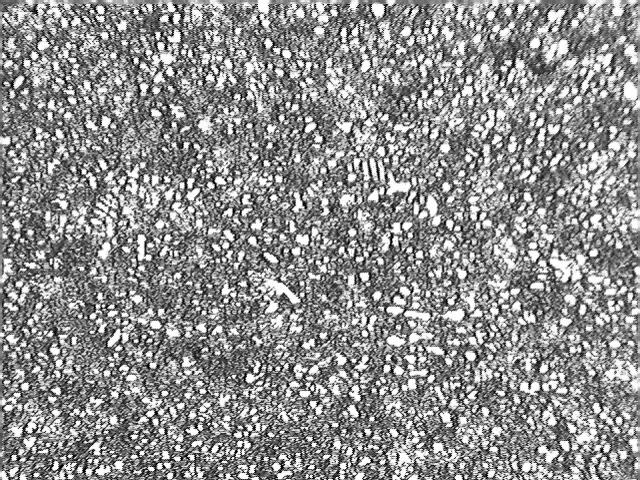
High Pressure Die Casting Workspace, 고압다이캐스팅

High Pressure Die Casting Workspace Highlights

  • 주입 정확도가 탁월합니다.
  • 전체 프로세스 모델링에는 고급 환기, PQ2 및 스프레이 냉각이 포함됩니다.
  • 동적 시뮬레이션 제어를 통해 동적 런타임 프로세스를 제어할 수 있습니다.
  • 최첨단 알루미늄 실리콘 합금 고형화입니다.

고압 다이 캐스팅 Workspace

고압 다이 캐스팅 Workspace은 엔지니어가 FLOW-3D CAST를 사용하여, 고압 다이 캐스팅 제품을 성공적으로 모델링할 수 있도록 설계된 직관적인 모델링 환경입니다.

FLOW-3D CAST v5.1은 첨단 다이 열 제어, 기계 파라미터 모델링,주입 및 배압 조건의 정확한 해석기능과 결합된 샷 슬리브 모션의 완전한 제어는 가장 까다로운 HPDC 시뮬레이션에 필요한 최적화된 솔루션입니다. HPDC Workspace에는 진보된 미세수축공 예측 및 후처리 기능 외에도 Al-Si 및 Al-Cu 기반 합금에 대한 최첨단 화학 기반 응고 및 재료 강도 모델이 포함되어 있습니다.

모델링된 프로세스

  • 고압 다이 주조
 

유연한 메시

  • FAVOR™ 간단한 메쉬 생성 도구
  • 멀티 블록 메시
  • 중첩 메시
 

다이 열 관리

  • 열 다이 사이클링
  • 열 포화도
  • 전체 열 전달 모델링
  • 스마트 냉각 채널 제어
  • 스프레이 냉각 경로 모델링
 

고급 응고

  • 다공성 예측
  • 수축
  • 핫스팟 식별
  • 기계적 특성 예측
  • 미세 구조 예측
 

국자 모션

  • 자유 모션 정의 6도
 

진공 및 환기

  • 대화형 프로브 배치
  • 지역 및 손실 계수 계산기
 

충전 정확도

  • 느리고 빠른 샷 모델링
  • 강화 압력 효과
  • 가스 및 버블 함정
  • 표면 산화물 계산
  • RNG 및 레 난류 모델
  • 역압력
 

결함 예측

  • 매크로 및 마이크로 다공성
  • 가스 다공성
  • 조기 응고
  • 산화물 형성
  • 표면 결함 분석
 

표면 결함 분석

  • PQ2 분석
  • 프로브 기반 트리거
  • 열 제어
  • 진공 및 환기 제어
 

전체 분석 패키지

  • 다중 뷰포트가 있는 애니메이션 – 3D, 2D, 기록 플롯, 볼륨 렌더링
  • 다공성 분석 도구
  • 나란히 시뮬레이션 결과 비교
  • 용융 온도, 고체 분획 측정을 위한 센서
  • 파티클 트레이서
  • 배치 후 처리
  • 보고서 생성

HPDC Part 1 – Thermal Die Cycling

Design workflow의 유연성


냉각 채널

  • 냉각 채널 기능
    -냉각 채널 제어
    -에너지 제거
    -열전대
    -시간 제어
    -HTC 계산기
    -HTC 데이터베이스

Thermal Die Cycle을 사용하는 이유

  • 다이캐스팅 시설의 표준 실무
  • 고품질의 부품을 얻기 위해서는 금형 온도가 중요
  • 급격한 온도 구배는 최종 주조제품에 다이 조각을 뒤틀리게하고 치수도 부정확해질 수 있음

시뮬레이션이 어떻게 도움이 되는가

  • 다이 전체의 열 분포 최적화
  • 냉각 채널의 효율성 평가
    -배치 및 전체 온도 제거에 대한 안목
  • 스프레이 냉각을 정확하게 모델링
    -다이 표면의 과도된 히트 맵
  • 필요한 온도까지 다이캐스팅 시간을 대폭 감소
  • TDC 스테이지 시간 단축 가능

FLOW-3D Cast 의 TDC 스테이지


스프레이 냉각

  • shot 사이에서 다이를 냉각하는데 사용
  • 적절한 다이의 성능을 보장
  • 프로그래밍이 가능한 로봇으로 수행

스프레이 냉각을 정확하게 모델링하는 것이 중요한 이유

  • 오래된 스프레이 모델은 전체 다이 캐비티에 걸친 일정한 HTC를 가정
    -공간적으로 변화하는 다이 냉각을 포착할 수 없음
    -시뮬레이션 파라미터를 설정하기 어려움
    -스프레이 냉각 디자인을 최적화할 수 없음

스프레이 냉각


High pressure die casting workspace:Advanced simulation options / 고압 다이캐스팅 workspace : 고급 시뮬레이션 옵션

고압 다이 캐스팅의 이점

  • 고압 다이캐스팅 기술은 매우 큰 경합금 부품을 대량으로 생산가능
  • 높은 정밀도, 우수한 표면 조도, 우수한 균일성 및 최적의 기계적 특성
  • 고압 다이캐스팅 공정은 또한 얇은 벽을 가진 부품과 스크류 및 라이너와 같은 다른 유형의 인서트를 가진 “공동 주조된”부품을 생산하여 제품 자체의 필수 부품이 될 수 있음

PQ2 해석

  • 다이 캐스팅 기의 기능과 게이트 속도를 일치시키는 표준 절차
  • 작동 시간은 충전 시간, 게이트 속도 및 금속 압력 등에 따라 다름
  • 기계 기능 내에서 유지되도록 샷 프로파일의 속도 변경
  • 정확한 샷 슬리브 모델링
  • No adjustment
  • With adjustment

Filling

Thermal die cycling

Spray cooling model

Filling with shot sleeve – fast shot activation

Solidification and porosity prediction

High Pressure Die Casting

Validations

Validations

금속 주조 설계 과정에서 FLOW-3D CAST의 사용은 회사의 비용 절감 방안을 제시하여 수익성을 개선할 수 있습니다. FLOW-3D CAST 는 엔지니어와 설계자에게 경험과 전문지식을 향상시킬 수 있는 강력한 도구가 될 수 있습니다. 보통 수익성은 비용 절감과 비용 회피에서 찾을 수 있습니다. 지금, 품질과 생산성 문제는 제품개발 단계에서 다양한 시뮬레이션 통해 짧은 공정시간, 낮은 비용으로 해결 할 수 있는 방안을 찾을 수 있습니다. 새로운 개발도구인 FLOW-3D CAST의 효율성은 생산이 시작되기 전에 문제를 해결할 수 있는 방안을 제시하여 생산성을 크게 개선할 수 있습니다.

Ladle Pour

샷 슬리브 공정을 최적화하는 것은 고품질 부품을 확보하는 데 필수적입니다. FLOW-3D CAST의 시뮬레이션 결과와 실제 사례의 비교를 통해, 시뮬레이션을 사용하여 엔지니어가 값 비싼 툴링을 제작하기 전에 설계를 개선하는 방법을 강조합니다. FLOW-3D CAST는 프로세스 전반에 걸쳐 유체의 움직임을 정확하게 포착할 수 있으므로, 엔지니어가 실제 레들 주입 공정에서 신속하게 파악할 수 있습니다. 시뮬레이션은 Nemak Poland Sp. z o.o로부터 제공받았습니다.

Gravity Casting

열전대 데이터를 기반으로 한 실제 충진 재구성과 비교 한 중력 주조 시뮬레이션. Courtesy of XC Engineering and Peugeot PSA.

Foundry: Simulating a Flow Fill Pattern


사형 주조 충진중의 X- 레이 검증

X -레이 결과와 FLOW-3D CAST 시뮬레이션 결과를 나란히 비교합니다. A356 알루미늄 합금으로 사형 주조의 3 차원 충진 색상은 금속의 압력을 나타냅니다. 시뮬레이션 결과는 수직 대칭 평면에 표시됩니다. Modeling of Casting, Welding, and Advanced Solidification Processes VII, London, 1995.

HPDC: Flow Pattern


Short sleeve validation – 시뮬레이션 결과와 주조 부품, Littler Diecast Corporation의 예

Modeling Air Entrapment


디젤 엔진 용 오일 필터 하우징의 X-ray vs. FLOW-3D CAST 검증.

디젤 엔진 용 오일 필터 하우징의 X- 레이 검증, 380 다이캐스팅 합금. 결과는 혼입 된 공기의 비율로 표시됩니다. X- 레이의 상세한 영역은 최대 다공도 농도를 나타냅니다.

HPDC Filling


FLOW-3D 결과를 실제 부품과 비교하는 HPDC 캐스팅 검증

Short Shot Simulation


실제 주조 부품의 유효성 검사. 스냅 샷과 FLOW-3D CAST 시뮬레이션 결과. 왼쪽에서 오른쪽으로 : 변속기 하우징, 오일 팬 및 자동차 부품.

HPDC Air Entrapment Defects


Antrametal에 의한 주조 시뮬레이션 대 실험 결과의 성공적인 비교.

Antmetetal의 고객 검증은 FLOW-3D CAST의 Air Entrapment 모델을 사용하여 실험 결과와 시뮬레이션을 비교 한 결과를 보여줍니다. 세탁기 용 전동 모터의 앞 커버의 HPDC입니다. 공기 관련 결함은 이미지의 색상에 정 성적으로 표시됩니다. FLOW-3D CAST 내의 다른 수치 기능에 의해 포착 된 물리적 공기 포켓 또한 명확하게 표현됩니다.

Core Drying


시뮬레이션과 무기 코어의 건조 실험 사이의 BMW에 의한 비교.

Predicting Die Erosion


캐비테이션으로 인한 다이 침식 영역은 FLOW-3D CAST 결과를 실제 사례와 비교하여 올바르게 배치되었습니다.

Predicting Lost Foam Filling


Lost foam L850 블록 벌크 헤드 슬라이스에 대한 실시간 X-ray 및 FLOW-3D CAST 유동 시뮬레이션 결과의 비교. 시뮬레이션은 GM Powertrain의 예입니다.

Porosity Defects


Porosity due to entrained air

Predicting Shrinkage Porosity


A380 diesel engine block casting


FLOW-3D CAST Suites

FLOW-3D CAST Suites

FLOW-3D CAST v5 comes in Suites of relevant casting processes: 

HIGH PRESSURE DIE CASTING SUITE

Process Workspace

High Pressure Die Casting

Features

Thermal Die Cycling
– Cooling/heating channels
– Spray cooling
Filling
– Shot sleeve with Plunger
– Shot motion
– Ladles, stoppers
– Venting efficiency
– PQ^2 analysis
– HPDC machine database
Solidification
– Squeeze pins
Cooling


PERMANENT MOLD CASTING SUITE

Process Workspaces

Permanent Mold Casting
Low Pressure Die Casting
Tilt Pour Casting

Features

Thermal Die Cycling
– Cooling/heating channels
Filling
– Tilt pouring
Solidification
– Squeeze pins
Cooling


SAND CASTING SUITE

Process Workspaces

Sand Casting
Low Pressure Sand Casting

Features

Filling
– Permeable molds
– Moisture evaporation in molds
– Gas generation in cores
– Ladle model
Solidification
– Exothermic sleeves
– Chills
– Cast iron solidification
Cooling


LOST FOAM CASTING SUITE

Process Workspaces

Lost Foam
Sand Casting
Low Pressure Sand Casting

Features

Filling
– Permeable molds
– Moisture evaporation in molds
– Gas generation in cores
– Ladle model
– Lost foam pattern evaporation models (Fast model and Full model)
– Lost foam defect prediction
Solidification
– Exothermic sleeves
– Chills
– Cast iron solidification
Cooling


ALL SUITES INCLUDE THESE CORE FEATURES:

Solver Engine

  • TruVOF – The most accurate filling simulation tool in the industry
  • Heat transfer and solidification
  • Shrinkage – Rapid Shrinkage model and Shrinkage with flow model
  • Temperature dependent properties
  • Multi-block meshing including conforming meshes
  • Turbulence models
  • Non-Newtonian viscosity (shear thinning/thickening, thixotropic)
  • Flow tracers
  • Active Simulation Control with Global Conditions
  • Surface tension model
  • Thermal stress analysis with warpage
  • General moving geometry w/6 DOF

FlowSight

  • Multi-case analysis
  • Porosity analysis tool

Defect Prediction Tools

  • Gas entrainment model
  • Thermal Modulus output
  • Hot Spot identification
  • Micro and macro porosity prediction
  • Surface defect prediction
  • Shrinkage
  • Cavitation and Cavitation Potential
  • Particle models (Inclusion modeling, collapsed bubble tracking)

User Conveniences

  • Process-oriented workspaces
  • Configurable Simulation Monitor
  • Metal and solid material databases
  • Heat transfer database
  • Filter database
  • Remote solving queues
  • Quick Analyze/Display tool

ALL NEW FLOW-3D CAST v5

ALL NEW FLOW-3D CAST v5

ALL NEW FLOW-3D CAST v5 는 금속 주조 시뮬레이션 및 공정 모델링에 있어 큰 발전입니다. 이제 FLOW-3D CAST는 시뮬레이션 할 프로세스를 선택할 수 있으며, 소프트웨어는 적절한 프로세스 매개 변수, 지오메트리 유형 및 합리적인 기본 값을 제공합니다. 이렇게 하면 시뮬레이션 설정이 상당히 간소화됩니다. 또한 FLOW-3D CAST의 강력한 시뮬레이션 엔진과 결함 예측을 위한 새로운 도구는 설계 주기를 단축하고 비용을 절감하는 통찰력을 제공합니다. 대표적인 개발 기능으로 응고 시뮬레이션을 위한 열 계수 및 핫 스팟 식별 출력, 갇혀 있는 가스를 식별하고 환기 효율을 예측하기 위한 결함 채우기 도구 등이 포함됩니다. 그리고 더 빠르고 더 강력한 압력과 및 응력 해소 기능이 모두 포함합니다.

ALL NEW FLOW-3D CAST v5 는 관련 프로세스가 포함된 Suite제품으로 제공됩니다. 영구 금형 제품군은 중력 다이 캐스팅, 저압 다이캐스팅(LPDC), 틸트 주입 주조와 같은 프로세스 작업 공간을 포함합니다. 각 프로세스에 대해 사용자 인터페이스는 특정 프로세스와 관련된 내용만 표시합니다. 모래 주조 Suite에는 중력 사형 주조 및 저압 사형 주조(LPSC)와 같은 프로세스가 포함되어 있습니다. 소실 폼 제품 군에는 사형 주조 Suite의 모든 것과 소실 폼 공정 작업 공간이 포함됩니다. HPDC 제품군은 열 응력 및 변형을 포함하여 고압 다이 캐스팅과 관련된 모든 것을 포함합니다. 각 프로세스 작업 공간 내에서 채우기, 응고 및 냉각과 같은 하위 프로세스는 서로 연결된 시뮬레이션으로, 처음부터 끝까지 차례로 전체 프로세스를 모델링 합니다. 사용자가 그것을 작업장 바닥에서 하는 것처럼. 사용자는 레들을 용융 풀 안에 담갔다가, 숏 슬리브 또는 주입 컵에 옮겨, 전체 이동 및 주입과 같은 단계를 포함하도록 프로세스를 확장할 수 있습니다. LPDC의 경우 프로세스 엔지니어는 도가니의 가압 및 금속 흐름을 주형으로 모델링 할 수 있습니다.  FLOW-3D CAST v5를 사용하면 가능성이 무한해 집니다.

WYSIWYN Process Workspaces

What-You-See-Is-What-You-Need (WYSIWYN) 프로세스 작업 공간은 FLOW-3D CAST의 다기능성을 간소화하여 사용 편의성과 탁월한 솔루션입니다. 대부분의 인터페이스는 사용자가 제공해야 하는 정보만을 요구하고, 사용자 설계 원칙을 적용하여 단순화되었습니다.

FLOW-3D CAST v4.2에 도입된 프로세스 중심 작업 공간은 중력 다이 주조, 저압 주조 및 경사 주입, 모래 등과 같은 영구 금형 공정으로 확장되었습니다. 중력 모래 주조, 저압 모래 주조 및 소실 폼과 같은 주조 공정 지속적인 주조, 투자 주조, 모래 코어 제작, 원심 주조를 포함한 더 많은 공정 작업 공간이 현재 진행 중에 있습니다.

Simulation setup is simplified by only showing the components applicable for a given process.

Types of casting components available in a HPDC simulation. Mold pieces available in a high pressure die casting include cover and ejector dies, sliders, and shot sleeves.

Defect Prediction / 결함 예측

Identify Filling Defects using Particles  결함 예측 및 입자를 이용한 주입 결함 식별

파티클을 사용하는 FLOW-3D CAST v5를 통해 유입된 가스로 인한 충전 결함을 식별하는 것이 훨씬 쉬워 졌습니다. 결함을 식별하기가 훨씬 용이할 뿐만 아니라, 결함 예측에 따른 계산 비용도 크게 절감되었습니다.

붕괴된 가스 지역을 나타내는 보이드 입자가 도입되었습니다. 이전에 붕괴된 가스 영역은 너무 압축되어 수치 메쉬에서 해결할 수 없으면 시뮬레이션에서 사라졌습니다. 보이드 입자는 작은 기포처럼 작용하며 드래그와 압력을 통해 금속과 상호 작용합니다. 주변의 금속 압력에 따라 크기가 변하며, 주입이 끝난 후 최종 위치를 보면 공기 침투 및 산화물로 인한 잠재적인 결함이 있음을 알 수 있습니다.

Predict filling defects caused by entrapped gas using the Particle Model.

Metal/Wall Contact Time 금속/벽 접촉 시간

벽면 접촉 시간은 금형 표면에서 다른 부위보다 금속에 더 오래 노출된 부위를 식별하는 데 유용합니다. 금속 접촉 시간은 금속이 고체 구성 요소와 접촉한 시간을 나타냅니다. 예를 들어 모래 입자가 핵분해 부위의 역할을 하기 때문에 미세 먼지가 발생할 수 있습니다. 개별 솔리드 구성 요소와의 금속 접촉 시간 출력이 모든 구성 요소와의 접촉 시간을 포함하도록 확장되었습니다. 접촉 시간 계산은 출력 탭에서 벽 접촉 시간을 선택하여 활성화합니다.

Identify solidification defects with the new Thermal Modulus output.

Solidification Defect Identification 응고 결함 식별

일반적으로 라이저 크기 조정에 사용되는 열 모듈은 이제 응고 시뮬레이션에서 출력됩니다.

Risers will likely need to be placed on the circled regions.

Hot Spots  핫 스팟

또 다른 결과인 “핫 스팟”은 라이저를 찾고 크기를 조정하며, 응고 관련 결함의 가능성을 식별하는 데 유용합니다. 핫 스팟은 최종적으로 응고된 부위를 나타냅니다. 이것들은 입자들로 표현되고 뜨거운 점 크기에 의해 색깔이 변하기도 합니다. 라이저는 핫 스팟 크기가 가장 큰 곳에 배치해야 합니다.

Porosity Analysis Tool

FlowSight의 새로운 Porosity Analysis Tool은 실제적인 측면에서 porosity-related 결점을 식별합니다. 결점은 이제 순 볼륨, 최대 선형 범위, 모양 인자 및 total count로 식별됩니다.

New defect identification tools allow users to analyze porosity.

Arbitrary 2D Clips 임의 2D 클립

기능 지향적인 2D 클립은 결함을 찾기 위해 전면적으로 살펴 볼 때 유용합니다. 이전에는 클립에 표시된 금속 영역이 솔리드에 의해 점유된 셀로 확장되었습니다. 잡식의 FLOW-3D CAST v5에서 이 클립은 구성 요소를 숨기는 옵션을 선택해야만 열린 공간(예:주조 부품)의 금속을 보여 줄 수 있습니다.

Intensification Pressure 강화 압력

고압 주조 시뮬레이션에 지정된 강화 압력은 이제 매크로 및 마이크로 Porosity모델 모두에 결합되어 형성 사이의 보다 현실적인 관계를 형성합니다. 이러한 결함의 크기 및 플런저에 의해 가해지는 압력의 크기입니다.

Adjusting Shrinkage Porosity 수축 기공 조절

사용자가 금속의 특성을 수정할 필요 없이 수축 다공성의 양과 크기를 미세 조정할 수 있도록 수축 조정 계수가 추가되었습니다. 계수를 사용하면 응고 중에 체적 수축의 양을 전화로 설정하거나 줄일 수 있습니다.

Gas Pressure and Venting Efficiency  가스 압력 및 밴트 효율성 검토

사용자가 충전 결함을 식별하고 다이캐스트에서 밴트 시스템을 설계하는 데 도움을 주기 위해 마지막 국부적인 가스 압력 및 밴트 효율성 검토 결과가 주조 시뮬레이션 출력에 추가되었습니다. 가스 압력은 셀이 금속으로 채워지기 전에 셀의 마지막 보이드 압력을 기록하며, 밴트 효율은 환기구를 배치하는 것이 밴트 위치에서 공기를 배출하는 데 가장 효율적인 영역을 보여 줍니다.

Databases 데이터베이스

주조 공정에서 일반적으로 사용되는 정보의 데이터베이스는 설정 오류를 줄이고 시뮬레이션 workflow 를 개선합니다.

Configurable Simulation Monitor 구성 가능한 시뮬레이션 모니터

시뮬레이션을 실행할 때 발생하는 중요하지만 종종 힘든 작업은 시뮬레이션을 모니터링하는 것입니다. FLOW-3D CAST를 사용하면 다음과 같은 일반적인 시뮬레이션 목표를 모니터링할 수 있습니다.

  • 게이트 속도
    주형 내 고상 분율
    최저/최고 용탕 온도 및 금형 온도
    다양한 프로브 위치에서의 온도
    시뮬레이션 진단(예:시간 스텝, 안정성 한계)

Plotting Capabilities  Plotting기능

이제 시뮬레이션 관리자에는 더 많은 플롯 기능이 포함됩니다. 플롯은 사용자가 구성할 수 있으며 구성은 다른 시뮬레이션에서 사용하기 위해 데이터베이스에 저장됩니다. 사용자는 시뮬레이션 런타임 그래프와 history-data 에서 모니터링할 이력 데이터 변수를 지정할 수 있습니다. 다중 변수를 각 그래프에 입력합니다.

Conforming Meshes

임의 형상의 활성 계산 영역을 정의할 수 있도록 적합한 메쉬 기능이 확장되었습니다. 이는 메쉬 블록이 준수할 수 있는 열린 볼륨과 솔리드 볼륨을 모두 포함하여 계산 도메인의 영역을 정의하는 meshing구성 요소라고 하는 새로운 유형의 지오메트리 구성 요소를 사용합니다.
메쉬 블록은 냉각 채널이나 공동에 선택적으로 조합할 수 있어 사용자가 이러한 기하학적 객체에 대해 최적의 해상도를 선택할 수 있습니다. 이제 확인할 수 있는 메쉬가 FAVORize 탭에 표시될 수 있습니다.

Summary Views of Components/Cooling Channels

FLOW-3D CAST v5의 인터페이스는 주조 시뮬레이션에서 다양한 형상 구성 요소를 꽉 차게 보여줍니다. 2개의 새로운 형상 요약 뷰인 구성 요소 요약 뷰와 냉각 채널 요약 뷰는 기하학적 구성 요소 및 냉각 채널의 플라이 아웃을 제공하여 사용자가 신속하게 수행할 수 있도록 합니다. 중요 설정을 한 눈에 파악하고 필요한 경우 변경 할 수 있습니다.

Under the Hood

FLOW-3D CAST의 많은 강력한 구성 요소들은 Solver Engine이라고 부르는 것 들에서 중요합니다. 아래에서는 이면에서 무거운 작업을 수행하는 데 도움이 되는 몇가지 중요한 사항을 설명합니다.

Thermal Die Cycling (TDC) Model TDC(열 다이 사이클)모델

열 다이 사이클 시뮬레이션의 주입/응고 단계는 균일하지 않은 캐비티 온도를 사용하여 개선할 수 있습니다. 이제 캐비티에 있는 금속의 초기 온도는 재시작 중에 채우기 시뮬레이션을 통해 지정하거나 초기 유체 영역을 사용하는 사용자 정의 분포에서 지정할 수 있습니다. 이 기능은 옵션으로 사용할 수 있는 균일한 초기 금속 온도에 비해 다이 사이클링의 열해석의 정확성과 현실성을 높여줍니다.

Melt temperatures in the casting cavity read from a filling simulation are applied to ejector die during filling/solidification stage of thermal die cycling simulation.

Heat Transfer Coefficient Calculator for Spray Cooling 분사 냉각을 위한 열 전달 계수 계산기

스프레이 유체와 다이 표면 사이의 열 전달 계수(HTC)를 추정하는 것은 어려운 일입니다. 계산 또는 측정을 통해 값을 사용할 수 있는 경우 사용자는 이러한 값을 스프레이 거리 및 각도의 함수로 직접 지정할 수 있습니다. 새로운 기능을 통해 노즐의 스프레이 액의 유량을 기준으로 HTC를 동적으로 계산할 수 있습니다. 단일 조정 계수를 통해 스프레이 유출량을 기준으로 HTC를 미세 조정할 수 있습니다.

FLOW-3D CAST 소개

FLOW-3D CAST

FLOW-3D CAST는 광범위한 금속 주조 공정을 위한 완벽한 해석 솔루션을 제공합니다. 시뮬레이션을 통해 다양한 종류의 다공성, 표면 산화물, 공기 및 기포, 열 응력 및 변형 등과 같은 다양한 결함을 추적하면서, 주조 부품의 충진 및 응고에 대한 상세한 통찰력을 제공합니다. 금형을 분석하거나 FLOW-3D CAST로 코어의 가스 처리 같은 열 특성 및 기타 특성을 제거 할 수 있습니다.

최적화된 시뮬레이션을 통한 설계는 생산 현장에서의 개발 시간이 단축되고 출시 시간이 단축되며 생산량이 늘어나게 됩니다. FLOW-3D CAST는 담당자가 새로운 주조 공정 또는 합금을 배치 할 때 설계 및 개발 비용을 절감 할 수 있습니다.

직관적이고 편의성 높은 사용자 인터페이스를 결합한 FLOW-3D CAST는 성공적인 프로젝트를 통해 충진 및 응고 결함에 대한 정확한 예측을 제공합니다. 공정 요구 사항에 가장 적합한 샌드 캐스팅, 금형 주조 및 고압 다이 캐스팅을 사용할 수 있습니다.

High Performance Computing: in-House or in the Cloud

대규모 시뮬레이션의 경우 많은 계산 시간이 필요하게 되는데 이를 극복하기 위한 최고의 컴퓨팅 성능이 필요하십니까? FLOW-3D CAST는 필요 시 고성능 클라우드 컴퓨팅 환경인 클러스터 버전으로 손 쉽게 전활할 수 있습니다.

Courtesy Littler Diecasting Corporation

금속 주조 애플리케이션은 매우 어려운 시뮬레이션 중 하나입니다. 관련된 물리학의 복잡성과 적용 범위, 박막 주조, 주조 장비 정교함 등 고객의 높은 눈높이가 증가함에 따라 FLOW-3D CAST도 이를 충족하기 위한 다양한 솔루션과 기능을 제공합니다. 사형 주조, LPDC, HPDC, LostForm, 원심주조 등 FLOW-3D CAST사용자 인터페이스 안에는 고유의 전용 모델링 워크 플로우가 있습니다.

FLOW-3D CAST는 매우 정확한 흐름과 응고 결과를 통해 표면 산화물, 발생 기포, 매크로 및 미세 극성을 포함한 중요한 주조 결함을 포착할 수 있습니다. 다른 고유한 모델링 기능으로는 로봇 스프레이 냉각 및 윤활을 모델링 할 수 있는 열 다이 사이클링, 샷 슬리브 흐름 프로파일, 압착 핀 및 열 스트레스가 있습니다.

Customer Case Studies

금속 주물의 결함 식별, 보다 가볍고 강한 주조 부품을 위한 새로운 재료로 부품 설계 또는 최적 설계를 위한 반복 설계 작업은 다음과 같은 방법 중 일부입니다. 고객은 당사의 소프트웨어를 사용하여 작업 요구 사항을 충족하고 폐기율을 줄이고 시장 진출 시간을 단축하며 경쟁 업체보다 앞서 나감으로써 조직을 위한 비용을 절감합니다.

“ The more you can do on a computer ahead of time, the better. It all comes down to saving time.”

“컴퓨터에서 좀 더 많은 것을 할 수 있으면 더욱 좋습니다. 모든 것은 시간 절약에 달려있습니다.”

– Elizabeth Ryder of Graham-White Manufacturing Co.

Coating Bibliography

아래는 코팅 참고 문헌의 기술 문서 모음입니다. 
이 모든 논문은 FLOW-3D  결과를 포함하고 있습니다. FLOW-3D를 사용하여 코팅 공정을 성공적으로 시뮬레이션  하는 방법에 대해 자세히 알아보십시오.

Coating Bibliography

2024년 11월 20일 Update

98-24 Fabiano I. Indicatti, Bo Cheng, Michael Rädler, Elisabeth Stammen, Klaus Dilger, Experimental and numerical investigation of the squeegee process during stencil printing of thick adhesive sealings, The Journal of Adhesion, 2024. doi.org/10.1080/00218464.2024.2356105

130-22   Md Didarul Islam, Himendra Perera, Benjamin Black, Matthew Phillips, Muh-Jang Chen, Greyson Hodges, Allyce Jackman, Yuxuan Liu, Chang-Jin Kim, Mohammed Zikry, Saad Khan, Yong Zhu, Mark Pankow, Jong Eun Ryu, Template-free scalable fabrication of linearly periodic microstructures by controlling ribbing defects phenomenon in forward roll coating for multifunctional applications, Advanced Materials Interfaces, 9.27; 2201237, 2022. doi.org/10.1002/admi.202201237

03-21   Delong Jia, Peng Yi, Yancong Liu, Jiawei Sun, Shengbo Yue, Qi Zhao, Effect of laser­ textured groove wall interface on molybdenum coating diffusion and metallurgical bonding, Surface and Coatings Technology, 405; 126561, 2021. doi.org/10.1016/j.surfcoat.2020.126561

50-19     Peng Yi, Delong Jia, Xianghua Zhan, Pengun Xu, and Javad Mostaghimi, Coating solidification mechanism during plasma-sprayed filling the laser textured grooves, International Journal of Heat and Mass Transfer, Vol. 142, 2019. doi:10.1016/j.ijheatmasstransfer.2019.118451

01-19   Jelena Dinic and Vivek Sharma, Computational analysis of self-similar capillary-driven thinning and pinch-off dynamics during dripping using the volume-of-fluid method, Physics of Fluids, Vol. 31, 2019. doi: 10.1063/1.5061715

85-18   Zia Jang, Oliver Litfin and Antonio Delgado, A semi-analytical approach for prediction of volume flow rate in nip-fed reverse roll coating process, Proceedings in Applied Mathematics and Mechanics, Vol. 18, no. 1, Special Issue: 89th Annual Meeting of the International Association of Applied Mathematics and Mechanics, 2018. doi: 10.1002/pamm.201800317

80-14   Hiroaki Koyama, Kazuhiro Fukada, Yoshitaka Murakami, Satoshi Inoue, and Tatsuya Shimoda, Investigation of Roll-to-Sheet Imprinting for the Fabrication of Thin-film Transistor Electrodes, IEICE TRAN, ELECTRON, VOL.E97-C, NO.11, November 2014

46-14   Isabell Vogeler, Andreas Olbers, Bettina Willinger and Antonio Delgado, Numerical investigation of the onset of air entrainment in forward roll coating, 17th International Coating Science and Technology Symposium September 7-10, 2014 San Diego, CA, USA

17-12  Chi-Feng Lin, Bo-Kai Wang, Carlos Tiu and Ta-Jo Liu, On the Pinning of Downstream Meniscus for Slot Die Coating, Advances in Polymer Technology, Vol. 00, No. 0, 1-9 (2012) © 2012 Wiley Periodicals, Inc. Available online at Wiley.

01-11  Reid Chesterfield, Andrew Johnson, Charlie Lang, Matthew Stainer, and Jonathan Ziebarth, Solution-Coating Technology for AMOLED Displays, Information Display Magazine, 1/11 0362-0972/01/2011-024 © SID 2011.

61-09 Yi-Rong Chang, Chi-Feng Lin and Ta-Jo Liu, Start-up of slot die coating, Polymer Engineering and Science, Vol. 49, pp. 1158-1167, 2009. doi:10.1002/pen.21360

26-06  James M. Brethour, 3-D transient simulation of viscoelastic coating flows, 13th International Coating Science and Technology Symposium, September 2006, Denver, Colorado

19-06  Ivosevic, M., Cairncross, R. A., and Knight, R., 3D Predictions of Thermally Sprayed Polymer Splats Modeling Particle Acceleration, Heating and Deformation on Impact with a Flat Substrate, Int. J. of Heat and Mass Transfer, 49, pp. 3285 – 3297, 2006

9-06  M. Ivosevic, R. A. Cairncross, R. Knight, T. E. Twardowski, V. Gupta, Drexel University, Philadelphia, PA; J. A. Baldoni, Duke University, Durham, NC, Effect of Substrate Roughness on Splatting Behavior of HVOF Sprayed Polymer Particles Modeling and Experiments, International Thermal Spray Conference, Seattle, WA, May 2006.

26-05  Ivosevic, M., Cairncross, R. A., Knight, R., Impact Modeling of Thermally Sprayed Polymer Particles, Proc. International Thermal Spray Conference [ITSC-2005], Eds., DVS/IIW/ASM-TSS, Basel, Switzerland, May 2005.

11-05  Brethour, J., Simulation of Viscoelastic Coating Flows with a Volume-of-fluid Technique, in Proceedings of the 6th European Coating Symposium, Bradford, UK, 2005

1-05 C.W. Hirt, Electro-Hydrodynamics of Semi-Conductive Fluids: With Application to Electro-Spraying, Flow Science Technical Note #70, FSI-05-TN70

38-04 K.H. Ho and Y.Y. Zhao, Modelling thermal development of liquid metal flow on rotating disc in centrifugal atomisation, Materials Science and Engineering, A365, pp. 336-340, 2004. doi:10.1016/j.msea.2003.09.044

30-04  M. Ivosevic, R.A. Cairncross, and R. Knight, Impact Modeling of HVOF Sprayed Polymer Particles, Presented at the 12th International Coating Science and Technology Symposium, Rochester, New York, September 23-25, 2004

29-04  J.M. Brethour and C.W. Hirt, Stains Arising from Dried Liquid Drops, Presented at the 12th International Coating Science and Technology Symposium, Rochester, New York, September 23-25, 2004

20-03  James Brethour, Filling and Emptying of Gravure Cells–A CFD Analysis, Convertech Pacific October 2002, Vol. 10, No 4, p 34-37

4-03   M. Toivakka, Numerical Investigation of Droplet Impact Spreading in Spray Coating of Paper, In Proceedings of 2003 TAPPI 8th Advanced Coating Fundamentals Symposium, TAPPI Press, Atlanta, 2003

28-02  J.M. Brethour and H. Benkreira, Filling and Emptying of Gravure Cells—Experiment and CFD Comparison, 11th International Coating Science and Technology Symposium, September 23-25, 2002, Minneapolis, Minnesota

22-02  Hirt, C.W., and Brethour, J.M., Contact Line on Rough Surfaces with Application to Air Entrainment, Presented at the 11th International Coating Science and Technology Symposium, September 23-25, 2002, Minneapolis, Minnesota. Unpublished.

17-01  J. M. Brethour, C. W. Hirt, Moving Contact Lines on Rough Surfaces, 4th European Coating Symposium, 2001, Belgium

16-01  J. M. Brethour, Filling and Emptying of Gravure Cells–-A CFD Analysis, proceedings of the 4th European Coating Symposium 2001, October 1-4, 2001, Brussels, Belgium

26-00 Ronald H. Miller and Gary S. Strumolo, A Self-Consistent Transient Paint Simulation, Proceedings of IMEC2000: 2000 ASME International Mechanical Engineering Congress and Exposition, November 2000, Orlando, Florida

6-99  C. W. Hirt, Direct Computation of Dynamic Contact Angles and Contact Lines, ECC99 Coating Conference, Erlangen, Germany (FSI-99-00-2), Sept. 1999

7-98 J. E. Richardson and Y. Becker, Three-Dimensional Simulation of Slot Coating Edge Effects, Flow Science Inc, and Polaroid Corporation, presented at the 9th International Coating Science and Technology Symposium, Newark, DE, May 18-20, 1998

6-98  C. W. Hirt and E. Choinski, Simulation of the Wet-Start Process in Slot Coating, Flow Science Inc, and Polaroid Corporation, presented at the 9th International Coating Science and Technology Symposium, Newark, DE, May 18-20, 1998

3-97  C. W. Hirt and J. E. Richardson of Flow Science Inc, and K.S. Chen, Sandia National Laboratory, Simulation of Transient and Three-Dimensional Coating Flows Using a Volume-of-Fluid Technique, presented at the 50th Annual Conference of the Society for Imaging and Science Technology, Boston, MA 18-23 May 1997

2-96 C. W. Hirt, K. S. Chen, Simulation of Slide-Coating Flows Using a Fixed Grid and a Volume-of-Fluid Front-Tracking Technique, presented a the 8th International Coating Process Science & Technology Symposium, February 25-29, 1996, New Orleans, LA

Metal Casting Bibliography

다음은 금속 주조 참고 문헌의 기술 문서 모음입니다. 
이 모든 논문은 FLOW-3D  CAST  결과를 포함하고 있습니다. FLOW-3D  CAST 를 사용하여 금속 주조 산업의 어플리케이션을 성공적으로 시뮬레이션  하는 방법에 대해 자세히 알아보십시오.

2024년 11월 20일 Update

93-24 Benedict Baumann, Andreas Kessler, Claudia Dommaschk, Gotthard Wolf , Influence of filter structure and casting system on filtration efficiency in aluminum mold casting, Multifunctional Ceramic Filter Systems for Metal Melt Filtration, Eds. C.G. Aneziris, H. Biermann, Springer Series in Materials Science, 337; 2024. doi.org/10.1007/978-3-031-40930-1_28

93-24 Benedict Baumann, Andreas Kessler, Claudia Dommaschk, Gotthard Wolf , Influence of filter structure and casting system on filtration efficiency in aluminum mold casting, Multifunctional Ceramic Filter Systems for Metal Melt Filtration, Eds. C.G. Aneziris, H. Biermann, Springer Series in Materials Science, 337; 2024. doi.org/10.1007/978-3-031-40930-1_28

87-24 Rahul Jayakumar, T.P.D. Rajan, Sivaraman Savithri, A GPU based accelerated solver for simulation of heat transfer during metal casting process, Modelling and Simulation in Materials Science and Engineering, 32.5; 055013, 2024. doi.org/10.1088/1361-651X/ad4406

46-24 Masyrukan, Irwan Mawarda, Sunardi Wiyono, Bibit Sugito, Ummi Kultsum, Dessy Ade Pratiwi, Desi Gustiani, Nur Annisa Istiqamah, The effect of differences in in-gate diameter size on the structure and mechanical properties of aluminum (Al) castings in pipe products with a red sand mold, AIP Conference Proceedings, 2838.1; 2024. doi.org/10.1063/5.0185773

43-24 German Alberto Barragán De Los Rios, Silvio Andrés Salazar Martínez, Emigdio Mendoza Fandiño, Patricia Fernández-Morales, Numerical simulation of aluminum foams by space holder infiltration, International Journal of Metalcasting, 2024. doi.org/10.1007/s40962-024-01287-8

40-24 Bin Zhang, Gary P. Grealy, Thermomechanical modeling on AirSlip® billet DC casting of high-strength crack-prone aluminum alloys, Light Metals 2024, Eds. S. Wagstaff, pp. 1015-1025, 2024. doi.org/10.1007/978-3-031-50308-5_128

35-24 Balaji Chandrakanth, Ved Prakash, Adwaita Maiti, Diya Mukherjee, Development of triply periodic minimal surface (TPMS) inspired structured cast iron foams through casting route, International Journal of Metalcasting, 2024. doi.org/10.1007/s40962-023-01247-8

19-24   Diya Mukherjee, Himadri Roy, Balaji Chandrakanth, Nilrudra Mandal, Sudip Kumar Samanta, Manidipto Mukherjee, Enhancing properties of Al-Zn-Mg-Cu alloy through microalloying and heat treatment, Materials Chemistry and Physics, 314; 128881, 2024. doi.org/10.1016/j.matchemphys.2024.128881

46-24 Masyrukan, Irwan Mawarda, Sunardi Wiyono, Bibit Sugito, Ummi Kultsum, Dessy Ade Pratiwi, Desi Gustiani, Nur Annisa Istiqamah, The effect of differences in in-gate diameter size on the structure and mechanical properties of aluminum (Al) castings in pipe products with a red sand mold, AIP Conference Proceedings, 2838.1; 2024. doi.org/10.1063/5.0185773

43-24 German Alberto Barragán De Los Rios, Silvio Andrés Salazar Martínez, Emigdio Mendoza Fandiño, Patricia Fernández-Morales, Numerical simulation of aluminum foams by space holder infiltration, International Journal of Metalcasting, 2024. doi.org/10.1007/s40962-024-01287-8

40-24 Bin Zhang, Gary P. Grealy, Thermomechanical modeling on AirSlip® billet DC casting of high-strength crack-prone aluminum alloys, Light Metals 2024, Eds. S. Wagstaff, pp. 1015-1025, 2024. doi.org/10.1007/978-3-031-50308-5_128

35-24 Balaji Chandrakanth, Ved Prakash, Adwaita Maiti, Diya Mukherjee, Development of triply periodic minimal surface (TPMS) inspired structured cast iron foams through casting route, International Journal of Metalcasting, 2024. doi.org/10.1007/s40962-023-01247-8

19-24   Diya Mukherjee, Himadri Roy, Balaji Chandrakanth, Nilrudra Mandal, Sudip Kumar Samanta, Manidipto Mukherjee, Enhancing properties of Al-Zn-Mg-Cu alloy through microalloying and heat treatment, Materials Chemistry and Physics, 314; 128881, 2024. doi.org/10.1016/j.matchemphys.2024.128881

181-23   Daichi Minamide, Ken’ichi Yano, Masahiro Sano, Takahiro Aoki, Overflow design system to decrease gas defects considering the direction of molten metal flow, 3rd International Conference on Electrical, Computer, Communications and Mechatronics Engineering (ICECCME), pp. 1-6, 2023. doi.org/10.1109/ICECCME57830.2023.10253413

102-23 Daichi Minamide, Ken’ichi Yano, Masahiro Sano, Takahiro Aoki, Automatic design of overflow system for preventing gas defects by considering the direction of molten metal flow, Computer-Aided Design, 163; 103586, 2023. doi.org/10.1016/j.cad.2023.103586

87-23 Prosenjit Das, Optimisation of melt pouring temperature and low superheat casting of Al-15Mg2Si-4.5Si composite, International Journal of Cast Metals Research, 36.1-3; 2023. doi.org/10.1080/13640461.2023.2211895

60-23   Yuanhao Gu, Feng Wang, Jian Jiao, Zhi Wang, Le Zhou, Pingli Mao, Zheng Liu, Study on semisolid rheo-diecasting process, microstructure and mechanical properties of Mg-6Al-1Ca-0.5Sb alloy with high solid fraction, International Journal of Metalcasting, 2023. doi.org/10.1007/s40962-023-01001-0

48-23   Patricia Fernández‑Morales, Lauramaría Echeverrí, Emigdio Mendoza Fandiño, Alejandro Alberto Zuleta Gil, Replication casting and additive manufacturing for fabrication of cellular aluminum with periodic topology: optimization by CFD simulation, The International Journal of Advanced Manufacturing Technology, 26; pp. 1789-1797, 2023. doi.org/10.1007/s00170-023-11124-7

45-23   Daniel Martinez, Philip King, Santosh Reddy Sama, Jay Sim, Hakan Toykoc, Guha Manogharan, Effect of freezing range on reducing casting defects through 3D sand-printed mold designs, The International Journal of Advanced Manufacturing Technology, 2023. doi.org/10.1007/s00170-023-11112-x

38-23   Emanuele Pagone, Christopher Jones, John Forde, William Shaw, Mark Jolly, Konstantinos Salonitis, Defect minimization in vacuum-assisted plaster mould investment casting through simulation of high-value aluminium alloy components, TMS 2023: Light Metals, pp. 1078-1086, 2023.

33-23   Philip King, Guha Manogharan, Novel experimental method for metal flow analysis using open molds for sand casting, International Journal of Metalcasting, 2023. doi.org/10.1007/s40962-023-00966-2

32-23   Sujeet Kumar Gautam, Himadri Roy, Aditya Kumar Lohar, Sudip Kumar Samanta, Studies on mold filling behavior of Al–10.5Si–1.7Cu Al alloy during rheo pressure die casting system, International Journal of Metalcasting, 2023. doi.org/10.1007/s40962-023-00958-2

31-23   Anand Kumbhare, Prasenjit Biswas, Anil Bisen, Chandan Choudary, Investigation of effect of the rheological parameters on the flow behavior of ADC12 Al alloy in rheo-pressure die casting, International Journal of Metalcasting, 2023. doi.org/10.1007/s40962-023-00962-6

24-23   Natalia Raźny, Anna Dmitruk, Maria Serdechnova, Carsten Blawert, Joanna Ludwiczak, Krzysztof Naplocha, The performance of thermally conductive tree-like cast aluminum structures in PCM-based storage units, International Communications in Heat and Mass Transfer, 142; 106606, 2023. doi.org/10.1016/j.icheatmasstransfer.2022.106606

172-22 J. Yokesh Kumar, S. Gopi, K.S. Amirthagadeswaran, Redesigning and numerical simulation of gating system to reduce cold shut defect in submersible pump part castings, Proceedings of the Institution of Mechanical Engineers, Part E: Journal of Process Mechanical Engineering, 2022. doi.org/10.1177/0954408922114218

125-22   Maximilian Erber, Tobias Rosnitschek, Christoph Hartmann, Bettina Alber-Laukant, Stephan Tremmel, Wolfram Volk, Geometry-based assurance of directional solidification for complex topology-optimized castings using the medial axis transform, Computer-Aided Design, 152; 103394, 2022. doi.org/10.1016/j.cad.2022.103394

74-22    Vasilios Fourlakidis, Ilia Belov, Attila Diószeg, Experimental model of the pearlite interlamellar spacing in lamellar graphite iron, Tecnologia em Metalurgia, Materiais e Mineração, 19; e2634, 2022. doi.org/10.4322/2176-1523.20222634

71-22   M. G. Mahmoud, Amr Abdelghany, Serag Salem, Numerical simulation of door lock plates castings produced by high pressure die casting process, International Journal of Metalcasting, 2022. doi.org/10.1007/s40962-022-00797-7

70-22   Andreas Schilling, Daniel Schmidt, Jakob Glück, Niklas Schwenke, Husam Sharabi, Martin Fehlbier, About the impact on gravity cast salt cores in high pressure die casting and rheocasting, Simulation Modelling Practice and Theory, 119; 102585, 2022. doi.org/10.1016/j.simpat.2022.102585

52-22   Manthan Dhisale, Jitesh Vasavada, Asim Tewari, An approach to optimize cooling channel parameters of low pressure die casting process for reducing shrinkage porosity in aluminium alloy wheels, Materials Today: Proceedings, in print, 2022. doi.org/10.1016/j.matpr.2022.03.478

44-22   Zihan Lang, Feng Wang, Wei Wang, Zhi Wang, Le Zhou, Pingli Mao, Zheng Liu, Numerical simulation and experimental study on semi-solid forming process of 319s aluminum alloy test bar, International Journal of Metalcasting, 2022. doi.org/10.1007/s40962-022-00788-8

32-22   Elisa Fracchia, Federico Simone Gobber, Claudio Mus, Raul Pirovino, Mario Russo, The local squeeze technology for challenging aluminium HPDC automotive components, Light Metals, pp. 772-778, 2022. doi.org/10.1007/978-3-030-92529-1_102

141-21   O. Ayer, O. Kaya, Mould design optimisation by FEM, Journal of Physics: Conference Series, 2130; 012021, 2021. doi.org/10.1088/1742-6596/2130/1/012021

117-21   I. Rajkumar, N. Rajini, T. Ram Prabhu, Sikiru O. Ismail, Suchart Siengchin, Faruq Mohammad, Hamad A. Al-Lohedan , Applicability of angular orientations of gating designs to quality of sand casting components using two-cavity mould set-up, Transactions of the Indian Institute of Metals, 2021. doi.org/10.1007/s12666-021-02434-z

106-21   M. Ahmed, E. Riedel, M. Kovalko, A. Volochko, R. Bähr, A. Nofal, Ultrafine ductile and austempered ductile irons by solidification in ultrasonic field, International Journal of Metalcasting, 2021. doi.org/10.1007/s40962-021-00683-8

97-21   J. Glueck, A. Schilling, N. Schwenke, A. Fros, M.Fehlbier, Efficiency and agility of a liquid CO2 cooling system for molten metal systems, Case Studies in Thermal Engineering, 28; 101485, 2021. doi.org/10.1016/j.csite.2021.101485

82-21   Giulia Scampone, Raul Pirovano, Stefano Mascetti, Giulio Timelli, Experimental and numerical investigations of oxide-related defects in Al alloy gravity die castings, The International Journal of Advanced Manufacturing Technology, 117; pp. 1765-1780, 2021. doi.org/10.1007/s00170-021-07680-5

74-21   Shuyang Ren, Feng Wang, Jingying Sun, Zheng Liu, Pingli Mao, Gating system design based on numerical simulation and production experiment verification of aluminum alloy bracket fabricated by semi-solid rheo-die casting process, International Journal of Metalcasting, 2021. doi.org/10.1007/s40962-021-00648-x

69-21   Ozen Gursoy, Murat Colak, Kazim Tur, Derya Dispinar, Characterization of properties of Vanadium, Boron and Strontium addition on HPDC of A360 alloy, Materials Chemistry and Physics, 271; 124931, 2021. doi.org/10.1016/j.matchemphys.2021.124931

54-21   K. Munpakdee, P. Ninpetch, S. Otarawanna, R. Canyook, P. Kowitwarangkul, Effect of feed sprue size on porosity defects in Platinum 950 centrifugal investment casting via numerical modelling, IOP Conference Series: Materials Science and Engineering, 11th TSME-International Conference on Mechanical Engineering, Ubon Ratchathani, Thailand, December 1-4, 2020, 1137; 012021, 2021. doi.org/10.1088/1757-899X/1137/1/012021/

44-21   Yunxiang Zhang, Haidong Zhao, Fei Liu, Microstructure characteristics and mechanical properties improvement of gravity cast Al-7Si-0.4Mg alloys with Zr additions, Materials Characterization, 176; 111117, 2021. doi.org/10.1016/j.matchar.2021.111117

05-21   Heqian Song, Lunyong Zhang, Fuyang Cao, Xu Gu, Jianfei Sun, Oxide bifilm defects in aluminum alloy castings, Materials Letters, 285; 129089, 2021. doi.org/10.1016/j.matlet.2020.129089

127-20   Eric Riedel, Niklas Bergedieck, Stefan Scharf, CFD simulation based investigation of cavitation cynamics during high intensity ultrasonic treatment of A356, Metals, 10.11; 1529, 2020. doi.org/10.3390/met10111529

86-20       Malte Leonhard, Matthias Todte, Jörg Schäfer, Realistic simulation of the combustion of exothermic feeders, Modern Casting, August 2020; pp. 35-40, 2020. (See also 58-19)

52-20       Mingfan Qi, Yonglin Kang, Jingyuan Li, Zhumabieke Wulabieke, Yuzhao Xu, Yangde Li, Aisen Liu, Junchen Chen, Microstructures refinement and mechanical properties enhancement of aluminum and magnesium alloys by combining distributary-confluence channel process for semisolid slurry preparation with high pressure die-casting, Journal of Materials Processing Technology, 285; 116800, 2020. doi.org/10.1016/j.jmatprotec.2020.116800

46-20       Yasushi Iwata, Shuxin Dong, Yoshio Sugiyama, Jun Yaokawa, Melt permeability changes during solidification of aluminum alloys and application to feeding simulation for die castings, Materials Transactions, 61.7; pp. 1381-1386, 2020. doi.org/10.2320/matertrans.F-M2020822

45-20       Daniel Bernal, Xabier Chamorro, Iñaki Hurtado, Iñaki Madariaga, Effect of boron content and cooling rate on the microstructure and boride formation of β-solidifying γ-TiAl TNM alloy, Metals, 10.5; 698, 2020. doi.org/10.3390/met10050698

33-20     Eric Riedel, Martin Liepe Stefan Scharf, Simulation of ultrasonic induced cavitation and acoustic streaming in liquid and solidifying aluminum, Metals, 10.4; 476, 2020. doi.org/10.3390/met10040476

20-20   Wu Yue, Li Zhuo and Lu Rong, Simulation and visual tester verification of solid propellant slurry vacuum plate casting, Propellants, Explosives, Pyrotechnics, 2020. doi.org/10.1002/prep.201900411

17-20   C.A. Jones, M.R. Jolly, A.E.W. Jarfors and M. Irwin, An experimental characterization of thermophysical properties of a porous ceramic shell used in the investment casting process, Supplimental Proceedings, pp. 1095-1105, TMS 2020 149th Annual Meeting and Exhibition, San Diego, CA, February 23-27, 2020. doi.org/10.1007/978-3-030-36296-6_102

12-20   Franz Josef Feikus, Paul Bernsteiner, Ricardo Fernández Gutiérrez and Michal Luszczak , Further development of electric motor housings, MTZ Worldwide, 81, pp. 38-43, 2020. doi.org/10.1007/s38313-019-0176-z

09-20   Mingfan Qi, Yonglin Kang, Yuzhao Xu, Zhumabieke Wulabieke and Jingyuan Li, A novel rheological high pressure die-casting process for preparing large thin-walled Al–Si–Fe–Mg–Sr alloy with high heat conductivity, high plasticity and medium strength, Materials Science and Engineering: A, 776, art. no. 139040, 2020. doi.org/10.1016/j.msea.2020.139040

07-20   Stefan Heugenhauser, Erhard Kaschnitz and Peter Schumacher, Development of an aluminum compound casting process – Experiments and numerical simulations, Journal of Materials Processing Technology, 279, art. no. 116578, 2020. doi.org/10.1016/j.jmatprotec.2019.116578

05-20   Michail Papanikolaou, Emanuele Pagone, Mark Jolly and Konstantinos Salonitis, Numerical simulation and evaluation of Campbell running and gating systems, Metals, 10.1, art. no. 68, 2020. doi.org/10.3390/met10010068

102-19   Ferencz Peti and Gabriela Strnad, The effect of squeeze pin dimension and operational parameters on material homogeneity of aluminium high pressure die cast parts, Acta Marisiensis. Seria Technologica, 16.2, 2019. doi.org/0.2478/amset-2019-0010

94-19   E. Riedel, I. Horn, N. Stein, H. Stein, R. Bahr, and S. Scharf, Ultrasonic treatment: a clean technology that supports sustainability incasting processes, Procedia, 26th CIRP Life Cycle Engineering (LCE) Conference, Indianapolis, Indiana, USA, May 7-9, 2019.

93-19   Adrian V. Catalina, Liping Xue, Charles A. Monroe, Robin D. Foley, and John A. Griffin, Modeling and Simulation of Microstructure and Mechanical Properties of AlSi- and AlCu-based Alloys, Transactions, 123rd Metalcasting Congress, Atlanta, GA, USA, April 27-30, 2019.

84-19   Arun Prabhakar, Michail Papanikolaou, Konstantinos Salonitis, and Mark Jolly, Sand casting of sheet lead: numerical simulation of metal flow and solidification, The International Journal of Advanced Manufacturing Technology, pp. 1-13, 2019. doi:10.1007/s00170-019-04522-3

72-19   Santosh Reddy Sama, Eric Macdonald, Robert Voigt, and Guha Manogharan, Measurement of metal velocity in sand casting during mold filling, Metals, 9:1079, 2019. doi:10.3390/met9101079

71-19   Sebastian Findeisen, Robin Van Der Auwera, Michael Heuser, and Franz-Josef Wöstmann, Gießtechnische Fertigung von E-Motorengehäusen mit interner Kühling (Casting production of electric motor housings with internal cooling), Geisserei, 106, pp. 72-78, 2019 (in German).

58-19     Von Malte Leonhard, Matthias Todte, and Jörg Schäffer, Realistic simulation of the combustion of exothermic feeders, Casting, No. 2, pp. 28-32, 2019. In English and German.

52-19     S. Lakkum and P. Kowitwarangkul, Numerical investigations on the effect of gas flow rate in the gas stirred ladle with dual plugs, International Conference on Materials Research and Innovation (ICMARI), Bangkok, Thailand, December 17-21, 2018. IOP Conference Series: Materials Science and Engineering, Vol. 526, 2019. doi: 10.1088/1757-899X/526/1/012028

47-19     Bing Zhou, Shuai Lu, Kaile Xu, Chun Xu, and Zhanyong Wang, Microstructure and simulation of semisolid aluminum alloy castings in the process of stirring integrated transfer-heat (SIT) with water cooling, International Journal of Metalcasting, Online edition, pp. 1-13, 2019. doi: 10.1007/s40962-019-00357-6

31-19     Zihao Yuan, Zhipeng Guo, and S.M. Xiong, Skin layer of A380 aluminium alloy die castings and its blistering during solution treatment, Journal of Materials Science & Technology, Vol. 35, No. 9, pp. 1906-1916, 2019. doi: 10.1016/j.jmst.2019.05.011

25-19     Stefano Mascetti, Raul Pirovano, and Giulio Timelli, Interazione metallo liquido/stampo: Il fenomeno della metallizzazione, La Metallurgia Italiana, No. 4, pp. 44-50, 2019. In Italian.

20-19     Fu-Yuan Hsu, Campbellology for runner system design, Shape Casting: The Minerals, Metals & Materials Series, pp. 187-199, 2019. doi: 10.1007/978-3-030-06034-3_19

19-19     Chengcheng Lyu, Michail Papanikolaou, and Mark Jolly, Numerical process modelling and simulation of Campbell running systems designs, Shape Casting: The Minerals, Metals & Materials Series, pp. 53-64, 2019. doi: 10.1007/978-3-030-06034-3_5

18-19     Adrian V. Catalina, Liping Xue, and Charles Monroe, A solidification model with application to AlSi-based alloys, Shape Casting: The Minerals, Metals & Materials Series, pp. 201-213, 2019. doi: 10.1007/978-3-030-06034-3_20

17-19     Fu-Yuan Hsu and Yu-Hung Chen, The validation of feeder modeling for ductile iron castings, Shape Casting: The Minerals, Metals & Materials Series, pp. 227-238, 2019. doi: 10.1007/978-3-030-06034-3_22

04-19   Santosh Reddy Sama, Tony Badamo, Paul Lynch and Guha Manogharan, Novel sprue designs in metal casting via 3D sand-printing, Additive Manufacturing, Vol. 25, pp. 563-578, 2019. doi: 10.1016/j.addma.2018.12.009

02-19   Jingying Sun, Qichi Le, Li Fu, Jing Bai, Johannes Tretter, Klaus Herbold and Hongwei Huo, Gas entrainment behavior of aluminum alloy engine crankcases during the low-pressure-die-casting-process, Journal of Materials Processing Technology, Vol. 266, pp. 274-282, 2019. doi: 10.1016/j.jmatprotec.2018.11.016

82-18   Xu Zhao, Ping Wang, Tao Li, Bo-yu Zhang, Peng Wang, Guan-zhou Wang and Shi-qi Lu, Gating system optimization of high pressure die casting thin-wall AlSi10MnMg longitudinal loadbearing beam based on numerical simulation, China Foundry, Vol. 15, no. 6, pp. 436-442, 2018. doi: 10.1007/s41230-018-8052-z

80-18   Michail Papanikolaou, Emanuele Pagone, Konstantinos Salonitis, Mark Jolly and Charalampos Makatsoris, A computational framework towards energy efficient casting processes, Sustainable Design and Manufacturing 2018: Proceedings of the 5th International Conference on Sustainable Design and Manufacturing (KES-SDM-18), Gold Coast, Australia, June 24-26 2018, SIST 130, pp. 263-276, 2019. doi: 10.1007/978-3-030-04290-5_27

64-18   Vasilios Fourlakidis, Ilia Belov and Attila Diószegi, Strength prediction for pearlitic lamellar graphite iron: Model validation, Metals, Vol. 8, No. 9, 2018. doi: 10.3390/met8090684

51-18   Xue-feng Zhu, Bao-yi Yu, Li Zheng, Bo-ning Yu, Qiang Li, Shu-ning Lü and Hao Zhang, Influence of pouring methods on filling process, microstructure and mechanical properties of AZ91 Mg alloy pipe by horizontal centrifugal casting, China Foundry, vol. 15, no. 3, pp.196-202, 2018. doi: 10.1007/s41230-018-7256-6

47-18   Santosh Reddy Sama, Jiayi Wang and Guha Manogharan, Non-conventional mold design for metal casting using 3D sand-printing, Journal of Manufacturing Processes, vol. 34-B, pp. 765-775, 2018. doi: 10.1016/j.jmapro.2018.03.049

42-18   M. Koru and O. Serçe, The Effects of Thermal and Dynamical Parameters and Vacuum Application on Porosity in High-Pressure Die Casting of A383 Al-Alloy, International Journal of Metalcasting, pp. 1-17, 2018. /doi: 10.1007/s40962-018-0214-7

41-18   Abhilash Viswanath, S. Savithri, U.T.S. Pillai, Similitude analysis on flow characteristics of water, A356 and AM50 alloys during LPC process, Journal of Materials Processing Technology, vol. 257, pp. 270-277, 2018. doi: 10.1016/j.jmatprotec.2018.02.031

29-18   Seyboldt, Christoph and Liewald, Mathias, Investigation on thixojoining to produce hybrid components with intermetallic phase, AIP Conference Proceedings, vol. 1960, no. 1, 2018. doi: 10.1063/1.5034992

28-18   Laura Schomer, Mathias Liewald and Kim Rouven Riedmüller, Simulation of the infiltration process of a ceramic open-pore body with a metal alloy in semi-solid state to design the manufacturing of interpenetrating phase composites, AIP Conference Proceedings, vol. 1960, no. 1, 2018. doi: 10.1063/1.5034991

41-17   Y. N. Wu et al., Numerical Simulation on Filling Optimization of Copper Rotor for High Efficient Electric Motors in Die Casting Process, Materials Science Forum, Vol. 898, pp. 1163-1170, 2017.

12-17   A.M.  Zarubin and O.A. Zarubina, Controlling the flow rate of melt in gravity die casting of aluminum alloys, Liteynoe Proizvodstvo (Casting Manufacturing), pp 16-20, 6, 2017. In Russian.

10-17   A.Y. Korotchenko, Y.V. Golenkov, M.V. Tverskoy and D.E. Khilkov, Simulation of the Flow of Metal Mixtures in the Mold, Liteynoe Proizvodstvo (Casting Manufacturing), pp 18-22, 5, 2017. In Russian.

08-17   Morteza Morakabian Esfahani, Esmaeil Hajjari, Ali Farzadi and Seyed Reza Alavi Zaree, Prediction of the contact time through modeling of heat transfer and fluid flow in compound casting process of Al/Mg light metals, Journal of Materials Research, © Materials Research Society 2017

04-17   Huihui Liu, Xiongwei He and Peng Guo, Numerical simulation on semi-solid die-casting of magnesium matrix composite based on orthogonal experiment, AIP Conference Proceedings 1829, 020037 (2017); doi: 10.1063/1.4979769.

100-16  Robert Watson, New numerical techniques to quantify and predict the effect of entrainment defects, applied to high pressure die casting, PhD Thesis: University of Birmingham, 2016.

88-16   M.C. Carter, T. Kauffung, L. Weyenberg and C. Peters, Low Pressure Die Casting Simulation Discovery through Short Shot, Cast Expo & Metal Casting Congress, April 16-19, 2016, Minneapolis, MN, Copyright 2016 American Foundry Society.

61-16   M. Koru and O. Serçe, Experimental and numerical determination of casting mold interfacial heat transfer coefficient in the high pressure die casting of a 360 aluminum alloy, ACTA PHYSICA POLONICA A, Vol. 129 (2016)

59-16   R. Pirovano and S. Mascetti, Tracking of collapsed bubbles during a filling simulation, La Metallurgia Italiana – n. 6 2016

43-16   Kevin Lee, Understanding shell cracking during de-wax process in investment casting, Ph.D Thesis: University of Birmingham, School of Engineering, Department of Chemical Engineering, 2016.

35-16   Konstantinos Salonitis, Mark Jolly, Binxu Zeng, and Hamid Mehrabi, Improvements in energy consumption and environmental impact by novel single shot melting process for casting, Journal of Cleaner Production, doi:10.1016/j.jclepro.2016.06.165, Open Access funded by Engineering and Physical Sciences Research Council, June 29, 2016

20-16   Fu-Yuan Hsu, Bifilm Defect Formation in Hydraulic Jump of Liquid Aluminum, Metallurgical and Materials Transactions B, 2016, Band: 47, Heft 3, 1634-1648.

15-16   Mingfan Qia, Yonglin Kanga, Bing Zhoua, Wanneng Liaoa, Guoming Zhua, Yangde Lib,and Weirong Li, A forced convection stirring process for Rheo-HPDC aluminum and magnesium alloys, Journal of Materials Processing Technology 234 (2016) 353–367

112-15   José Miguel Gonçalves Ledo Belo da Costa, Optimization of filling systems for low pressure by FLOW-3D, Dissertação de mestrado integrado em Engenharia Mecânica, http://hdl.handle.net/1822/40132, 2015

89-15   B.W. Zhu, L.X. Li, X. Liu, L.Q. Zhang and R. Xu, Effect of Viscosity Measurement Method to Simulate High Pressure Die Casting of Thin-Wall AlSi10MnMg Alloy Castings, Journal of Materials Engineering and Performance, Published online, November 2015, DOI: 10.1007/s11665-015-1783-8, © ASM International.

88-15   Peng Zhang, Zhenming Li, Baoliang Liu, Wenjiang Ding and Liming Peng, Improved tensile properties of a new aluminum alloy for high pressure die casting, Materials Science & Engineering A651(2016)376–390, Available online, November 2015.

83-15   Zu-Qi Hu, Xin-Jian Zhang and Shu-Sen Wu, Microstructure, Mechanical Properties and Die-Filling Behavior of High-Performance Die-Cast Al–Mg–Si–Mn Alloy, Acta Metall. Sin. (Engl. Lett.), DOI 10.1007/s40195-015-0332-7, © The Chinese Society for Metals and Springer-Verlag Berlin Heidelberg 2015.

82-15   J. Müller, L. Xue, M.C. Carter, C. Thoma, M. Fehlbier and M. Todte, A Die Spray Cooling Model for Thermal Die Cycling Simulations, 2015 Die Casting Congress & Exposition, Indianapolis, IN, October 2015

81-15   M. T. Murray, L.F. Hansen, L. Chilcott, E. Li and A.M. Murray, Case Studies in the Use of Simulation- Improved Yield and Reduced Time to Market, 2015 Die Casting Congress & Exposition, Indianapolis, IN, October 2015

80-15   R. Bhola, S. Chandra and D. Souders, Predicting Castability of Thin-Walled Parts for the HPDC Process Using Simulations, 2015 Die Casting Congress & Exposition, Indianapolis, IN, October 2015

76-15   Prosenjit Das, Sudip K. Samanta, Shashank Tiwari and Pradip Dutta, Die Filling Behaviour of Semi Solid A356 Al Alloy Slurry During Rheo Pressure Die Casting, Transactions of the Indian Institute of Metals, pp 1-6, October 2015

74-15   Murat KORU and Orhan SERÇE, Yüksek Basınçlı Döküm Prosesinde Enjeksiyon Parametrelerine Bağlı Olarak Döküm Simülasyon, Cumhuriyet University Faculty of Science, Science Journal (CSJ), Vol. 36, No: 5 (2015) ISSN: 1300-1949, May 2015

69-15   A. Viswanath, S. Sivaraman, U. T. S. Pillai, Computer Simulation of Low Pressure Casting Process Using FLOW-3D, Materials Science Forum, Vols. 830-831, pp. 45-48, September 2015

68-15   J. Aneesh Kumar, K. Krishnakumar and S. Savithri, Computer Simulation of Centrifugal Casting Process Using FLOW-3D, Materials Science Forum, Vols. 830-831, pp. 53-56, September 2015

59-15   F. Hosseini Yekta and S. A. Sadough Vanini, Simulation of the flow of semi-solid steel alloy using an enhanced model, Metals and Materials International, August 2015.

44-15   Ulrich E. Klotz, Tiziana Heiss and Dario Tiberto, Platinum investment casting material properties, casting simulation and optimum process parameters, Jewelry Technology Forum 2015

41-15   M. Barkhudarov and R. Pirovano, Minimizing Air Entrainment in High Pressure Die Casting Shot Sleeves, GIFA 2015, Düsseldorf, Germany

40-15   M. Todte, A. Fent, and H. Lang, Simulation in support of the development of innovative processes in the casting industry, GIFA 2015, Düsseldorf, Germany

19-15   Bruce Morey, Virtual casting improves powertrain design, Automotive Engineering, SAE International, March 2015.

15-15   K.S. Oh, J.D. Lee, S.J. Kim and J.Y. Choi, Development of a large ingot continuous caster, Metall. Res. Technol. 112, 203 (2015) © EDP Sciences, 2015, DOI: 10.1051/metal/2015006, www.metallurgical-research.org

14-15   Tiziana Heiss, Ulrich E. Klotz and Dario Tiberto, Platinum Investment Casting, Part I: Simulation and Experimental Study of the Casting Process, Johnson Matthey Technol. Rev., 2015, 59, (2), 95, doi:10.1595/205651315×687399

138-14 Christopher Thoma, Wolfram Volk, Ruben Heid, Klaus Dilger, Gregor Banner and Harald Eibisch, Simulation-based prediction of the fracture elongation as a failure criterion for thin-walled high-pressure die casting components, International Journal of Metalcasting, Vol. 8, No. 4, pp. 47-54, 2014. doi:10.1007/BF03355594

107-14  Mehran Seyed Ahmadi, Dissolution of Si in Molten Al with Gas Injection, ProQuest Dissertations And Theses; Thesis (Ph.D.), University of Toronto (Canada), 2014; Publication Number: AAT 3637106; ISBN: 9781321195231; Source: Dissertation Abstracts International, Volume: 76-02(E), Section: B.; 191 p.

99-14   R. Bhola and S. Chandra, Predicting Castability for Thin-Walled HPDC Parts, Foundry Management Technology, December 2014

92-14   Warren Bishenden and Changhua Huang, Venting design and process optimization of die casting process for structural components; Part II: Venting design and process optimization, Die Casting Engineer, November 2014

90-14   Ken’ichi Kanazawa, Ken’ichi Yano, Jun’ichi Ogura, and Yasunori Nemoto, Optimum Runner Design for Die-Casting using CFD Simulations and Verification with Water-Model Experiments, Proceedings of the ASME 2014 International Mechanical Engineering Congress and Exposition, IMECE2014, November 14-20, 2014, Montreal, Quebec, Canada, IMECE2014-37419

89-14   P. Kapranos, C. Carney, A. Pola, and M. Jolly, Advanced Casting Methodologies: Investment Casting, Centrifugal Casting, Squeeze Casting, Metal Spinning, and Batch Casting, In Comprehensive Materials Processing; McGeough, J., Ed.; 2014, Elsevier Ltd., 2014; Vol. 5, pp 39–67.

77-14   Andrei Y. Korotchenko, Development of Scientific and Technological Approaches to Casting Net-Shaped Castings in Sand Molds Free of Shrinkage Defects and Hot Tears, Post-doctoral thesis: Russian State Technological University, 2014. In Russian.

69-14   L. Xue, M.C. Carter, A.V. Catalina, Z. Lin, C. Li, and C. Qiu, Predicting, Preventing Core Gas Defects in Steel Castings, Modern Casting, September 2014

68-14   L. Xue, M.C. Carter, A.V. Catalina, Z. Lin, C. Li, and C. Qiu, Numerical Simulation of Core Gas Defects in Steel Castings, Copyright 2014 American Foundry Society, 118th Metalcasting Congress, April 8 – 11, 2014, Schaumburg, IL

51-14   Jesus M. Blanco, Primitivo Carranza, Rafael Pintos, Pedro Arriaga, and Lakhdar Remaki, Identification of Defects Originated during the Filling of Cast Pieces through Particles Modelling, 11th World Congress on Computational Mechanics (WCCM XI), 5th European Conference on Computational Mechanics (ECCM V), 6th European Conference on Computational Fluid Dynamics (ECFD VI), E. Oñate, J. Oliver and A. Huerta (Eds)

47-14   B. Vijaya Ramnatha, C.Elanchezhiana, Vishal Chandrasekhar, A. Arun Kumarb, S. Mohamed Asif, G. Riyaz Mohamed, D. Vinodh Raj , C .Suresh Kumar, Analysis and Optimization of Gating System for Commutator End Bracket, Procedia Materials Science 6 ( 2014 ) 1312 – 1328, 3rd International Conference on Materials Processing and Characterisation (ICMPC 2014)

42-14  Bing Zhou, Yong-lin Kang, Guo-ming Zhu, Jun-zhen Gao, Ming-fan Qi, and Huan-huan Zhang, Forced convection rheoforming process for preparation of 7075 aluminum alloy semisolid slurry and its numerical simulation, Trans. Nonferrous Met. Soc. China 24(2014) 1109−1116

37-14    A. Karwinski, W. Lesniewski, P. Wieliczko, and M. Malysza, Casting of Titanium Alloys in Centrifugal Induction Furnaces, Archives of Metallurgy and Materials, Volume 59, Issue 1, DOI: 10.2478/amm-2014-0068, 2014.

26-14    Bing Zhou, Yonglin Kang, Mingfan Qi, Huanhuan Zhang and Guoming ZhuR-HPDC Process with Forced Convection Mixing Device for Automotive Part of A380 Aluminum Alloy, Materials 2014, 7, 3084-3105; doi:10.3390/ma7043084

20-14  Johannes Hartmann, Tobias Fiegl, Carolin Körner, Aluminum integral foams with tailored density profile by adapted blowing agents, Applied Physics A, 10.1007/s00339-014-8377-4, March 2014.

19-14    A.Y. Korotchenko, N.A. Nikiforova, E.D. Demjanov, N.C. Larichev, The Influence of the Filling Conditions on the Service Properties of the Part Side Frame, Russian Foundryman, 1 (January), pp 40-43, 2014. In Russian.

11-14 B. Fuchs and C. Körner, Mesh resolution consideration for the viability prediction of lost salt cores in the high pressure die casting process, Progress in Computational Fluid Dynamics, Vol. 14, No. 1, 2014, Copyright © 2014 Inderscience Enterprises Ltd.

08-14 FY Hsu, SW Wang, and HJ Lin, The External and Internal Shrinkages in Aluminum Gravity Castings, Shape Casting: 5th International Symposium 2014. Available online at Google Books

103-13  B. Fuchs, H. Eibisch and C. Körner, Core Viability Simulation for Salt Core Technology in High-Pressure Die Casting, International Journal of Metalcasting, July 2013, Volume 7, Issue 3, pp 39–45

94-13    Randall S. Fielding, J. Crapps, C. Unal, and J.R.Kennedy, Metallic Fuel Casting Development and Parameter Optimization Simulations, International Conference on Fast reators and Related Fuel Cycles (FR13), 4-7 March 2013, Paris France

90-13  A. Karwińskia, M. Małyszaa, A. Tchórza, A. Gila, B. Lipowska, Integration of Computer Tomography and Simulation Analysis in Evaluation of Quality of Ceramic-Carbon Bonded Foam Filter, Archives of Foundry Engineering, DOI: 10.2478/afe-2013-0084, Published quarterly as the organ of the Foundry Commission of the Polish Academy of Sciences, ISSN, (2299-2944), Volume 13, Issue 4/2013

88-13  Litie and Metallurgia (Casting and Metallurgy), 3 (72), 2013, N.V.Sletova, I.N.Volnov, S.P.Zadrutsky, V.A.Chaikin, Modeling of the Process of Removing Non-metallic Inclusions in Aluminum Alloys Using the FLOW-3D program, pp 138-140. In Russian.

85-13    Michał Szucki,Tomasz Goraj, Janusz Lelito, Józef S. Suchy, Numerical Analysis of Solid Particles Flow in Liquid Metal, XXXVII International Scientific Conference Foundryman’ Day 2013, Krakow, 28-29 November 2013

84-13  Körner, C., Schwankl, M., Himmler, D., Aluminum-Aluminum compound castings by electroless deposited zinc layers, Journal of Materials Processing Technology (2014), http://dx.doi.org/10.1016/j.jmatprotec.2013.12.01483-13.

77-13  Antonio Armillotta & Raffaello Baraggi & Simone Fasoli, SLM tooling for die casting with conformal cooling channels, The International Journal of Advanced Manufacturing Technology, DOI 10.1007/s00170-013-5523-7, December 2013.

64-13   Johannes Hartmann, Christina Blümel, Stefan Ernst, Tobias Fiegl, Karl-Ernst Wirth, Carolin Körner, Aluminum integral foam castings with microcellular cores by nano-functionalization, J Mater Sci, DOI: 10.1007/s10853-013-7668-z, September 2013.

46-13  Nicholas P. Orenstein, 3D Flow and Temperature Analysis of Filling a Plutonium Mold, LA-UR-13-25537, Approved for public release; distribution is unlimited. Los Alamos Annual Student Symposium 2013, 2013-07-24 (Rev.1)

42-13   Yang Yue, William D. Griffiths, and Nick R. Green, Modelling of the Effects of Entrainment Defects on Mechanical Properties in a Cast Al-Si-Mg Alloy, Materials Science Forum, 765, 225, 2013.

39-13  J. Crapps, D.S. DeCroix, J.D Galloway, D.A. Korzekwa, R. Aikin, R. Fielding, R. Kennedy, C. Unal, Separate effects identification via casting process modeling for experimental measurement of U-Pu-Zr alloys, Journal of Nuclear Materials, 15 July 2013.

35-13   A. Pari, Real Life Problem Solving through Simulations in the Die Casting Industry – Case Studies, © Die Casting Engineer, July 2013.

34-13  Martin Lagler, Use of Simulation to Predict the Viability of Salt Cores in the HPDC Process – Shot Curve as a Decisive Criterion, © Die Casting Engineer, July 2013.

24-13    I.N.Volnov, Optimizatsia Liteynoi Tekhnologii, (Casting Technology Optimization), Liteyshik Rossii (Russian Foundryman), 3, 2013, 27-29. In Russian

23-13  M.R. Barkhudarov, I.N. Volnov, Minimizatsia Zakhvata Vozdukha v Kamere Pressovania pri Litie pod Davleniem, (Minimization of Air Entrainment in the Shot Sleeve During High Pressure Die Casting), Liteyshik Rossii (Russian Foundryman), 3, 2013, 30-34. In Russian

09-13  M.C. Carter and L. Xue, Simulating the Parameters that Affect Core Gas Defects in Metal Castings, Copyright 2012 American Foundry Society, Presented at the 2013 CastExpo, St. Louis, Missouri, April 2013

08-13  C. Reilly, N.R. Green, M.R. Jolly, J.-C. Gebelin, The Modelling Of Oxide Film Entrainment In Casting Systems Using Computational Modelling, Applied Mathematical Modelling, http://dx.doi.org/10.1016/j.apm.2013.03.061, April 2013.

03-13  Alexandre Reikher and Krishna M. Pillai, A fast simulation of transient metal flow and solidification in a narrow channel. Part II. Model validation and parametric study, Int. J. Heat Mass Transfer (2013), http://dx.doi.org/10.1016/j.ijheatmasstransfer.2012.12.061.

02-13  Alexandre Reikher and Krishna M. Pillai, A fast simulation of transient metal flow and solidification in a narrow channel. Part I: Model development using lubrication approximation, Int. J. Heat Mass Transfer (2013), http://dx.doi.org/10.1016/j.ijheatmasstransfer.2012.12.060.

116-12  Jufu Jianga, Ying Wang, Gang Chena, Jun Liua, Yuanfa Li and Shoujing Luo, “Comparison of mechanical properties and microstructure of AZ91D alloy motorcycle wheels formed by die casting and double control forming, Materials & Design, Volume 40, September 2012, Pages 541-549.

107-12  F.K. Arslan, A.H. Hatman, S.Ö. Ertürk, E. Güner, B. Güner, An Evaluation for Fundamentals of Die Casting Materials Selection and Design, IMMC’16 International Metallurgy & Materials Congress, Istanbul, Turkey, 2012.

103-12 WU Shu-sen, ZHONG Gu, AN Ping, WAN Li, H. NAKAE, Microstructural characteristics of Al−20Si−2Cu−0.4Mg−1Ni alloy formed by rheo-squeeze casting after ultrasonic vibration treatment, Transactions of Nonferrous Metals Society of China, 22 (2012) 2863-2870, November 2012. Full paper available online.

109-12 Alexandre Reikher, Numerical Analysis of Die-Casting Process in Thin Cavities Using Lubrication Approximation, Ph.D. Thesis: The University of Wisconsin Milwaukee, Engineering Department (2012) Theses and Dissertations. Paper 65.

97-12 Hong Zhou and Li Heng Luo, Filling Pattern of Step Gating System in Lost Foam Casting Process and its Application, Advanced Materials Research, Volumes 602-604, Progress in Materials and Processes, 1916-1921, December 2012.

93-12  Liangchi Zhang, Chunliang Zhang, Jeng-Haur Horng and Zichen Chen, Functions of Step Gating System in the Lost Foam Casting Process, Advanced Materials Research, 591-593, 940, DOI: 10.4028/www.scientific.net/AMR.591-593.940, November 2012.

91-12  Hong Yan, Jian Bin Zhu, Ping Shan, Numerical Simulation on Rheo-Diecasting of Magnesium Matrix Composites, 10.4028/www.scientific.net/SSP.192-193.287, Solid State Phenomena, 192-193, 287.

89-12  Alexandre Reikher and Krishna M. Pillai, A Fast Numerical Simulation for Modeling Simultaneous Metal Flow and Solidification in Thin Cavities Using the Lubrication Approximation, Numerical Heat Transfer, Part A: Applications: An International Journal of Computation and Methodology, 63:2, 75-100, November 2012.

82-12  Jufu Jiang, Gang Chen, Ying Wang, Zhiming Du, Weiwei Shan, and Yuanfa Li, Microstructure and mechanical properties of thin-wall and high-rib parts of AM60B Mg alloy formed by double control forming and die casting under the optimal conditions, Journal of Alloys and Compounds, http://dx.doi.org/10.1016/j.jallcom.2012.10.086, October 2012.

78-12   A. Pari, Real Life Problem Solving through Simulations in the Die Casting Industry – Case Studies, 2012 Die Casting Congress & Exposition, © NADCA, October 8-10, 2012, Indianapolis, IN.

77-12  Y. Wang, K. Kabiri-Bamoradian and R.A. Miller, Rheological behavior models of metal matrix alloys in semi-solid casting process, 2012 Die Casting Congress & Exposition, © NADCA, October 8-10, 2012, Indianapolis, IN.

76-12  A. Reikher and H. Gerber, Analysis of Solidification Parameters During the Die Cast Process, 2012 Die Casting Congress & Exposition, © NADCA, October 8-10, 2012, Indianapolis, IN.

75-12 R.A. Miller, Y. Wang and K. Kabiri-Bamoradian, Estimating Cavity Fill Time, 2012 Die Casting Congress & Exposition, © NADCA, October 8-10, 2012Indianapolis, IN.

65-12  X.H. Yang, T.J. Lu, T. Kim, Influence of non-conducting pore inclusions on phase change behavior of porous media with constant heat flux boundaryInternational Journal of Thermal Sciences, Available online 10 October 2012. Available online at SciVerse.

55-12  Hejun Li, Pengyun Wang, Lehua Qi, Hansong Zuo, Songyi Zhong, Xianghui Hou, 3D numerical simulation of successive deposition of uniform molten Al droplets on a moving substrate and experimental validation, Computational Materials Science, Volume 65, December 2012, Pages 291–301.

52-12 Hongbing Ji, Yixin Chen and Shengzhou Chen, Numerical Simulation of Inner-Outer Couple Cooling Slab Continuous Casting in the Filling Process, Advanced Materials Research (Volumes 557-559), Advanced Materials and Processes II, pp. 2257-2260, July 2012.

47-12    Petri Väyrynen, Lauri Holappa, and Seppo Louhenkilpi, Simulation of Melting of Alloying Materials in Steel Ladle, SCANMET IV – 4th International Conference on Process Development in Iron and Steelmaking, Lulea, Sweden, June 10-13, 2012.

46-12  Bin Zhang and Dave Salee, Metal Flow and Heat Transfer in Billet DC Casting Using Wagstaff® Optifill™ Metal Distribution Systems, 5th International Metal Quality Workshop, United Arab Emirates Dubai, March 18-22, 2012.

45-12 D.R. Gunasegaram, M. Givord, R.G. O’Donnell and B.R. Finnin, Improvements engineered in UTS and elongation of aluminum alloy high pressure die castings through the alteration of runner geometry and plunger velocity, Materials Science & Engineering.

44-12    Antoni Drys and Stefano Mascetti, Aluminum Casting Simulations, Desktop Engineering, September 2012

42-12   Huizhen Duan, Jiangnan Shen and Yanping Li, Comparative analysis of HPDC process of an auto part with ProCAST and FLOW-3D, Applied Mechanics and Materials Vols. 184-185 (2012) pp 90-94, Online available since 2012/Jun/14 at www.scientific.net, © (2012) Trans Tech Publications, Switzerland, doi:10.4028/www.scientific.net/AMM.184-185.90.

41-12    Deniece R. Korzekwa, Cameron M. Knapp, David A. Korzekwa, and John W. Gibbs, Co-Design – Fabrication of Unalloyed Plutonium, LA-UR-12-23441, MDI Summer Research Group Workshop Advanced Manufacturing, 2012-07-25/2012-07-26 (Los Alamos, New Mexico, United States)

29-12  Dario Tiberto and Ulrich E. Klotz, Computer simulation applied to jewellery casting: challenges, results and future possibilities, IOP Conf. Ser.: Mater. Sci. Eng.33 012008. Full paper available at IOP.

28-12  Y Yue and N R Green, Modelling of different entrainment mechanisms and their influences on the mechanical reliability of Al-Si castings, 2012 IOP Conf. Ser.: Mater. Sci. Eng. 33,012072.Full paper available at IOP.

27-12  E Kaschnitz, Numerical simulation of centrifugal casting of pipes, 2012 IOP Conf. Ser.: Mater. Sci. Eng. 33 012031, Issue 1. Full paper available at IOP.

15-12  C. Reilly, N.R Green, M.R. Jolly, The Present State Of Modeling Entrainment Defects In The Shape Casting Process, Applied Mathematical Modelling, Available online 27 April 2012, ISSN 0307-904X, 10.1016/j.apm.2012.04.032.

12-12   Andrei Starobin, Tony Hirt, Hubert Lang, and Matthias Todte, Core drying simulation and validation, International Foundry Research, GIESSEREIFORSCHUNG 64 (2012) No. 1, ISSN 0046-5933, pp 2-5

10-12  H. Vladimir Martínez and Marco F. Valencia (2012). Semisolid Processing of Al/β-SiC Composites by Mechanical Stirring Casting and High Pressure Die Casting, Recent Researches in Metallurgical Engineering – From Extraction to Forming, Dr Mohammad Nusheh (Ed.), ISBN: 978-953-51-0356-1, InTech

07-12     Amir H. G. Isfahani and James M. Brethour, Simulating Thermal Stresses and Cooling Deformations, Die Casting Engineer, March 2012

06-12   Shuisheng Xie, Youfeng He and Xujun Mi, Study on Semi-solid Magnesium Alloys Slurry Preparation and Continuous Roll-casting Process, Magnesium Alloys – Design, Processing and Properties, ISBN: 978-953-307-520-4, InTech.

04-12 J. Spangenberg, N. Roussel, J.H. Hattel, H. Stang, J. Skocek, M.R. Geiker, Flow induced particle migration in fresh concrete: Theoretical frame, numerical simulations and experimental results on model fluids, Cement and Concrete Research, http://dx.doi.org/10.1016/j.cemconres.2012.01.007, February 2012.

01-12   Lee, B., Baek, U., and Han, J., Optimization of Gating System Design for Die Casting of Thin Magnesium Alloy-Based Multi-Cavity LCD Housings, Journal of Materials Engineering and Performance, Springer New York, Issn: 1059-9495, 10.1007/s11665-011-0111-1, Volume 1 / 1992 – Volume 21 / 2012. Available online at Springer Link.

104-11  Fu-Yuan Hsu and Huey Jiuan Lin, Foam Filters Used in Gravity Casting, Metall and Materi Trans B (2011) 42: 1110. doi:10.1007/s11663-011-9548-8.

99-11    Eduardo Trejo, Centrifugal Casting of an Aluminium Alloy, thesis: Doctor of Philosophy, Metallurgy and Materials School of Engineering University of Birmingham, October 2011. Full paper available upon request.

93-11  Olga Kononova, Andrejs Krasnikovs ,Videvuds Lapsa,Jurijs Kalinka and Angelina Galushchak, Internal Structure Formation in High Strength Fiber Concrete during Casting, World Academy of Science, Engineering and Technology 59 2011

76-11  J. Hartmann, A. Trepper, and C. Körner, Aluminum Integral Foams with Near-Microcellular Structure, Advanced Engineering Materials 2011, Volume 13 (2011) No. 11, © Wiley-VCH

71-11  Fu-Yuan Hsu and Yao-Ming Yang Confluence Weld in an Aluminum Gravity Casting, Journal of Materials Processing Technology, Available online 23 November 2011, ISSN 0924-0136, 10.1016/j.jmatprotec.2011.11.006.

65-11     V.A. Chaikin, A.V. Chaikin, I.N.Volnov, A Study of the Process of Late Modification Using Simulation, in Zagotovitelnye Proizvodstva v Mashinostroenii, 10, 2011, 8-12. In Russian.

54-11  Ngadia Taha Niane and Jean-Pierre Michalet, Validation of Foundry Process for Aluminum Parts with FLOW-3D Software, Proceedings of the 2011 International Symposium on Liquid Metal Processing and Casting, 2011.

51-11    A. Reikher and H. Gerber, Calculation of the Die Cast parameters of the Thin Wall Aluminum Cast Part, 2011 Die Casting Congress & Tabletop, Columbus, OH, September 19-21, 2011

50-11   Y. Wang, K. Kabiri-Bamoradian, and R.A. Miller, Runner design optimization based on CFD simulation for a die with multiple cavities, 2011 Die Casting Congress & Tabletop, Columbus, OH, September 19-21, 2011

48-11 A. Karwiński, W. Leśniewski, S. Pysz, P. Wieliczko, The technology of precision casting of titanium alloys by centrifugal process, Archives of Foundry Engineering, ISSN: 1897-3310), Volume 11, Issue 3/2011, 73-80, 2011.

46-11  Daniel Einsiedler, Entwicklung einer Simulationsmethodik zur Simulation von Strömungs- und Trocknungsvorgängen bei Kernfertigungsprozessen mittels CFD (Development of a simulation methodology for simulating flow and drying operations in core production processes using CFD), MSc thesis at Technical University of Aalen in Germany (Hochschule Aalen), 2011.

44-11  Bin Zhang and Craig Shaber, Aluminum Ingot Thermal Stress Development Modeling of the Wagstaff® EpsilonTM Rolling Ingot DC Casting System during the Start-up Phase, Materials Science Forum Vol. 693 (2011) pp 196-207, © 2011 Trans Tech Publications, July, 2011.

43-11 Vu Nguyen, Patrick Rohan, John Grandfield, Alex Levin, Kevin Naidoo, Kurt Oswald, Guillaume Girard, Ben Harker, and Joe Rea, Implementation of CASTfill low-dross pouring system for ingot casting, Materials Science Forum Vol. 693 (2011) pp 227-234, © 2011 Trans Tech Publications, July, 2011.

40-11  A. Starobin, D. Goettsch, M. Walker, D. Burch, Gas Pressure in Aluminum Block Water Jacket Cores, © 2011 American Foundry Society, International Journal of Metalcasting/Summer 2011

37-11 Ferencz Peti, Lucian Grama, Analyze of the Possible Causes of Porosity Type Defects in Aluminum High Pressure Diecast Parts, Scientific Bulletin of the Petru Maior University of Targu Mures, Vol. 8 (XXV) no. 1, 2011, ISSN 1841-9267

31-11  Johannes Hartmann, André Trepper, Carolin Körner, Aluminum Integral Foams with Near-Microcellular Structure, Advanced Engineering Materials, 13: n/a. doi: 10.1002/adem.201100035, June 2011.

27-11  A. Pari, Optimization of HPDC Process using Flow Simulation Case Studies, Die Casting Engineer, July 2011

26-11    A. Reikher, H. Gerber, Calculation of the Die Cast Parameters of the Thin Wall Aluminum Die Casting Part, Die Casting Engineer, July 2011

21-11 Thang Nguyen, Vu Nguyen, Morris Murray, Gary Savage, John Carrig, Modelling Die Filling in Ultra-Thin Aluminium Castings, Materials Science Forum (Volume 690), Light Metals Technology V, pp 107-111, 10.4028/www.scientific.net/MSF.690.107, June 2011.

19-11 Jon Spangenberg, Cem Celal Tutum, Jesper Henri Hattel, Nicolas Roussel, Metter Rica Geiker, Optimization of Casting Process Parameters for Homogeneous Aggregate Distribution in Self-Compacting Concrete: A Feasibility Study, © IEEE Congress on Evolutionary Computation, 2011, New Orleans, USA

16-11  A. Starobin, C.W. Hirt, H. Lang, and M. Todte, Core Drying Simulation and Validations, AFS Proceedings 2011, © American Foundry Society, Presented at the 115th Metalcasting Congress, Schaumburg, Illinois, April 2011.

15-11  J. J. Hernández-Ortega, R. Zamora, J. López, and F. Faura, Numerical Analysis of Air Pressure Effects on the Flow Pattern during the Filling of a Vertical Die Cavity, AIP Conf. Proc., Volume 1353, pp. 1238-1243, The 14th International Esaform Conference on Material Forming: Esaform 2011; doi:10.1063/1.3589686, May 2011. Available online.

10-11 Abbas A. Khalaf and Sumanth Shankar, Favorable Environment for Nondentric Morphology in Controlled Diffusion Solidification, DOI: 10.1007/s11661-011-0641-z, © The Minerals, Metals & Materials Society and ASM International 2011, Metallurgical and Materials Transactions A, March 11, 2011.

08-11 Hai Peng Li, Chun Yong Liang, Li Hui Wang, Hong Shui Wang, Numerical Simulation of Casting Process for Gray Iron Butterfly Valve, Advanced Materials Research, 189-193, 260, February 2011.

04-11  C.W. Hirt, Predicting Core Shooting, Drying and Defect Development, Foundry Management & Technology, January 2011.

76-10  Zhizhong Sun, Henry Hu, Alfred Yu, Numerical Simulation and Experimental Study of Squeeze Casting Magnesium Alloy AM50, Magnesium Technology 2010, 2010 TMS Annual Meeting & ExhibitionFebruary 14-18, 2010, Seattle, WA.

68-10  A. Reikher, H. Gerber, K.M. Pillai, T.-C. Jen, Natural Convection—An Overlooked Phenomenon of the Solidification Process, Die Casting Engineer, January 2010

54-10    Andrea Bernardoni, Andrea Borsi, Stefano Mascetti, Alessandro Incognito and Matteo Corrado, Fonderia Leonardo aveva ragione! L’enorme cavallo dedicato a Francesco Sforza era materialmente realizzabile, A&C – Analisis e Calcolo, Giugno 2010. In  Italian.

48-10  J. J. Hernández-Ortega, R. Zamora, J. Palacios, J. López and F. Faura, An Experimental and Numerical Study of Flow Patterns and Air Entrapment Phenomena During the Filling of a Vertical Die Cavity, J. Manuf. Sci. Eng., October 2010, Volume 132, Issue 5, 05101, doi:10.1115/1.4002535.

47-10  A.V. Chaikin, I.N. Volnov, and V.A. Chaikin, Development of Dispersible Mixed Inoculant Compositions Using the FLOW-3D Program, Liteinoe Proizvodstvo, October, 2010, in Russian.

42-10  H. Lakshmi, M.C. Vinay Kumar, Raghunath, P. Kumar, V. Ramanarayanan, K.S.S. Murthy, P. Dutta, Induction reheating of A356.2 aluminum alloy and thixocasting as automobile component, Transactions of Nonferrous Metals Society of China 20(20101) s961-s967.

41-10  Pamela J. Waterman, Understanding Core-Gas Defects, Desktop Engineering, October 2010. Available online at Desktop Engineering. Also published in the Foundry Trade Journal, November 2010.

39-10  Liu Zheng, Jia Yingying, Mao Pingli, Li Yang, Wang Feng, Wang Hong, Zhou Le, Visualization of Die Casting Magnesium Alloy Steering Bracket, Special Casting & Nonferrous Alloys, ISSN: 1001-2249, CN: 42-1148/TG, 2010-04. In Chinese.

37-10  Morris Murray, Lars Feldager Hansen, and Carl Reinhardt, I Have Defects – Now What, Die Casting Engineer, September 2010

36-10  Stefano Mascetti, Using Flow Analysis Software to Optimize Piston Velocity for an HPDC Process, Die Casting Engineer, September 2010. Also available in Italian: Ottimizzare la velocita del pistone in pressofusione.  A & C, Analisi e Calcolo, Anno XII, n. 42, Gennaio 2011, ISSN 1128-3874.

32-10  Guan Hai Yan, Sheng Dun Zhao, Zheng Hui Sha, Parameters Optimization of Semisolid Diecasting Process for Air-Conditioner’s Triple Valve in HPb59-1 Alloy, Advanced Materials Research (Volumes 129 – 131), Vol. Material and Manufacturing Technology, pp. 936-941, DOI: 10.4028/www.scientific.net/AMR.129-131.936, August 2010.

29-10 Zheng Peng, Xu Jun, Zhang Zhifeng, Bai Yuelong, and Shi Likai, Numerical Simulation of Filling of Rheo-diecasting A357 Aluminum Alloy, Special Casting & Nonferrous Alloys, DOI: CNKI:SUN:TZZZ.0.2010-01-024, 2010.

27-10 For an Aerospace Diecasting, Littler Uses Simulation to Reveal Defects, and Win a New Order, Foundry Management & Technology, July 2010

23-10 Michael R. Barkhudarov, Minimizing Air Entrainment, The Canadian Die Caster, June 2010

15-10 David H. Kirkwood, Michel Suery, Plato Kapranos, Helen V. Atkinson, and Kenneth P. Young, Semi-solid Processing of Alloys, 2010, XII, 172 p. 103 illus., 19 in color., Hardcover ISBN: 978-3-642-00705-7.

09-10  Shannon Wetzel, Fullfilling Da Vinci’s Dream, Modern Casting, April 2010.

08-10 B.I. Semenov, K.M. Kushtarov, Semi-solid Manufacturing of Castings, New Industrial Technologies, Publication of Moscow State Technical University n.a. N.E. Bauman, 2009 (in Russian)

07-10 Carl Reilly, Development Of Quantitative Casting Quality Assessment Criteria Using Process Modelling, thesis: The University of Birmingham, March 2010 (Available upon request)

06-10 A. Pari, Optimization of HPDC Process using Flow Simulation – Case Studies, CastExpo ’10, NADCA, Orlando, Florida, March 2010

05-10 M.C. Carter, S. Palit, and M. Littler, Characterizing Flow Losses Occurring in Air Vents and Ejector Pins in High Pressure Die Castings, CastExpo ’10, NADCA, Orlando, Florida, March 2010

04-10 Pamela Waterman, Simulating Porosity Factors, Foundry Management Technology, March 2010, Article available at Foundry Management Technology

03-10 C. Reilly, M.R. Jolly, N.R. Green, JC Gebelin, Assessment of Casting Filling by Modeling Surface Entrainment Events Using CFD, 2010 TMS Annual Meeting & Exhibition (Jim Evans Honorary Symposium), Seattle, Washington, USA, February 14-18, 2010

02-10 P. Väyrynen, S. Wang, J. Laine and S.Louhenkilpi, Control of Fluid Flow, Heat Transfer and Inclusions in Continuous Casting – CFD and Neural Network Studies, 2010 TMS Annual Meeting & Exhibition (Jim Evans Honorary Symposium), Seattle, Washington, USA, February 14-18, 2010

60-09   Somlak Wannarumon, and Marco Actis Grande, Comparisons of Computer Fluid Dynamic Software Programs applied to Jewelry Investment Casting Process, World Academy of Science, Engineering and Technology 55 2009.

59-09   Marco Actis Grande and Somlak Wannarumon, Numerical Simulation of Investment Casting of Gold Jewelry: Experiments and Validations, World Academy of Science, Engineering and Technology, Vol:3 2009-07-24

56-09  Jozef Kasala, Ondrej Híreš, Rudolf Pernis, Start-up Phase Modeling of Semi Continuous Casting Process of Brass Billets, Metal 2009, 19.-21.5.2009

51-09  In-Ting Hong, Huan-Chien Tung, Chun-Hao Chiu and Hung-Shang Huang, Effect of Casting Parameters on Microstructure and Casting Quality of Si-Al Alloy for Vacuum Sputtering, China Steel Technical Report, No. 22, pp. 33-40, 2009.

42-09  P. Väyrynen, S. Wang, S. Louhenkilpi and L. Holappa, Modeling and Removal of Inclusions in Continuous Casting, Materials Science & Technology 2009 Conference & Exhibition, Pittsburgh, Pennsylvania, USA, October 25-29, 2009

41-09 O.Smirnov, P.Väyrynen, A.Kravchenko and S.Louhenkilpi, Modern Methods of Modeling Fluid Flow and Inclusions Motion in Tundish Bath – General View, Proceedings of Steelsim 2009 – 3rd International Conference on Simulation and Modelling of Metallurgical Processes in Steelmaking, Leoben, Austria, September 8-10, 2009

21-09 A. Pari, Case Studies – Optimization of HPDC Process Using Flow Simulation, Die Casting Engineer, July 2009

20-09 M. Sirvio, M. Wos, Casting directly from a computer model by using advanced simulation software, FLOW-3D Cast, Archives of Foundry Engineering Volume 9, Issue 1/2009, 79-82

19-09 Andrei Starobin, C.W. Hirt, D. Goettsch, A Model for Binder Gas Generation and Transport in Sand Cores and Molds, Modeling of Casting, Welding, and Solidification Processes XII, TMS (The Minerals, Metals & Minerals Society), June 2009

11-09 Michael Barkhudarov, Minimizing Air Entrainment in a Shot Sleeve during Slow-Shot Stage, Die Casting Engineer (The North American Die Casting Association ISSN 0012-253X), May 2009

10-09 A. Reikher, H. Gerber, Application of One-Dimensional Numerical Simulation to Optimize Process Parameters of a Thin-Wall Casting in High Pressure Die Casting, Die Casting Engineer (The North American Die Casting Association ISSN 0012-253X), May 2009

7-09 Andrei Starobin, Simulation of Core Gas Evolution and Flow, presented at the North American Die Casting Association – 113th Metalcasting Congress, April 7-10, 2009, Las Vegas, Nevada, USA

6-09 A.Pari, Optimization of HPDC PROCESS: Case Studies, North American Die Casting Association – 113th Metalcasting Congress, April 7-10, 2009, Las Vegas, Nevada, USA

2-09 C. Reilly, N.R. Green and M.R. Jolly, Oxide Entrainment Structures in Horizontal Running Systems, TMS 2009, San Francisco, California, February 2009

30-08 I.N.Volnov, Computer Modeling of Casting of Pipe Fittings, © 2008, Pipe Fittings, 5 (38), 2008. Russian version

28-08 A.V.Chaikin, I.N.Volnov, V.A.Chaikin, Y.A.Ukhanov, N.R.Petrov, Analysis of the Efficiency of Alloy Modifiers Using Statistics and Modeling, © 2008, Liteyshik Rossii (Russian Foundryman), October, 2008

27-08 P. Scarber, Jr., H. Littleton, Simulating Macro-Porosity in Aluminum Lost Foam Castings, American Foundry Society, © 2008, AFS Lost Foam Conference, Asheville, North Carolina, October, 2008

25-08 FMT Staff, Forecasting Core Gas Pressures with Computer Simulation, Foundry Management and Technology, October 28, 2008 © 2008 Penton Media, Inc. Online article

24-08 Core and Mold Gas Evolution, Foundry Management and Technology, January 24, 2008 (excerpted from the FM&T May 2007 issue) © 2008 Penton Media, Inc.

22-08 Mark Littler, Simulation Eliminates Die Casting Scrap, Modern Casting/September 2008

21-08 X. Chen, D. Penumadu, Permeability Measurement and Numerical Modeling for Refractory Porous Materials, AFS Transactions © 2008 American Foundry Society, CastExpo ’08, Atlanta, Georgia, May 2008

20-08 Rolf Krack, Using Solidification Simulations for Optimising Die Cooling Systems, FTJ July/August 2008

19-08 Mark Littler, Simulation Software Eliminates Die Casting Scrap, ECS Casting Innovations, July/August 2008

13-08 T. Yoshimura, K. Yano, T. Fukui, S. Yamamoto, S. Nishido, M. Watanabe and Y. Nemoto, Optimum Design of Die Casting Plunger Tip Considering Air Entrainment, Proceedings of 10th Asian Foundry Congress (AFC10), Nagoya, Japan, May 2008

08-08 Stephen Instone, Andreas Buchholz and Gerd-Ulrich Gruen, Inclusion Transport Phenomena in Casting Furnaces, Light Metals 2008, TMS (The Minerals, Metals & Materials Society), 2008

07-08 P. Scarber, Jr., H. Littleton, Simulating Macro-Porosity in Aluminum Lost Foam Casting, AFS Transactions 2008 © American Foundry Society, CastExpo ’08, Atlanta, Georgia, May 2008

06-08 A. Reikher, H. Gerber and A. Starobin, Multi-Stage Plunger Deceleration System, CastExpo ’08, NADCA, Atlanta, Georgia, May 2008

05-08 Amol Palekar, Andrei Starobin, Alexander Reikher, Die-casting end-of-fill and drop forge viscometer flow transients examined with a coupled-motion numerical model, 68th World Foundry Congress, Chennai, India, February 2008

03-08 Petri J. Väyrynen, Sami K. Vapalahti and Seppo J. Louhenkilpi, On Validation of Mathematical Fluid Flow Models for Simulation of Tundish Water Models and Industrial Examples, AISTech 2008, May 2008

53-07   A. Kermanpur, Sh. Mahmoudi and A. Hajipour, Three-dimensional Numerical Simulation of Metal Flow and Solidification in the Multi-cavity Casting Moulds of Automotive Components, International Journal of Iron & Steel Society of Iran, Article 2, Volume 4, Issue 1, Summer and Autumn 2007, pages 8-15.

36-07 Duque Mesa A. F., Herrera J., Cruz L.J., Fernández G.P. y Martínez H.V., Caracterización Defectológica de Piezas Fundida por Lost Foam Casting Mediante Simulación Numérica, 8° Congreso Iberoamericano de Ingenieria Mecanica, Cusco, Peru, 23 al 25 de Octubre de 2007 (in Spanish)

27-07 A.Y. Korotchenko, A.M. Zarubin, I.A.Korotchenko, Modeling of High Pressure Die Casting Filling, Russian Foundryman, December 2007, pp 15-19. (in Russian)

26-07 I.N. Volnov, Modeling of Casting Processes with Variable Geometry, Russian Foundryman, November 2007, pp 27-30. (in Russian)

16-07 P. Väyrynen, S. Vapalahti, S. Louhenkilpi, L. Chatburn, M. Clark, T. Wagner, Tundish Flow Model Tuning and Validation – Steady State and Transient Casting Situations, STEELSIM 2007, Graz/Seggau, Austria, September 12-14 2007

11-07 Marco Actis Grande, Computer Simulation of the Investment Casting Process – Widening of the Filling Step, Santa Fe Symposium on Jewelry Manufacturing Technology, May 2007

09-07 Alexandre Reikher and Michael Barkhudarov, Casting: An Analytical Approach, Springer, 1st edition, August 2007, Hardcover ISBN: 978-1-84628-849-4. U.S. Order Form; Europe Order Form.

07-07 I.N. Volnov, Casting Modeling Systems – Current State, Problems and Perspectives, (in Russian), Liteyshik Rossii (Russian Foundryman), June 2007

05-07 A.N. Turchin, D.G. Eskin, and L. Katgerman, Solidification under Forced-Flow Conditions in a Shallow Cavity, DOI: 10.1007/s1161-007-9183-9, © The Minerals, Metals & Materials Society and ASM International 2007

04-07 A.N. Turchin, M. Zuijderwijk, J. Pool, D.G. Eskin, and L. Katgerman, Feathery grain growth during solidification under forced flow conditions, © Acta Materialia Inc. Published by Elsevier Ltd. All rights reserved. DOI: 10.1016/j.actamat.2007.02.030, April 2007

03-07 S. Kuyucak, Sponsored Research – Clean Steel Casting Production—Evaluation of Laboratory Castings, Transactions of the American Foundry Society, Volume 115, 111th Metalcasting Congress, May 2007

02-07 Fu-Yuan Hsu, Mark R. Jolly and John Campbell, The Design of L-Shaped Runners for Gravity Casting, Shape Casting: 2nd International Symposium, Edited by Paul N. Crepeau, Murat Tiryakioðlu and John Campbell, TMS (The Minerals, Metals & Materials Society), Orlando, FL, Feb 2007

30-06 X.J. Liu, S.H. Bhavnani, R.A. Overfelt, Simulation of EPS foam decomposition in the lost foam casting process, Journal of Materials Processing Technology 182 (2007) 333–342, © 2006 Elsevier B.V. All rights reserved.

25-06 Michael Barkhudarov and Gengsheng Wei, Modeling Casting on the Move, Modern Casting, August 2006; Modeling of Casting Processes with Variable Geometry, Russian Foundryman, December 2007, pp 10-15. (in Russian)

24-06 P. Scarber, Jr. and C.E. Bates, Simulation of Core Gas Production During Mold Fill, © 2006 American Foundry Society

7-06 M.Y.Smirnov, Y.V.Golenkov, Manufacturing of Cast Iron Bath Tubs Castings using Vacuum-Process in Russia, Russia’s Foundryman, July 2006. In Russian.

6-06 M. Barkhudarov, and G. Wei, Modeling of the Coupled Motion of Rigid Bodies in Liquid Metal, Modeling of Casting, Welding and Advanced Solidification Processes – XI, May 28 – June 2, 2006, Opio, France, eds. Ch.-A. Gandin and M. Bellet, pp 71-78, 2006.

2-06 J.-C. Gebelin, M.R. Jolly and F.-Y. Hsu, ‘Designing-in’ Controlled Filling Using Numerical Simulation for Gravity Sand Casting of Aluminium Alloys, Int. J. Cast Met. Res., 2006, Vol.19 No.1

1-06 Michael Barkhudarov, Using Simulation to Control Microporosity Reduces Die Iterations, Die Casting Engineer, January 2006, pp. 52-54

30-05 H. Xue, K. Kabiri-Bamoradian, R.A. Miller, Modeling Dynamic Cavity Pressure and Impact Spike in Die Casting, Cast Expo ’05, April 16-19, 2005

22-05 Blas Melissari & Stavros A. Argyropoulous, Measurement of Magnitude and Direction of Velocity in High-Temperature Liquid Metals; Part I, Mathematical Modeling, Metallurgical and Materials Transactions B, Volume 36B, October 2005, pp. 691-700

21-05 M.R. Jolly, State of the Art Review of Use of Modeling Software for Casting, TMS Annual Meeting, Shape Casting: The John Campbell Symposium, Eds, M. Tiryakioglu & P.N Crepeau, TMS, Warrendale, PA, ISBN 0-87339-583-2, Feb 2005, pp 337-346

20-05 J-C Gebelin, M.R. Jolly & F-Y Hsu, ‘Designing-in’ Controlled Filling Using Numerical Simulation for Gravity Sand Casting of Aluminium Alloys, TMS Annual Meeting, Shape Casting: The John Campbell Symposium, Eds, M. Tiryakioglu & P.N Crepeau, TMS, Warrendale, PA, ISBN 0-87339-583-2, Feb 2005, pp 355-364

19-05 F-Y Hsu, M.R. Jolly & J Campbell, Vortex Gate Design for Gravity Castings, TMS Annual Meeting, Shape Casting: The John Campbell Symposium, Eds, M. Tiryakioglu & P.N Crepeau, TMS, Warrendale, PA, ISBN 0-87339-583-2, Feb 2005, pp 73-82

18-05 M.R. Jolly, Modelling the Investment Casting Process: Problems and Successes, Japanese Foundry Society, JFS, Tokyo, Sept. 2005

13-05 Xiaogang Yang, Xiaobing Huang, Xiaojun Dai, John Campbell and Joe Tatler, Numerical Modelling of the Entrainment of Oxide Film Defects in Filling of Aluminium Alloy Castings, International Journal of Cast Metals Research, 17 (6), 2004, 321-331

10-05 Carlos Evaristo Esparza, Martha P. Guerro-Mata, Roger Z. Ríos-Mercado, Optimal Design of Gating Systems by Gradient Search Methods, Computational Materials Science, October 2005

6-05 Birgit Hummler-Schaufler, Fritz Hirning, Jurgen Schaufler, A World First for Hatz Diesel and Schaufler Tooling, Die Casting Engineer, May 2005, pp. 18-21

4-05 Rolf Krack, The W35 Topic—A World First, Die Casting World, March 2005, pp. 16-17

3-05 Joerg Frei, Casting Simulations Speed Up Development, Die Casting World, March 2005, p. 14

2-05 David Goettsch and Michael Barkhudarov, Analysis and Optimization of the Transient Stage of Stopper-Rod Pour, Shape Casting: The John Campbell Symposium, The Minerals, Metals & Materials Society, 2005

36-04  Ik Min Park, Il Dong Choi, Yong Ho Park, Development of Light-Weight Al Scroll Compressor for Car Air Conditioner, Materials Science Forum, Designing, Processing and Properties of Advanced Engineering Materials, 449-452, 149, March 2004.

32-04 D.H. Kirkwood and P.J Ward, Numerical Modelling of Semi-Solid Flow under Processing Conditions, steel research int. 75 (2004), No. 8/9

30-04 Haijing Mao, A Numerical Study of Externally Solidified Products in the Cold Chamber Die Casting Process, thesis: The Ohio State University, 2004 (Available upon request)

28-04 Z. Cao, Z. Yang, and X.L. Chen, Three-Dimensional Simulation of Transient GMA Weld Pool with Free Surface, Supplement to the Welding Journal, June 2004.

23-04 State of the Art Use of Computational Modelling in the Foundry Industry, 3rd International Conference Computational Modelling of Materials III, Sicily, Italy, June 2004, Advances in Science and Technology,  Eds P. Vincenzini & A Lami, Techna Group Srl, Italy, ISBN: 88-86538-46-4, Part B, pp 479-490

22-04 Jerry Fireman, Computer Simulation Helps Reduce Scrap, Die Casting Engineer, May 2004, pp. 46-49

21-04 Joerg Frei, Simulation—A Safe and Quick Way to Good Components, Aluminium World, Volume 3, Issue 2, pp. 42-43

20-04 J.-C. Gebelin, M.R. Jolly, A. M. Cendrowicz, J. Cirre and S. Blackburn, Simulation of Die Filling for the Wax Injection Process – Part II Numerical Simulation, Metallurgical and Materials Transactions, Volume 35B, August 2004

14-04 Sayavur I. Bakhtiyarov, Charles H. Sherwin, and Ruel A. Overfelt, Hot Distortion Studies In Phenolic Urethane Cold Box System, American Foundry Society, 108th Casting Congress, June 12-15, 2004, Rosemont, IL, USA

13-04 Sayavur I. Bakhtiyarov and Ruel A. Overfelt, First V-Process Casting of Magnesium, American Foundry Society, 108th Casting Congress, June 12-15, 2004, Rosemont, IL, USA

5-04 C. Schlumpberger & B. Hummler-Schaufler, Produktentwicklung auf hohem Niveau (Product Development on a High Level), Druckguss Praxis, January 2004, pp 39-42 (in German).

3-04 Charles Bates, Dealing with Defects, Foundry Management and Technology, February 2004, pp 23-25

1-04 Laihua Wang, Thang Nguyen, Gary Savage and Cameron Davidson, Thermal and Flow Modeling of Ladling and Injection in High Pressure Die Casting Process, International Journal of Cast Metals Research, vol. 16 No 4 2003, pp 409-417

2-03 J-C Gebelin, AM Cendrowicz, MR Jolly, Modeling of the Wax Injection Process for the Investment Casting Process – Prediction of Defects, presented at the Third International Conference on Computational Fluid Dynamics in the Minerals and Process Industries, December 10-12, 2003, Melbourne, Australia, pp. 415-420

29-03 C. W. Hirt, Modeling Shrinkage Induced Micro-porosity, Flow Science Technical Note (FSI-03-TN66)

28-03 Thixoforming at the University of Sheffield, Diecasting World, September 2003, pp 11-12

26-03 William Walkington, Gas Porosity-A Guide to Correcting the Problems, NADCA Publication: 516

22-03 G F Yao, C W Hirt, and M Barkhudarov, Development of a Numerical Approach for Simulation of Sand Blowing and Core Formation, in Modeling of Casting, Welding, and Advanced Solidification Process-X”, Ed. By Stefanescu et al pp. 633-639, 2003

21-03 E F Brush Jr, S P Midson, W G Walkington, D T Peters, J G Cowie, Porosity Control in Copper Rotor Die Castings, NADCA Indianapolis Convention Center, Indianapolis, IN September 15-18, 2003, T03-046

12-03 J-C Gebelin & M.R. Jolly, Modeling Filters in Light Alloy Casting Processes,  Trans AFS, 2002, 110, pp. 109-120

11-03 M.R. Jolly, Casting Simulation – How Well Do Reality and Virtual Casting Match – A State of the Art Review, Intl. J. Cast Metals Research, 2002, 14, pp. 303-313

10-03 Gebelin., J-C and Jolly, M.R., Modeling of the Investment Casting Process, Journal of  Materials Processing Tech., Vol. 135/2-3, pp. 291 – 300

9-03 Cox, M, Harding, R.A. and Campbell, J., Optimised Running System Design for Bottom Filled Aluminium Alloy 2L99 Investment Castings, J. Mat. Sci. Tech., May 2003, Vol. 19, pp. 613-625

8-03 Von Alexander Schrey and Regina Reek, Numerische Simulation der Kernherstellung, (Numerical Simulation of Core Blowing), Giesserei, June 2003, pp. 64-68 (in German)

7-03 J. Zuidema Jr., L Katgerman, Cyclone separation of particles in aluminum DC Casting, Proceedings from the Tenth International Conference on Modeling of Casting, Welding and Advanced Solidification Processes, Destin, FL, May 2003, pp. 607-614

6-03 Jean-Christophe Gebelin and Mark Jolly, Numerical Modeling of Metal Flow Through Filters, Proceedings from the Tenth International Conference on Modeling of Casting, Welding and Advanced Solidification Processes, Destin, FL, May 2003, pp. 431-438

5-03 N.W. Lai, W.D. Griffiths and J. Campbell, Modelling of the Potential for Oxide Film Entrainment in Light Metal Alloy Castings, Proceedings from the Tenth International Conference on Modeling of Casting, Welding and Advanced Solidification Processes, Destin, FL, May 2003, pp. 415-422

21-02 Boris Lukezic, Case History: Process Modeling Solves Die Design Problems, Modern Casting, February 2003, P 59

20-02 C.W. Hirt and M.R. Barkhudarov, Predicting Defects in Lost Foam Castings, Modern Casting, December 2002, pp 31-33

19-02 Mark Jolly, Mike Cox, Ric Harding, Bill Griffiths and John Campbell, Quiescent Filling Applied to Investment Castings, Modern Casting, December 2002 pp. 36-38

18-02 Simulation Helps Overcome Challenges of Thin Wall Magnesium Diecasting, Foundry Management and Technology, October 2002, pp 13-15

17-02 G Messmer, Simulation of a Thixoforging Process of Aluminum Alloys with FLOW-3D, Institute for Metal Forming Technology, University of Stuttgart

16-02 Barkhudarov, Michael, Computer Simulation of Lost Foam Process, Casting Simulation Background and Examples from Europe and the USA, World Foundrymen Organization, 2002, pp 319-324

15-02 Barkhudarov, Michael, Computer Simulation of Inclusion Tracking, Casting Simulation Background and Examples from Europe and the USA, World Foundrymen Organization, 2002, pp 341-346

14-02 Barkhudarov, Michael, Advanced Simulation of the Flow and Heat Transfer of an Alternator Housing, Casting Simulation Background and Examples from Europe and the USA, World Foundrymen Organization, 2002, pp 219-228

8-02 Sayavur I. Bakhtiyarov, and Ruel A. Overfelt, Experimental and Numerical Study of Bonded Sand-Air Two-Phase Flow in PUA Process, Auburn University, 2002 American Foundry Society, AFS Transactions 02-091, Kansas City, MO

7-02 A Habibollah Zadeh, and J Campbell, Metal Flow Through a Filter System, University of Birmingham, 2002 American Foundry Society, AFS Transactions 02-020, Kansas City, MO

6-02 Phil Ward, and Helen Atkinson, Final Report for EPSRC Project: Modeling of Thixotropic Flow of Metal Alloys into a Die, GR/M17334/01, March 2002, University of Sheffield

5-02 S. I. Bakhtiyarov and R. A. Overfelt, Numerical and Experimental Study of Aluminum Casting in Vacuum-sealed Step Molding, Auburn University, 2002 American Foundry Society, AFS Transactions 02-050, Kansas City, MO

4-02 J. C. Gebelin and M. R. Jolly, Modelling Filters in Light Alloy Casting Processes, University of Birmingham, 2002 American Foundry Society AFS Transactions 02-079, Kansas City, MO

3-02 Mark Jolly, Mike Cox, Jean-Christophe Gebelin, Sam Jones, and Alex Cendrowicz, Fundamentals of Investment Casting (FOCAST), Modelling the Investment Casting Process, Some preliminary results from the UK Research Programme, IRC in Materials, University of Birmingham, UK, AFS2001

49-01   Hua Bai and Brian G. Thomas, Bubble formation during horizontal gas injection into downward-flowing liquid, Metallurgical and Materials Transactions B, Vol. 32, No. 6, pp. 1143-1159, 2001. doi.org/10.1007/s11663-001-0102-y

45-01 Jan Zuidema; Laurens Katgerman; Ivo J. Opstelten;Jan M. Rabenberg, Secondary Cooling in DC Casting: Modelling and Experimental Results, TMS 2001, New Orleans, Louisianna, February 11-15, 2001

43-01 James Andrew Yurko, Fluid Flow Behavior of Semi-Solid Aluminum at High Shear Rates,Ph.D. thesis; Massachusetts Institute of Technology, June 2001. Abstract only; full thesis available at http://dspace.mit.edu/handle/1721.1/8451 (for a fee).

33-01 Juang, S.H., CAE Application on Design of Die Casting Dies, 2001 Conference on CAE Technology and Application, Hsin-Chu, Taiwan, November 2001, (article in Chinese with English-language abstract)

32-01 Juang, S.H. and C. M. Wang, Effect of Feeding Geometry on Flow Characteristics of Magnesium Die Casting by Numerical Analysis, The Preceedings of 6th FADMA Conference, Taipei, Taiwan, July 2001, Chinese language with English abstract

26-01 C. W. Hirt., Predicting Defects in Lost Foam Castings, December 13, 2001

21-01 P. Scarber Jr., Using Liquid Free Surface Areas as a Predictor of Reoxidation Tendency in Metal Alloy Castings, presented at the Steel Founders’ Society of American, Technical and Operating Conference, October 2001

20-01 P. Scarber Jr., J. Griffin, and C. E. Bates, The Effect of Gating and Pouring Practice on Reoxidation of Steel Castings, presented at the Steel Founders’ Society of American, Technical and Operating Conference, October 2001

19-01 L. Wang, T. Nguyen, M. Murray, Simulation of Flow Pattern and Temperature Profile in the Shot Sleeve of a High Pressure Die Casting Process, CSIRO Manufacturing Science and Technology, Melbourne, Victoria, Australia, Presented by North American Die Casting Association, Oct 29-Nov 1, 2001, Cincinnati, To1-014

18-01 Rajiv Shivpuri, Venkatesh Sankararaman, Kaustubh Kulkarni, An Approach at Optimizing the Ingate Design for Reducing Filling and Shrinkage Defects, The Ohio State University, Columbus, OH, Presented by North American Die Casting Association, Oct 29-Nov 1, 2001, Cincinnati, TO1-052

5-01 Michael Barkhudarov, Simulation Helps Overcome Challenges of Thin Wall Magnesium Diecasting, Diecasting World, March 2001, pp. 5-6

2-01 J. Grindling, Customized CFD Codes to Simulate Casting of Thermosets in Full 3D, Electrical Manufacturing and Coil Winding 2000 Conference, October 31-November 2, 20

20-00 Richard Schuhmann, John Carrig, Thang Nguyen, Arne Dahle, Comparison of Water Analogue Modelling and Numerical Simulation Using Real-Time X-Ray Flow Data in Gravity Die Casting, Australian Die Casting Association Die Casting 2000 Conference, September 3-6, 2000, Melbourne, Victoria, Australia

15-00 M. Sirvio, Vainola, J. Vartianinen, M. Vuorinen, J. Orkas, and S. Devenyi, Fluid Flow Analysis for Designing Gating of Aluminum Castings, Proc. NADCA Conf., Rosemont, IL, Nov 6-8, 1999

14-00 X. Yang, M. Jolly, and J. Campbell, Reduction of Surface Turbulence during Filling of Sand Castings Using a Vortex-flow Runner, Conference for Modeling of Casting, Welding, and Advanced Solidification Processes IX, Aachen, Germany, August 2000

13-00 H. S. H. Lo and J. Campbell, The Modeling of Ceramic Foam Filters, Conference for Modeling of Casting, Welding, and Advanced Solidification Processes IX, Aachen, Germany, August 2000

12-00 M. R. Jolly, H. S. H. Lo, M. Turan and J. Campbell, Use of Simulation Tools in the Practical Development of a Method for Manufacture of Cast Iron Camshafts,” Conference for Modeling of Casting, Welding, and Advanced Solidification Processes IX, Aachen, Germany, August, 2000

14-99 J Koke, and M Modigell, Time-Dependent Rheological Properties of Semi-solid Metal Alloys, Institute of Chemical Engineering, Aachen University of Technology, Mechanics of Time-Dependent Materials 3: 15-30, 1999

12-99 Grun, Gerd-Ulrich, Schneider, Wolfgang, Ray, Steven, Marthinusen, Jan-Olaf, Recent Improvements in Ceramic Foam Filter Design by Coupled Heat and Fluid Flow Modeling, Proc TMS Annual Meeting, 1999, pp. 1041-1047

10-99 Bongcheol Park and Jerald R. Brevick, Computer Flow Modeling of Cavity Pre-fill Effects in High Pressure Die Casting, NADCA Proceedings, Cleveland T99-011, November, 1999

8-99 Brad Guthrie, Simulation Reduces Aluminum Die Casting Cost by Reducing Volume, Die Casting Engineer Magazine, September/October 1999, pp. 78-81

7-99 Fred L. Church, Virtual Reality Predicts Cast Metal Flow, Modern Metals, September, 1999, pp. 67F-J

19-98 Grun, Gerd-Ulrich, & Schneider, Wolfgang, Numerical Modeling of Fluid Flow Phenomena in the Launder-integrated Tool Within Casting Unit Development, Proc TMS Annual Meeting, 1998, pp. 1175-1182

18-98 X. Yang & J. Campbell, Liquid Metal Flow in a Pouring Basin, Int. J. Cast Metals Res, 1998, 10, pp. 239-253

15-98 R. Van Tol, Mould Filling of Horizontal Thin-Wall Castings, Delft University Press, The Netherlands, 1998

14-98 J. Daughtery and K. A. Williams, Thermal Modeling of Mold Material Candidates for Copper Pressure Die Casting of the Induction Motor Rotor Structure, Proc. Int’l Workshop on Permanent Mold Casting of Copper-Based Alloys, Ottawa, Ontario, Canada, Oct. 15-16, 1998

10-98 C. W. Hirt, and M.R. Barkhudarov, Lost Foam Casting Simulation with Defect Prediction, Flow Science Inc, presented at Modeling of Casting, Welding and Advanced Solidification Processes VIII Conference, June 7-12, 1998, Catamaran Hotel, San Diego, California

9-98 M. R. Barkhudarov and C. W. Hirt, Tracking Defects, Flow Science Inc, presented at the 1st International Aluminum Casting Technology Symposium, 12-14 October 1998, Rosemont, IL

5-98 J. Righi, Computer Simulation Helps Eliminate Porosity, Die Casting Management Magazine, pp. 36-38, January 1998

3-98 P. Kapranos, M. R. Barkhudarov, D. H. Kirkwood, Modeling of Structural Breakdown during Rapid Compression of Semi-Solid Alloy Slugs, Dept. Engineering Materials, The University of Sheffield, Sheffield S1 3JD, U.K. and Flow Science Inc, USA, Presented at the 5th International Conference Semi-Solid Processing of Alloys and Composites, Colorado School of Mines, Golden, CO, 23-25 June 1998

1-98 U. Jerichow, T. Altan, and P. R. Sahm, Semi Solid Metal Forming of Aluminum Alloys-The Effect of Process Variables Upon Material Flow, Cavity Fill and Mechanical Properties, The Ohio State University, Columbus, OH, published in Die Casting Engineer, p. 26, Jan/Feb 1998

8-97 Michael Barkhudarov, High Pressure Die Casting Simulation Using FLOW-3D, Die Casting Engineer, 1997

15-97 M. R. Barkhudarov, Advanced Simulation of the Flow and Heat Transfer Process in Simultaneous Engineering, Flow Science report, presented at the Casting 1997 – International ADI and Simulation Conference, Helsinki, Finland, May 28-30, 1997

14-97 M. Ranganathan and R. Shivpuri, Reducing Scrap and Increasing Die Life in Low Pressure Die Casting through Flow Simulation and Accelerated Testing, Dept. Welding and Systems Engineering, Ohio State University, Columbus, OH, presented at 19th International Die Casting Congress & Exposition, November 3-6, 1997

13-97 J. Koke, Modellierung und Simulation der Fließeigenschaften teilerstarrter Metallegierungen, Livt Information, Institut für Verfahrenstechnik, RWTH Aachen, October 1997

10-97 J. P. Greene and J. O. Wilkes, Numerical Analysis of Injection Molding of Glass Fiber Reinforced Thermoplastics – Part 2 Fiber Orientation, Body-in-White Center, General Motors Corp. and Dept. Chemical Engineering, University of Michigan, Polymer Engineering and Science, Vol. 37, No. 6, June 1997

9-97 J. P. Greene and J. O. Wilkes, Numerical Analysis of Injection Molding of Glass Fiber Reinforced Thermoplastics. Part 1 – Injection Pressures and Flow, Manufacturing Center, General Motors Corp. and Dept. Chemical Engineering, University of Michigan, Polymer Engineering and Science, Vol. 37, No. 3, March 1997

8-97 H. Grazzini and D. Nesa, Thermophysical Properties, Casting Simulation and Experiments for a Stainless Steel, AT Systemes (Renault) report, presented at the Solidification Processing ’97 Conference, July 7-10, 1997, Sheffield, U.K.

7-97 R. Van Tol, L. Katgerman and H. E. A. Van den Akker, Horizontal Mould Filling of a Thin Wall Aluminum Casting, Laboratory of Materials report, Delft University, presented at the Solidification Processing ’97 Conference, July 7-10, 1997, Sheffield, U.K.

6-97 M. R. Barkhudarov, Is Fluid Flow Important for Predicting Solidification, Flow Science report, presented at the Solidification Processing ’97 Conference, July 7-10, 1997, Sheffield, U.K.

22-96 Grun, Gerd-Ulrich & Schneider, Wolfgang, 3-D Modeling of the Start-up Phase of DC Casting of Sheet Ingots, Proc TMS Annual Meeting, 1996, pp. 971-981

9-96 M. R. Barkhudarov and C. W. Hirt, Thixotropic Flow Effects under Conditions of Strong Shear, Flow Science report FSI96-00-2, to be presented at the “Materials Week ’96” TMS Conference, Cincinnati, OH, 7-10 October 1996

4-96 C. W. Hirt, A Computational Model for the Lost Foam Process, Flow Science final report, February 1996 (FSI-96-57-R2)

3-96 M. R. Barkhudarov, C. L. Bronisz, C. W. Hirt, Three-Dimensional Thixotropic Flow Model, Flow Science report, FSI-96-00-1, published in the proceedings of (pp. 110- 114) and presented at the 4th International Conference on Semi-Solid Processing of Alloys and Composites, The University of Sheffield, 19-21 June 1996

1-96 M. R. Barkhudarov, J. Beech, K. Chang, and S. B. Chin, Numerical Simulation of Metal/Mould Interfacial Heat Transfer in Casting, Dept. Mech. & Process Engineering, Dept. Engineering Materials, University of Sheffield and Flow Science Inc, 9th Int. Symposium on Transport Phenomena in Thermal-Fluid Engineering, June 25-28, 1996, Singapore

11-95 Barkhudarov, M. R., Hirt, C.W., Casting Simulation Mold Filling and Solidification-Benchmark Calculations Using FLOW-3D, Modeling of Casting, Welding, and Advanced Solidification Processes VII, pp 935-946

10-95 Grun, Gerd-Ulrich, & Schneider, Wolfgang, Optimal Design of a Distribution Pan for Level Pour Casting, Proc TMS Annual Meeting, 1995, pp. 1061-1070

9-95 E. Masuda, I. Itoh, K. Haraguchi, Application of Mold Filling Simulation to Die Casting Processes, Honda Engineering Co., Ltd., Tochigi, Japan, presented at the Modelling of Casting, Welding and Advanced Solidification Processes VII, The Minerals, Metals & Materials Society, 1995

6-95 K. Venkatesan, Experimental and Numerical Investigation of the Effect of Process Parameters on the Erosive Wear of Die Casting Dies, presented for Ph.D. degree at Ohio State University, 1995

5-95 J. Righi, A. F. LaCamera, S. A. Jones, W. G. Truckner, T. N. Rouns, Integration of Experience and Simulation Based Understanding in the Die Design Process, Alcoa Technical Center, Alcoa Center, PA 15069, presented by the North American Die Casting Association, 1995

2-95 K. Venkatesan and R. Shivpuri, Numerical Simulation and Comparison with Water Modeling Studies of the Inertia Dominated Cavity Filling in Die Casting, NUMIFORM, 1995

1-95 K. Venkatesan and R. Shivpuri, Numerical Investigation of the Effect of Gate Velocity and Gate Size on the Quality of Die Casting Parts, NAMRC, 1995.

15-94 D. Liang, Y. Bayraktar, S. A. Moir, M. Barkhudarov, and H. Jones, Primary Silicon Segregation During Isothermal Holding of Hypereutectic AI-18.3%Si Alloy in the Freezing Range, Dept. of Engr. Materials, U. of Sheffield, Metals and Materials, February 1994

13-94 Deniece Korzekwa and Paul Dunn, A Combined Experimental and Modeling Approach to Uranium Casting, Materials Division, Los Alamos National Laboratory, presented at the Symposium on Liquid Metal Processing and Casting, El Dorado Hotel, Santa Fe, New Mexico, 1994

12-94 R. van Tol, H. E. A. van den Akker and L. Katgerman, CFD Study of the Mould Filling of a Horizontal Thin Wall Aluminum Casting, Delft University of Technology, Delft, The Netherlands, HTD-Vol. 284/AMD-Vol. 182, Transport Phenomena in Solidification, ASME 1994

11-94 M. R. Barkhudarov and K. A. Williams, Simulation of ‘Surface Turbulence’ Fluid Phenomena During the Mold Filling Phase of Gravity Castings, Flow Science Technical Note #41, November 1994 (FSI-94-TN41)

10-94 M. R. Barkhudarov and S. B. Chin, Stability of a Numerical Algorithm for Gas Bubble Modelling, University of Sheffield, Sheffield, U.K., International Journal for Numerical Methods in Fluids, Vol. 19, 415-437 (1994)

16-93 K. Venkatesan and R. Shivpuri, Numerical Simulation of Die Cavity Filling in Die Castings and an Evaluation of Process Parameters on Die Wear, Dept. of Industrial Systems Engineering, Presented by: N.A. Die Casting Association, Cleveland, Ohio, October 18-21, 1993

15-93 K. Venkatesen and R. Shivpuri, Numerical Modeling of Filling and Solidification for Improved Quality of Die Casting: A Literature Survey (Chapters II and III), Engineering Research Center for Net Shape Manufacturing, Report C-93-07, August 1993, Ohio State University

1-93 P-E Persson, Computer Simulation of the Solidification of a Hub Carrier for the Volvo 800 Series, AB Volvo Technological Development, Metals Laboratory, Technical Report No. LM 500014E, Jan. 1993

13-92 D. R. Korzekwa, M. A. K. Lewis, Experimentation and Simulation of Gravity Fed Lead Castings, in proceedings of a TMS Symposium on Concurrent Engineering Approach to Materials Processing, S. N. Dwivedi, A. J. Paul and F. R. Dax, eds., TMS-AIME Warrendale, p. 155 (1992)

12-92 M. A. K. Lewis, Near-Net-Shaiconpe Casting Simulation and Experimentation, MST 1992 Review, Los Alamos National Laboratory

2-92 M. R. Barkhudarov, H. You, J. Beech, S. B. Chin, D. H. Kirkwood, Validation and Development of FLOW-3D for Casting, School of Materials, University of Sheffield, Sheffield, UK, presented at the TMS/AIME Annual Meeting, San Diego, CA, March 3, 1992

1-92 D. R. Korzekwa and L. A. Jacobson, Los Alamos National Laboratory and C.W. Hirt, Flow Science Inc, Modeling Planar Flow Casting with FLOW-3D, presented at the TMS/AIME Annual Meeting, San Diego, CA, March 3, 1992

12-91 R. Shivpuri, M. Kuthirakulathu, and M. Mittal, Nonisothermal 3-D Finite Difference Simulation of Cavity Filling during the Die Casting Process, Dept. Industrial and Systems Engineering, Ohio State University, presented at the 1991 Winter Annual ASME Meeting, Atlanta, GA, Dec. 1-6, 1991

3-91 C. W. Hirt, FLOW-3D Study of the Importance of Fluid Momentum in Mold Filling, presented at the 18th Annual Automotive Materials Symposium, Michigan State University, Lansing, MI, May 1-2, 1991 (FSI-91-00-2)

11-90 N. Saluja, O.J. Ilegbusi, and J. Szekely, On the Calculation of the Electromagnetic Force Field in the Circular Stirring of Metallic Melts, accepted in J. Appl. Physics, 1990

10-90 N. Saluja, O. J. Ilegbusi, and J. Szekely, On the Calculation of the Electromagnetic Force Field in the Circular Stirring of Metallic Molds in Continuous Castings, presented at the 6th Iron and Steel Congress of the Iron and Steel Institute of Japan, Nagoya, Japan, October 1990

9-90 N. Saluja, O. J. Ilegbusi, and J. Szekely, Fluid Flow in Phenomena in the Electromagnetic Stirring of Continuous Casting Systems, Part I. The Behavior of a Cylindrically Shaped, Laboratory Scale Installation, accepted for publication in Steel Research, 1990

8-89 C. W. Hirt, Gravity-Fed Casting, Flow Science Technical Note #20, July 1989 (FSI-89-TN20)

6-89 E. W. M. Hansen and F. Syvertsen, Numerical Simulation of Flow Behaviour in Moldfilling for Casting Analysis, SINTEF-Foundation for Scientific and Industrial Research at the Norwegian Institute of Technology, Trondheim, Norway, Report No. STS20 A89001, June 1989

1-88 C. W. Hirt and R. P. Harper, Modeling Tests for Casting Processes, Flow Science report, Jan. 1988 (FSI-88-38-01)

2-87 C. W. Hirt, Addition of a Solidification/Melting Model to FLOW-3D, Flow Science report, April 1987 (FSI-87-33-1)
Real-World Validations

실제 산업현장에서의 검증

FLOW-3D 의 고객들은 끊임없이 자신의 설계 및 제조 공정을 개선하기 위하여 시뮬레이션을 사용한 결과와 실제를 비교 검증을 하고 있습니다.

Ladle Pour Simulation

Shot sleeve 공정을 최적화하는 것은 제품 품질을 보장하는 데 매우 중요합니다. FLOW-3D의 시뮬레이션 결과와 실제 사례 간의 비교는 시뮬레이션을 사용하여 엔지니어가 고가의 금형을 제조하기 전에 디자인을 향상시킬 수 있는 방법을 강조합니다. FLOW-3D의 GMO 기능을 이용하여 사용자는 전체 공정을 따라 실제 ladle로부터 fast shot까지 유체의 움직임을 정확하게 포착 할 수 있습니다. Simulation courtesy of Mr. Antoni Drys from Nemak Poland Sp. z o.o

Gravity Casting Validation

A gravity casting simulation compared with the reconstruction of the real filling, based on thermocoupled data. Courtesy of XC Engineering and Peugeot PSA.

Foundry: Simulating a Flow Fill Pattern

X 레이 사진 및 FLOW-3D 충전 시뮬레이션 비교표입니다. A356 알루미늄 합금으로의 사형 주형의 3 차원 중력 충진양상이고, legend 색은 용탕의 압력입니다. 시뮬레이션 결과는 대칭의 수직면에 나타나고 있습니다. X-rays courtesy of Modeling of Casting, Welding, and Advanced Solidification Processes VII, London, 1995.

X-ray validation of a sand mold filling

HPDC: Flow Pattern

Short shot compared to simulation results show good correlation. Courtesy of Littler Diecast Corporation.

Short sleeve validation – simulation versus casting part

HPDC Validation Showing Air Entrapment Defects

FLOW-3D의 Air Entrapment model을 사용하여 나온 시뮬레이션과 실험결과를 보여줍니다. 이는 세탁기 용 전동 모터에 대한 프론트 커버의 HPDC 결과입니다. 공기 관련 결함은 이미지의 컬러 형태로 정성적으로 표시됩니다. FLOW-3D 내의 다른 수치 기능에 의해 물리적인 air pocket도 명확하게 포착됩니다.

Successful comparison of casting simulation versus experimental results courtesy of Antrametal.

Modeling Air Entrapment

디젤 엔진 용 오일 필터 하우징(380 다이 캐스트 합금.)의 X 선 검증 사례입니다. X 선에 대한 자세한 영역은 최대 porosity concentration를 나타냅니다.

X-ray vs. FLOW-3D Cast validation of an oil filter housing for a diesel engine.

Simulation vs. Short Shot

Validation snapshots of actual casting parts vs. FLOW-3D  simulations. From left to right: A transmission housing, an oil pan and an auto part.

Validating a High Pressure Die Casting Filling

HPDC casting validation comparing FLOW-3D results to the actual part

Predicting Die Erosion

The area of die erosion due to cavitation was correctly located in a comparison of FLOW-3D results to a real-world case.

Core Drying Validation

A comparison made by BMW between simulation and experiment of the drying of an inorganic core.

Predicting Lost Foam Filling

Comparison of real time X-ray and FLOW-3D  metal flow simulation results on a lost foam L850 Block Bulkhead Slice. Simulation courtesy of GM Powertrain.

HPDC (High Pressure Die Casting, 고압다이캐스팅)
HPDC (High Pressure Die Casting, 고압다이캐스팅)

주조 기술 중 하나인 고압 다이 캐스팅 해석시 다른 많은 주조해석 소프트웨어에서 큰 문제들이 나타납니다. 충진되어야 할 부분은 대부분 매우 얇은 두께를 가지고 있어서 형상 구현에 필요한 격자의 수가 크게 증가되어야 합니다. 무엇보다도 금속은 높은 압력과 매우 빠른 속도로 금형안의 빈 공간에 충진됩니다. 금형 내부로 분사되고 비산하는 유동은 이 과정에서 혼입 된 공기로 인한 기포결함, 제품이 완전히 충진되기 전에 냉각이 시작하면서 발생하는 탕주름과 산화물 결함으로 이어질 수 있습니다.  FLOW-3D는 실질적인 금형 충진 해석의 정밀도를 향상시키기 위해 정확성이 고도로 향상된 TruVOF™ 추적기법과 복잡한 형상을 모델링하는FAVOR ™ 기법을 포함하고 있습니다. 또한 FLOW-3D는 혼입 된 공기, 열 응력, 미세 결함 영역을 검출하기 위한 다양한 모델을 가지고 있습니다.

Thermal Die Cycling (금형온도분포,  금형싸이클링)

Die cycling 해석은 다이캐스팅 금형이 수천 개의 제품 생산에 반복적으로 사용되기 때문에 고압 다이 캐스팅에 필수적인 공정입니다. 생산시 모든 주조품에 대해서 동일한 금형 온도를 유지하는 것은 매우 중요한데, 이는 금형온도에 따라 주조품의 결괌이 발생할 수 있기 때문입니다. FLOW-3D는 다이캐스팅 싸이클에서 발생하는  금형 가열(충진, 응고), 스프레이, 에어 블로우로부터 온도 분포를 해석하므로 사용자는 냉각 채널의 위치를 정확하고 효과적으로 예측할 수 있습니다.

Shot Sleeve Optimization (슬리브 유동 최적화)

고압다이캐스팅에서 슬리브는 금형 속에 용탕을 빠르게 밀어넣는 데 사용됩니다. 일반적으로 슬리브는 수평으로 위치되고, 용탕은 슬리브 상면의 주입구를 통해 부어집니다. 플런저는 금형 반대편에서 슬리브를 통해 금형 안쪽으로 용탕을 밀어 넣게 됩니다. 적절하게 설계된  플런저 이동조건은 슬리브 내부의 공기 혼입을 최소화하고 슬리브에서의 응고를 피하기 위해 가능한 한 빨리 금형에 용탕을 충진하게 설계되어야 합니다. 하지만,  피스톤이 너무 빨리 이동하는 경우, 슬리브 내에서 용탕의 겹침현상이 발생하여 주조품에 공기 갇힘 결함이 나타날 수 있습니다. FLOW-3D는 다이캐스팅 해석시 플런저 이동에 따른 슬리브 내부의 유동을 실제와 동일하게 반영하여 이와 같은 기포 결함을 최소화할 수 있습니다.

Filling Simulations (충진해석)

고압 다이 캐스팅을 해석할 때, 가장 어려운 과제는 고압 및 고속으로 금형에 충진되는 용탕의 유동을 정확하게 추적하는 것입니다. 많은 주조해석 소프트웨어에서 용탕의 분사와 비산을 정확하게 모사하지 못하는 것이 제품의 결함 예측에 가장 큰 장애물이됩니다. FLOW-3D의 TruVOF™ method는 설계 엔지니어들이 금형내부에서 최적의 유동 패턴을 유도하기 위해 게이트의 위치를 확인하고, 오버 플로우의 위치를 확인하는데 핵심적인 역할을 할 수 있습니다.

Modeling Solidification (응고모델링)

Courtesy of Littler Diecast Corporation

FLOW-3D는 엔지니어로 하여금 최종 제품의 품질에 영향을 미칠 수 있는 내부 기공(porosity)의 발생을 알수 있도록 합니다. FLOW-3D는 2원계합금(binary alloy)의 편석(segregation)을 해석할 수 있습니다. 해석에 의한 온도 이력은 냉금(chill)  또는 냉각라인(cooling line)이 추가되거나 수정 될 필요가 있는지, 초기 용탕 온도를 변경해야 하는지 등을 결정하는데 도움을 줍니다. FLOW-3D는 내부 미세수축공의 형성, 열응력 및 2원계합금의 편석을 예측할 수 있습니다.

HPDC Videos

Defect Prediction (주조결함 예측)

Defect Prediction (주조결함 예측)

Prevent Defects in Your Castings

금형 설계 시 항상 마주치게 되는 문제는 최종 주조품이 결함을 가져는지 아닌지를 판단하는 것입니다. 설계자는 설계기준과 경험, 양호한 설계사례(gate, runner, riser, 용탕의 온도, 냉각범위 등)을 참조하여 좋은 품질의 부품을 생산할 수도 있습니다. 그러나, 오늘날의 비즈니스 환경에서, 이와 같은 방법으로는 경쟁사를 이기기에 충분하지 않습니다. FLOW-3D의 강력한 결함 예측 기능은 설계자에게 신속하고 정확하게 판단할 수 있게 하고, 짧은 시간에 더 높은 품질로 제품을 제조 할 수 있도록 주조결함을 판단하고 찾을 수 있게 해 줍니다.

HPDC filling colored by surface defect concentration. Final locations of defects such as oxides are shown at the end the filling.